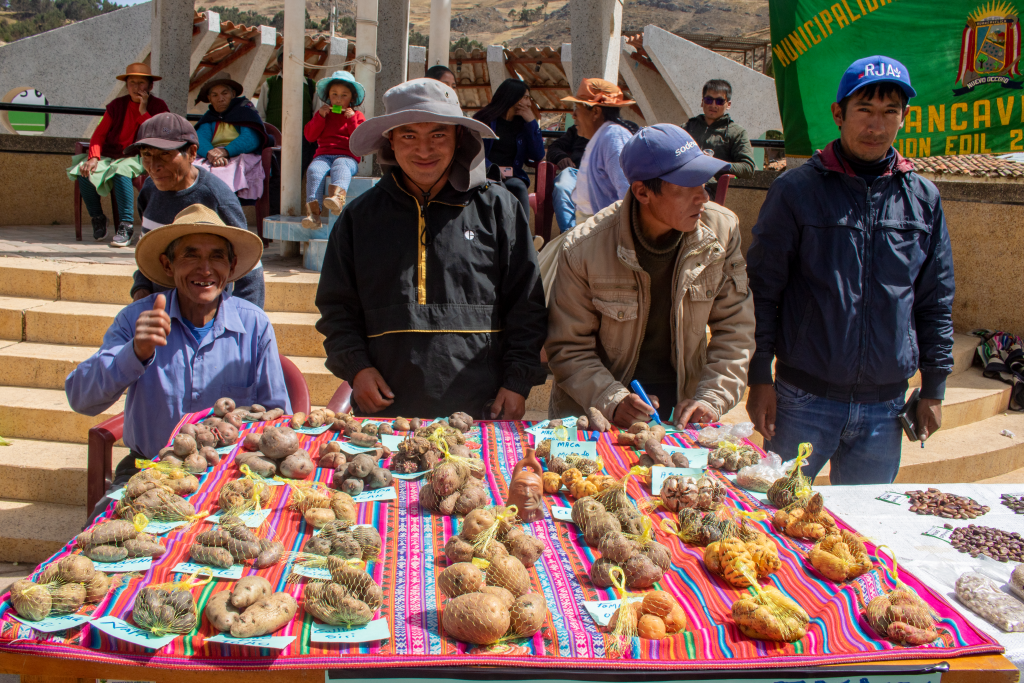
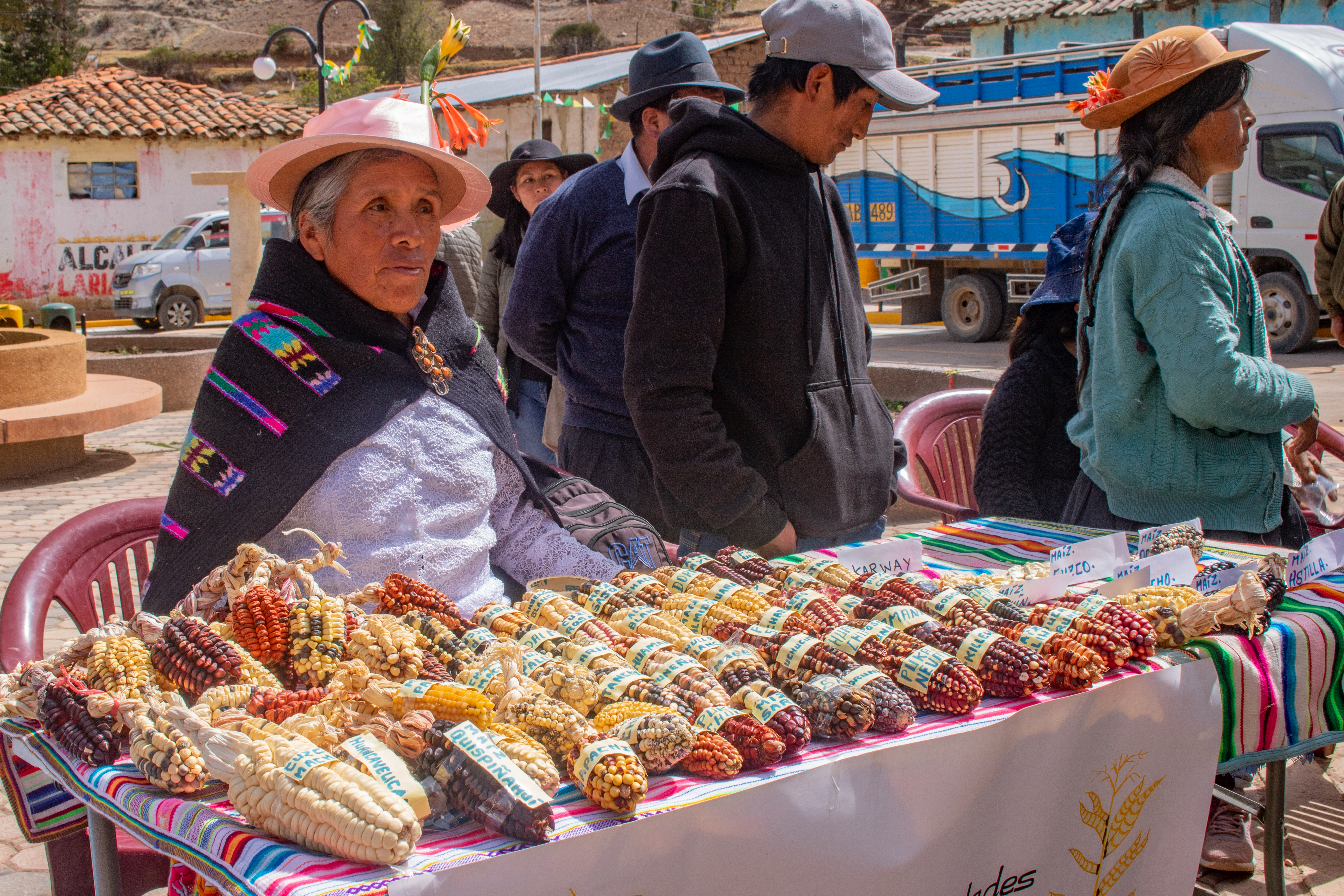
In the Plaza de Armas of the Laria district, Huancavelica, the third ReSCA awards were presented to conservationist farmers who managed to recover native agrobiodiversity species during the 2021-2022 agricultural season. During this event, Laria was also declared the first Agrobiodiversity Zone in the region, in recognition of the work of the farming communities that develop, manage, and conserve a wealth of native resources.
The GEF Agrobiodiversity SIPAM Project, promoted by the Ministry of the Environment (MINAM), the Ministry of Agrarian Development and Irrigation (MIDAGRI), the Food and Agriculture Organization of the United Nations (FAO) and Profonanpe, the Environmental Fund of Peru, has been promoting since 2019, in the Huancavelica region, the recovery of crop varieties at high risk of disappearing, through the Remuneration for Agrobiodiversity Conservation Services (ReSCA) mechanism, which turns the farmer into a strategic partner for the conservation and sustainable use of native cultivars.
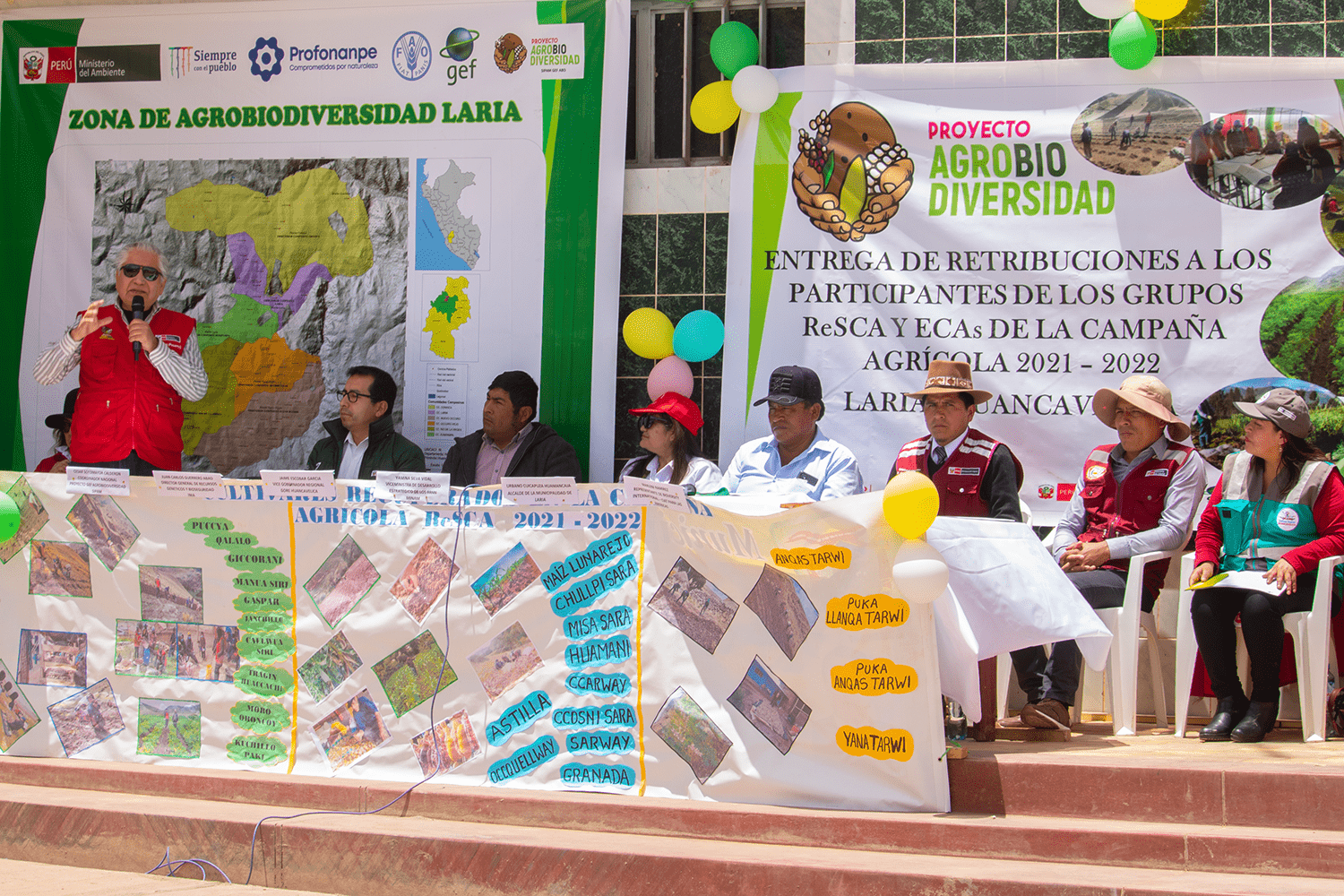
Farmers from the rural communities of Laria, Zunipampa, San José de Belén, Vista Alegre, Conaica, Occoro Viejo, and Nuevo Occoro received their choice of compensation in the form of wheelbarrows, backpack sprayers, and hose reels, which will be useful for their work in the upcoming agricultural seasons. These conservation heroes and heroines recovered potato varieties such as Kuchillo Paki, Moro Oroncoy, Janchillo, and Walalo, among others; corn varieties such as Misa Sara, Ccarwuay, Astilla, and Saruay; and tarwi varieties such as Yana Tarwi, Anqas Tari, and Puka Anqas Tarwi.
During the ceremony, the declaration of the Laria district as an Agrobiodiversity Zone was also announced. This is the first zone declared in the Huancavelica region and the seventh nationwide. Since 2021, the request from the farming communities of Laria, Zunipampa, Nuevo Occoro, Occoro Viejo, Río de la Virgen, and Conaica has been addressed, leading to this declaration through coordinated, collaborative, and participatory work with community leaders, conservationists, local authorities, the Ministry of the Environment (MINAM), the National Institute of Agricultural Innovation (INIA), and specialists from the GEF Agrobiodiversity GIAHS Project. This designation recognizes the work of these farming communities who develop, manage, and conserve a wealth of native resources, which are fundamental to food security in Peru and the world.
THE FACT:
ReSCA It is a compensation mechanism designed to incentivize and enhance the value of conserving agrobiodiversity in vulnerable states (decreased or disappearing varieties and breeds of native crops) through agreements reached with farming communities. Since 2019, 337 families from 16 farming communities have participated. This participation was complemented by field schools, providing technical assistance to 800 families in the districts of Laria, Huando, Nuevo Occoro, Conaica, and Izcuchaca, in the province of Huancavelica, to improve (innovate) and recover their traditional practices for conserving agrobiodiversity.
The Laria Agrobiodiversity Zone It is the seventh such declaration nationwide and the first in the Huancavelica region. This Agrobiodiversity Zone is home to 355 native potato varieties, 25 oca varieties, 7 mashua varieties, 13 olluco varieties, 30 broad bean varieties, 6 quinoa varieties, and others.
About the GEF Agrobiodiversity GIAHS Project
The GEF Agrobiodiversity SIPAM project seeks to conserve agrobiodiversity in the localities of Acora (Puno), Huayana (Apurimac), Lares (Cusco), Laria (Huancavelica) and Atiquipa (Arequipa), through traditional farming systems, integrated management of forests, water and land resources; and the maintenance of ecosystem services.
This initiative is financed by the Global Environment Facility (GEF), executed by the Ministry of Environment and the Ministry of Agrarian Development and Irrigation, with the implementation of the Food and Agriculture Organization of the United Nations (FAO) and the administration of Profonanpe.