The third edition of the event took place on Saturday, May 21st and Sunday, May 22nd. “Biodiversity Festival: Building a Shared Future for All Life Forms,” an event held at the Parque de la Exposición, featured various businesses from across Peru. This initiative was promoted by the Ministry of the Environment (MINAM), the Municipality of Lima, Profonanpe, the Food and Agriculture Organization of the United Nations (FAO), the Peruvian Association of Consumers and Users (ASPEC), and the National Association of Organic Producers of Peru (ANPE).
The event provided a platform for learning about and promoting the work of Peruvian farmers and producers. During the opening ceremony, Anton Willems, CEO of Profonanpe, emphasized the importance of active public participation in consuming products derived from Peru's biodiversity. Similarly, Modesto Montoya, Minister of the Environment, highlighted that "it is important to continue fostering the participation of family farmers in local and national markets."“
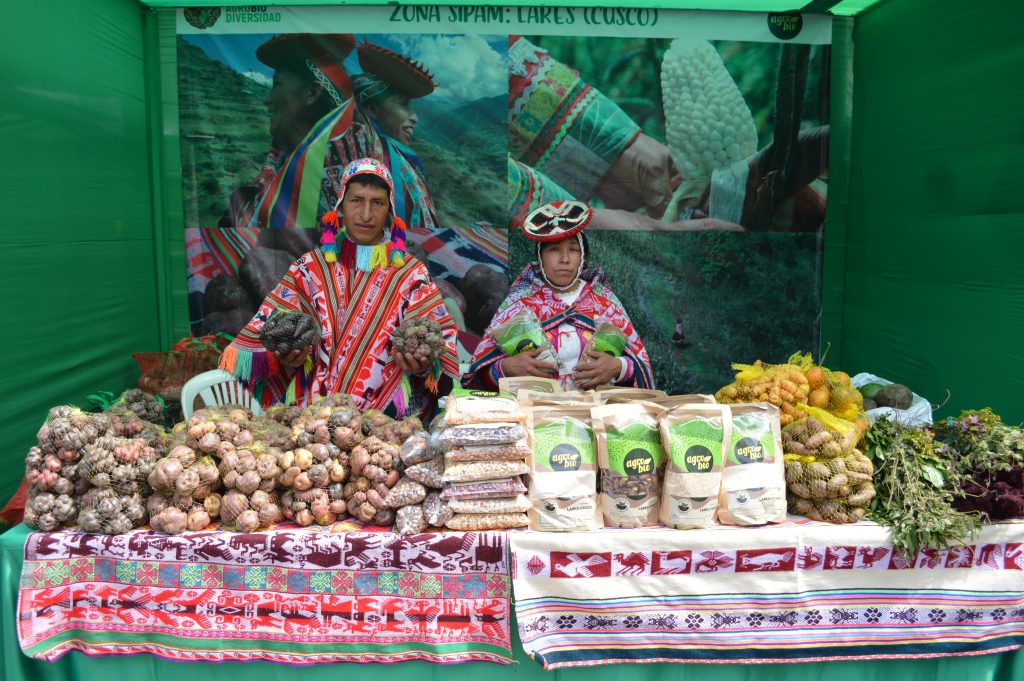
Three initiatives promoted by Profonanpe participated in the festival. The SIPAM Project was present through the Kusikuy traveling fair, which featured agricultural producers from the Cusco, Puno, Huancavelica, and Apurímac regions, as well as the traveling museum. Through recreational activities, the museum offered visitors the opportunity to learn more about agrobiodiversity and the ancestral wisdom of farmers. Also highlighted was the announcement of the first app for selling ancestral products, which will connect farmers with consumers in Lima through digital transactions. The app will be available starting May 31.
The Kusikuy fair is the first interactive museum of Peruvian agrobiodiversity
He Nagoya Project The interactive space “BiodiversityWithScience” was presented, which, through five stations, allowed visitors to learn about the importance and benefits of biodiversity. Representatives of the Nuqanchik Maronijei Noshaninka Network, who maintain their native languages of Quechua, Asháninka, and Matsigenka, shared the experiences of their communities with the attendees and delighted them with traditional songs in their languages.
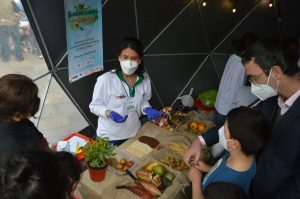
The “BiodiversityWithScience” route allowed participants to discover the benefits of Peruvian biodiversity products.
In the entrepreneurs' area, the Marine-Coastal Adaptation Project (AMC) presented 4 initiatives from women producers and artisans from Huaura and Talara, who are strengthening their technical-productive capacities in the face of the impacts of climate change on their economic activities.
One of them is Marleni Lapu, president of the Association of Biofertilizer Producers of Carquín (APROBIOSPECC) who commented that the work they do in their ventures aims to help the environment and the farmer. This initiative participated alongside AMARTEMM, women from Medio Mundo (Huaura) who work with reed accessories; Pearls of Cabo Blanco, artisans dedicated to the production of jewelry with pearl oyster shells; and Bandurria, artisans from Huacho who work with reeds.
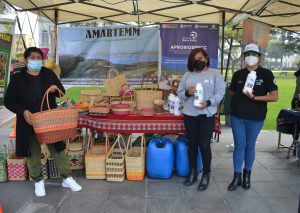
Women entrepreneurs, representing Amartemm and Aprobiospec, presenting their products.
The Biodiversity Fair provided an opportunity to recognize and value the work of producers and farmers from different regions of the country. Profonanpe, Peru's private environmental fund, remains committed to participating in and promoting initiatives that encourage and strengthen knowledge of biodiversity, as well as the work of farmers and producers.