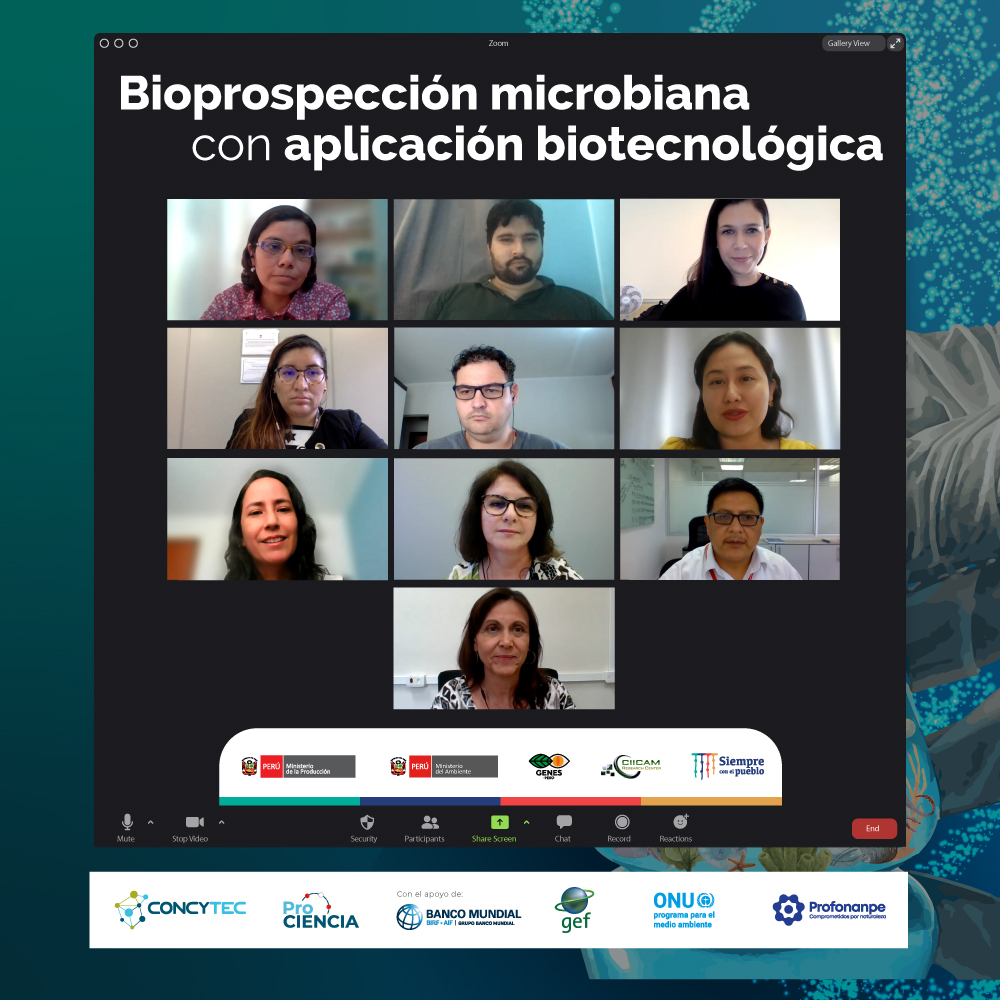
LIMA, April 29, 2022. With the aim of publicizing the potential of research with microorganisms and their technological applications, the Ministry of Production (PRODUCE), together with the CIICAM Research Center, and the Ministry of the Environment (MINAM), through the GEF-ABS-Nagoya Project, held a virtual seminar with experts from Brazil, Colombia and Peru, who shared their experiences in current research processes on microbial diversity.
The virtual event called "Microbial Bioprospecting with Biotechnological Application" was inaugurated by Jessica María Amanzo Alcántara, director of Genetic Resources and Biosafety (MINAM), who considered that this space will allow the development of new projects that achieve advances in microbial research, and understand its nature for the benefit of human well-being.
Jessica Amanzo, Director of Genetic Resources and Biosafety (MINAM), gave a welcome address to the speakers and participants of the seminar.
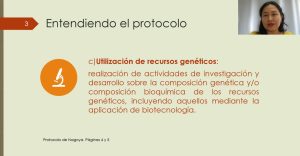
He also highlighted the importance of implementing the Nagoya Protocol, which provides the tools and methods to protect genetic resources ex situ and in situ through conservation, and allows this part of Peruvian diversity to be valued both in the academic world and in other areas where it can be shared.
The meeting highlighted the progress made in the development of new compounds for therapeutic and pharmacological use, obtained through the analysis of microorganisms with biotechnological applications; the topic was presented by the researcher from Brazil Rene Flores Clavo (Brazil), general director of the CIICAM Research Center and researcher in the Directorate of Microbial Resources-CPQBA-UNICAMP.
Also presented were new results on microbial resistance from its diagnosis to its importance in clinical diagnosis for the correct use of therapeutic drugs, presented by researcher Zhandra Arce Gil (Peru), as part of her work on projects in the area of clinical microbiology, infectious diseases, resistance of pathogenic microorganisms and detection of variations in DNA.
For her part, Nataly Ruiz Quiñones from Colombia explained the procedures and the value that the Nagoya protocol brings to access to microbial cultures for research with this resource, in order to guarantee its conservation, and to ensure fair treatment for the people who are in charge of protecting it.
The event featured other specialists such as Derlene Attili de Angelis (Brazil), Fabiana Fantinatti Garboggini (Brazil), Tiago Ferreira Leão (Brazil), Taícia Pacheco Fill (Brazil) and Pedro Henrique Riboldi Monteiro (Brazil), who discussed their research with biotechnological applications and genetic improvement to generate solutions to the problems it is causing among plants and fruit trees.
The Zoom event was attended by more than 400 people from various regions of Peru and the world, who were able to contact the researchers to resolve their doubts, and established alliances to obtain updated and specialized information, which will be useful in future research.
The Ministry of Environment (MINAM), through the GEF-ABS-Nagoya Project, aims to strengthen national capacities for the effective implementation of access regimes to genetic resources and traditional knowledge, in accordance with the Nagoya Protocol.
By promoting the use of genetic resources and related traditional knowledge, and by strengthening opportunities to fairly and equitably share the benefits arising from their use, the Protocol will create incentives to conserve biological diversity and to sustainably use its components, and will further enhance the contribution of biological diversity to sustainable development and human well-being.