April, 2023. – With the establishment of the Joint Declaration of Intent (JDI) Phase II Steering Committee and the approval of the Operations Manual (OM), key multilateral cooperation begins that will enable the mitigation of deforestation and forest degradation in our country. The JDI includes the Governments of Peru, Germany, and Norway, as well as the United Kingdom, the United States, and USAID (as observers).
This milestone will allow for the prioritization of the Implementation Plan and the disbursement of over US$10 million granted by the Norwegian Government. This will enable the project to begin, with the goal of reducing 44.25 million tons of CO2 in the Peruvian Amazon, benefiting 1 million Amazonian inhabitants and 180,000 Indigenous people who protect our forests.
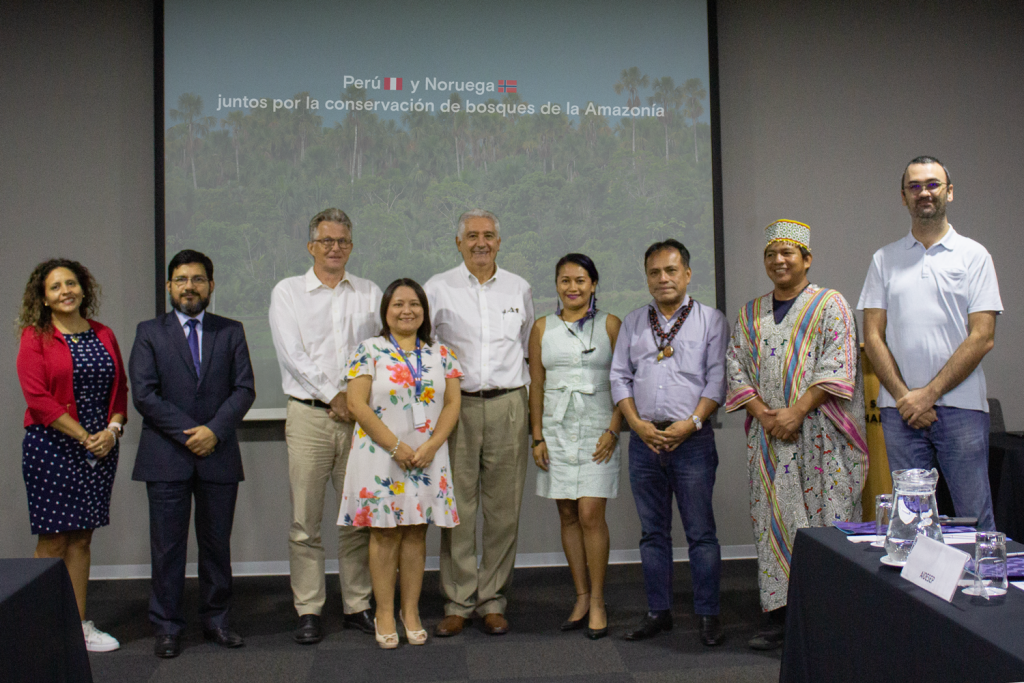
The Board of Directors is made up of representatives from the Ministry of the Environment; the Ministry of Agrarian Development and Irrigation, through SERFOR; the Ministry of Economy and Finance; the Ministry of Culture; the regional governments of Huánuco, Ucayali, Loreto and Amazonas; the Embassy of Norway; and the indigenous organizations AIDESEP, CONAP and ANECAP.
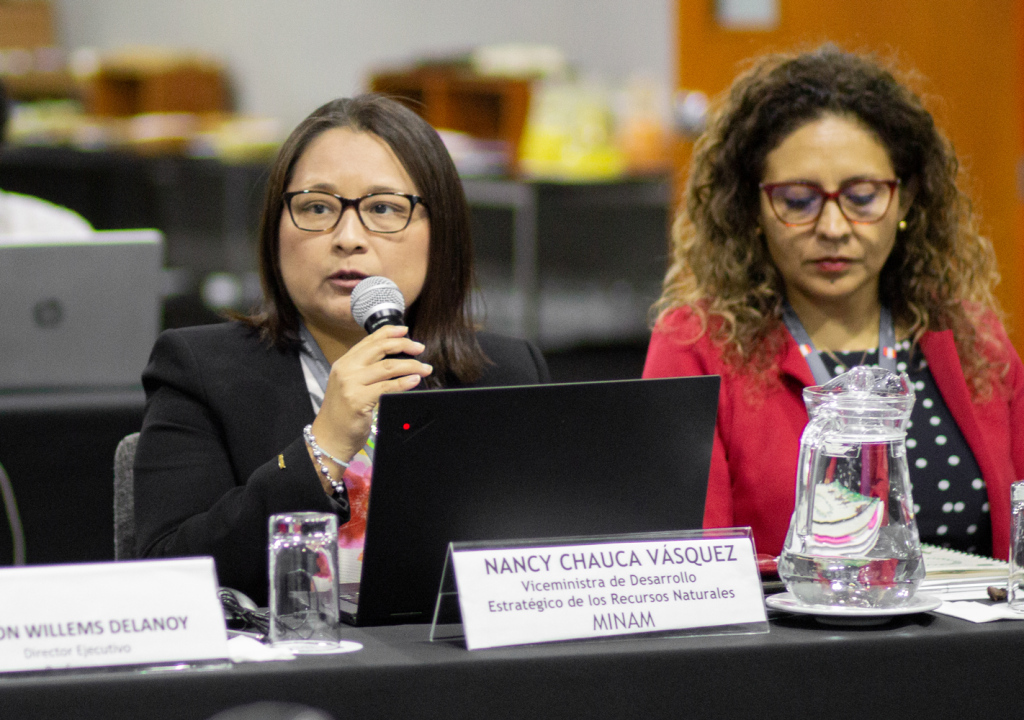
“This process was built jointly, within the framework of current regulations and incorporating the necessary improvements, in a timely and appropriate manner. We need the actions to be carried out with a presence on the ground, represented through the regional governments.”, Nancy Chauca, Vice Minister of Strategic Development of Natural Resources of the Ministry of the Environment and President of the Board, highlighted this.
For his part, Einar Telnes, Advisor on Climate Change and Forests for the Norwegian Government, highlighted that “With the approval of the Operations Manual, the Norwegian Government is prepared to provide the funds already committed. It is important to have this mechanism and the manual, which will strengthen our work and that of the board, involving Indigenous organizations and regional governments.”

To achieve this process, the DCI Phase II Implementation Plan, in the new period 2021-2025. This allowed for improvements to the objectives and goals, as well as the incorporation of a territorial approach. The updating process included the participation of national sectors and regional governments, as well as Amazonian indigenous organizations who incorporated their proposed actions.
Phase II of the DCI aims to reduce greenhouse gas (GHG) emissions in the Amazon, as well as achieve the 100% implementation of cross-cutting enabling conditions to reduce deforestation. This is expected to be achieved through the reduction of illegal activities, forest zoning, and strengthening knowledge management to implement public policies in the impacted regions.
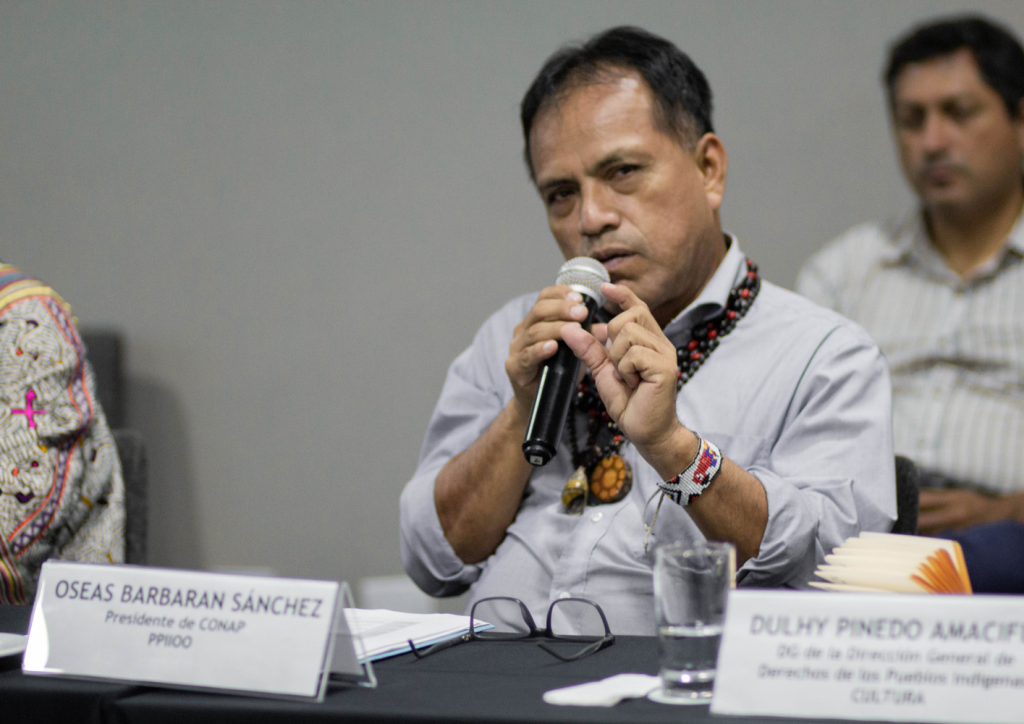
“I want to reaffirm our commitment to implementing the DCI and thank the Government of Norway for the funding, which will allow us to work for Indigenous communities. We, the Indigenous peoples of the Amazon, have reached a consensus and elected our own representatives to this board.», Óseas Barbaran Sánchez, president of the Confederation of Amazonian Nationalities of Peru – CONAP, mentioned.
Joint Declaration of Intent
As you may recall, Peru signed a cooperation agreement in 2014 with Norway and Germany, called the Joint Declaration of Intent (JDI), which was expanded in 2021 to include the United Kingdom and the United States as observers. This agreement aims to mitigate greenhouse gas (GHG) emissions in our country, which are produced as a consequence of deforestation and degradation of Amazonian forests. In this way, it strengthens the national REDD+ strategy and contributes to sustainable development.
Within the framework of the DCI, Peru is in Phase II, called “Transformation.” This stage involves a series of efforts by the country to mitigate the effects of climate change by reducing forest loss and greenhouse gas emissions. Between 2014 and 2020, the following achievements were made: granting rights to more than 5.6 million hectares of uncategorized areas; titling 1.9 million hectares of land to native communities; establishing 2.9 million hectares as new protected natural areas and regional conservation areas; among others.
Situation of Amazonian forests
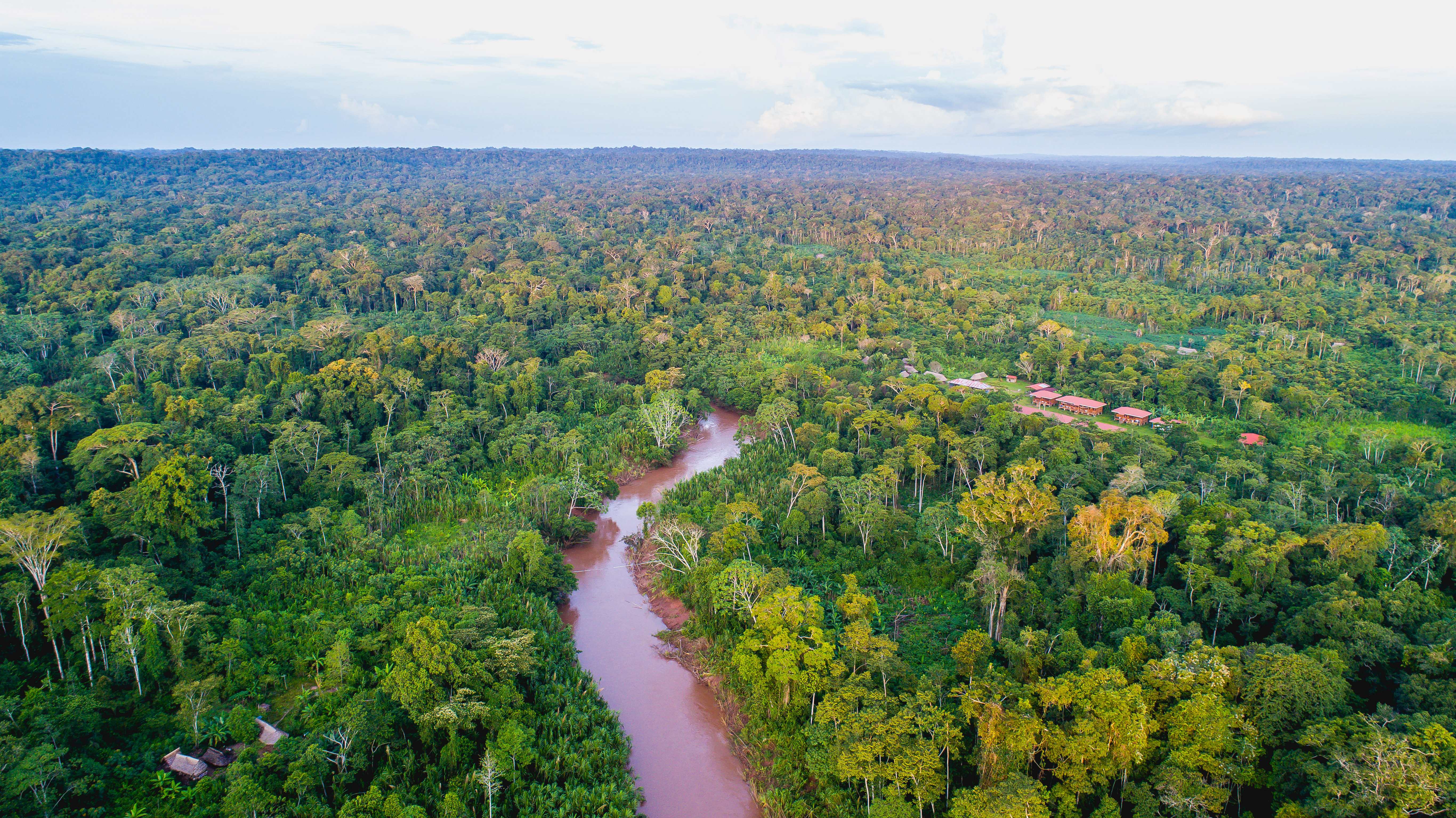
Nearly 601,000 hectares of Peruvian territory are covered by forests, a characteristic that places it ninth in the world for forest area. Despite the fact that forests in Peru are one of the most valuable resources for mitigating the effects of climate change, high rates of deforestation and degradation continue to be reported.
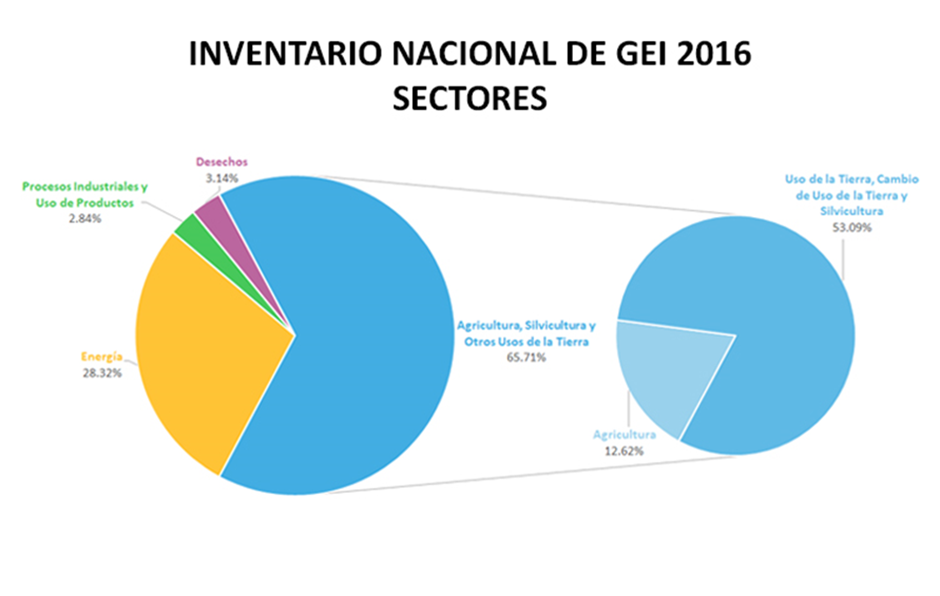
He National Greenhouse Gas Inventory 2016 – INGEI It was reported that in that year, 65,711 TP3T of GHG emissions came from the Agriculture, Forestry, and Other Land Use (ASOUT) sector; and within this sector, the main source of GHG emissions (53,091 TP3T) was in the Land Use, Land-Use Change, and Forestry (LULUCF) subcategory, associated with deforestation. This is why national efforts to reduce GHG emissions are focused on this area.