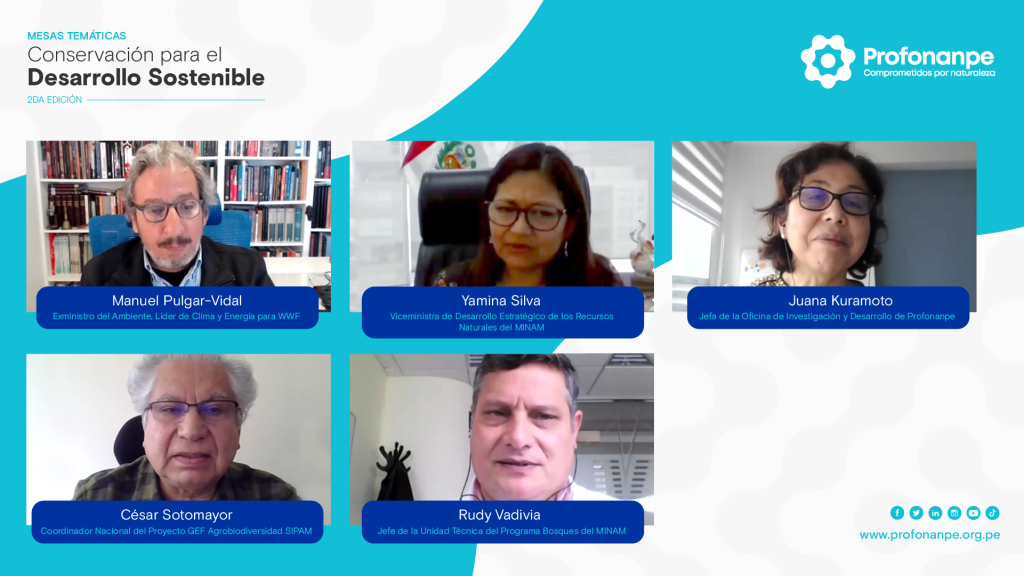
On October 19 and 20, Profonanpe held the second edition of Thematic Roundtables, in which 4 relevant topics were discussed: the conservation of ecosystems for sustainable development, territorial governance for conservation, environmental management and indigenous or native populations, and sustainable chains for development.
In this edition, more than 30 participants from the public and private sectors presented various proposals and actions they are implementing in their respective areas of work, and how these have progressed in combating problems associated with deforestation of Protected Natural Areas, biodiversity loss, and ecosystem management. It was emphasized that the country has built a successful system of protected areas based on adequate planning, central administration, and funding. However, conservation outside these areas presents challenges due to incomplete regulations, a lack of scientific and experience-based management knowledge, and weak coordination among stakeholders.
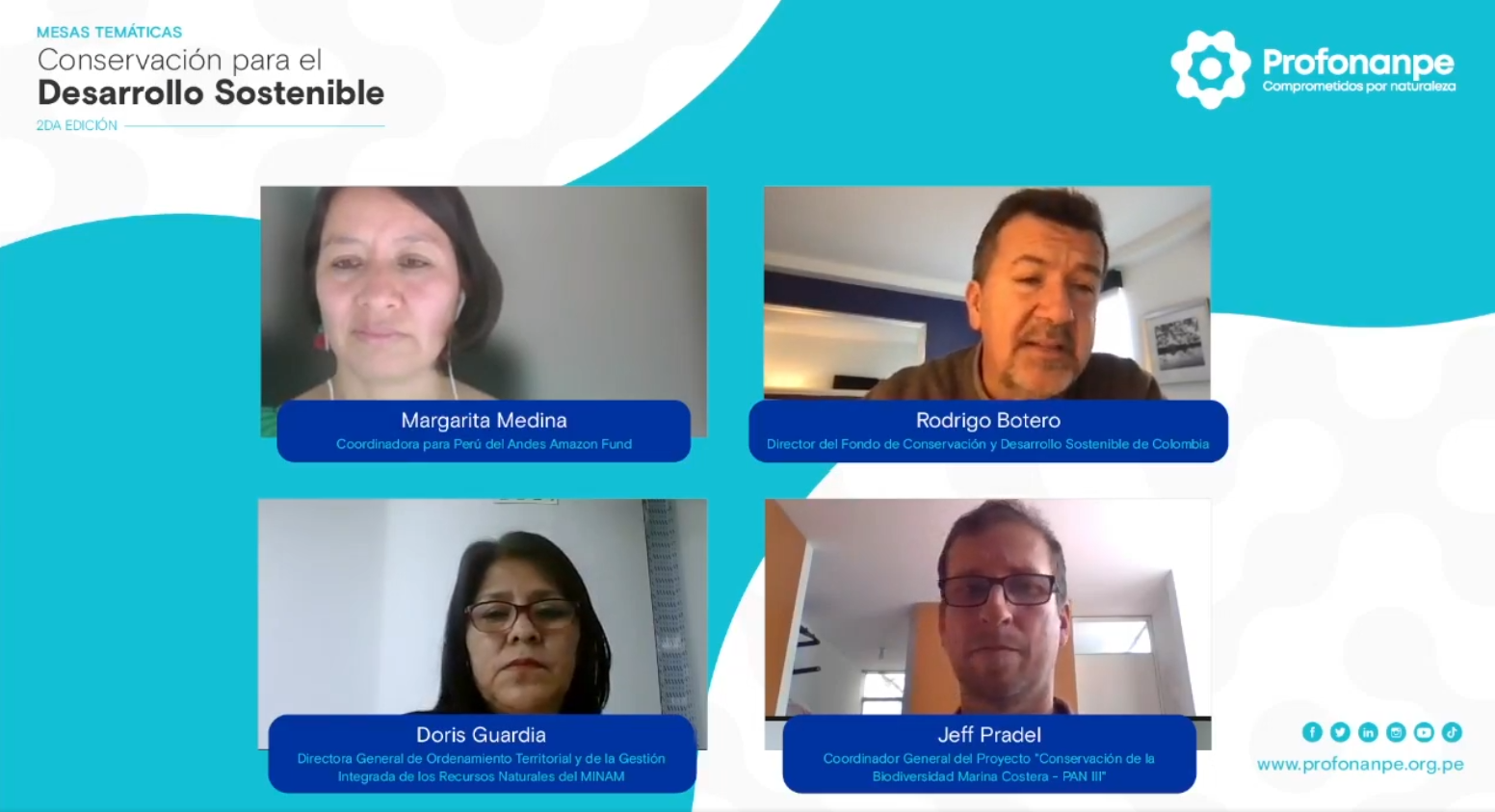
During the meeting, Rodrigo Botero, director of the Conservation and Sustainable Development Fund of Colombia, As an international guest, he shared the challenges of deforestation and illicit activities in his country's protected areas. During his presentation, he emphasized that “Colombia’s borders with Venezuela, Brazil, and Peru are covered with illegal mining dredges that are advancing against the governance of the territories.”.On the other hand, our country's efforts to build adequate governance of the territories not only involve continuing to develop the pillars of territorial planning, but also require that the sustainable use of resources be based on traceability that, often, has to be cross-border.
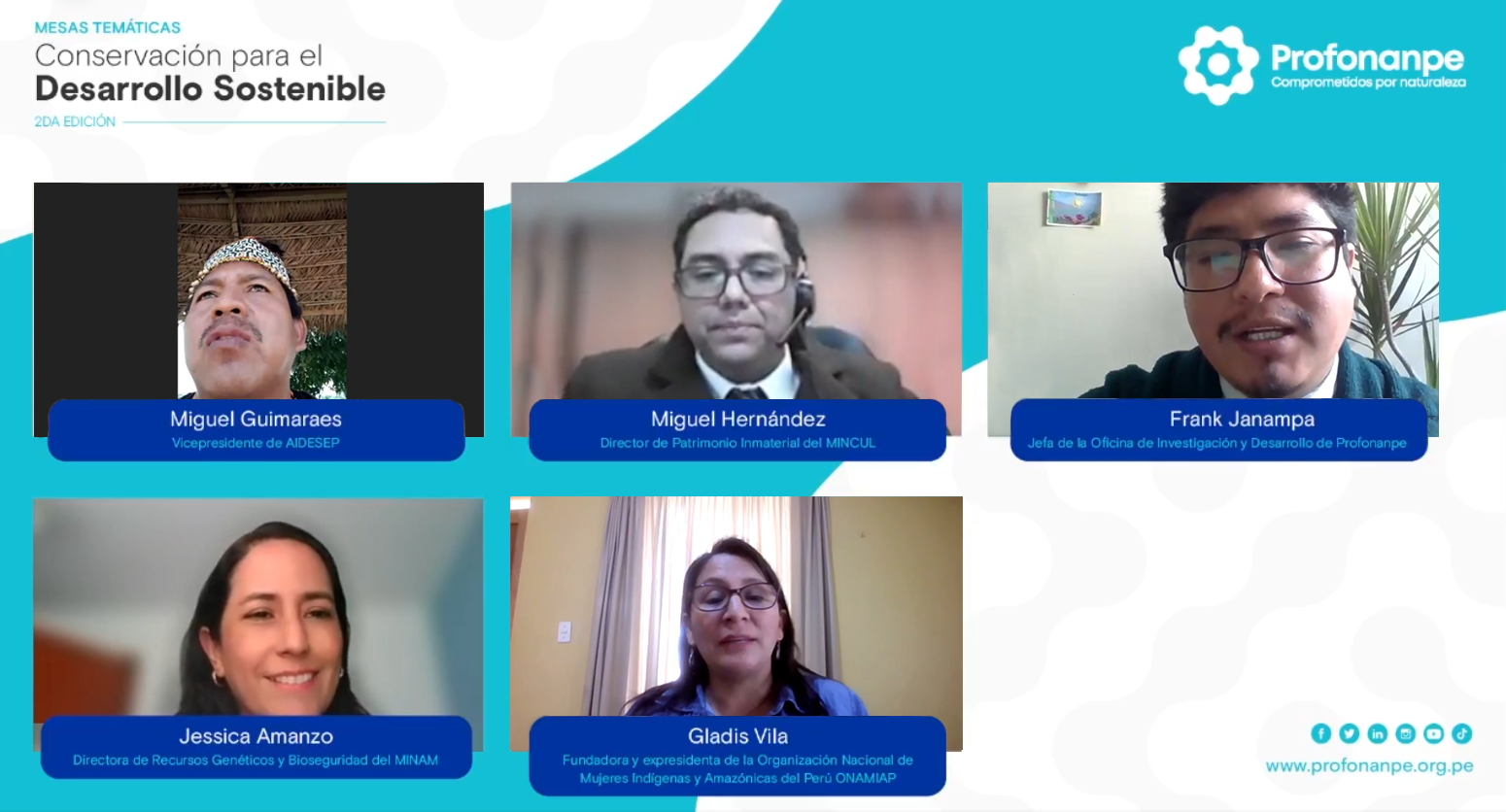
The role of local residents, especially Indigenous communities, as conservation agents was also emphasized. Their holistic view of the territory and resource use, linked to cultural practices that seek the care and respect of ecosystems, allows them to maintain the ecological balance that has been lost in other areas of the country. Fermín Chimatani, president of ANECAP, maintained that “The benefits of conservation are felt at the international, national, and local levels, but the costs are mostly borne by local populations, especially the indigenous peoples who live in the territory. We have moved from protest to proposal and to action.”. In this regard, there is still a long way to go to ensure that the participation of indigenous populations is equal, constant, and central to decision-making regarding the territory they inhabit.
The new approach to conservation promotes the sustainable use of resources to generate sustainable development processes that benefit local populations, with the promotion of value chains as a central strategy. The main challenge is to create the enabling conditions for these chains to flourish, which includes improving the provision of infrastructure and technical services, the provision of financial services, incentivizing formalization, and promoting capacity building, among other things. AJE Group He pointed out that sustainable supply chains are the foundation for abandoning the production model left to us by the industrial revolution and embracing and resuming the natural revolution. After all, as Dennis del Castillo noted... IIAP, The Amazon changed the world by providing us with products such as rubber, cocoa, and quinine.
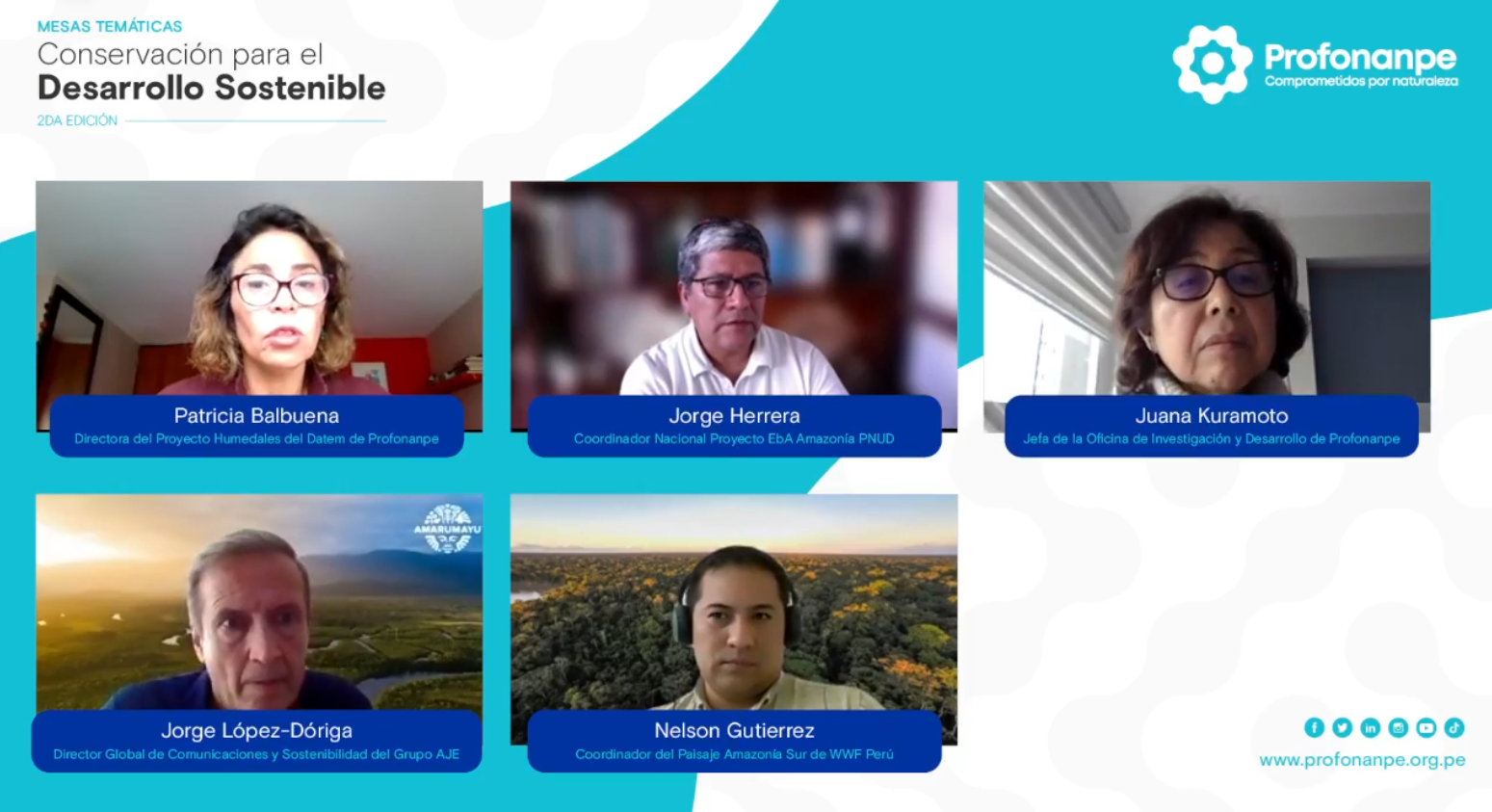
This second edition of Thematic Roundtables has given us many experiences and new opportunities for designing strategies and proposals that help us care for, manage and take advantage of our ecosystems to achieve the sustainable development of the country.