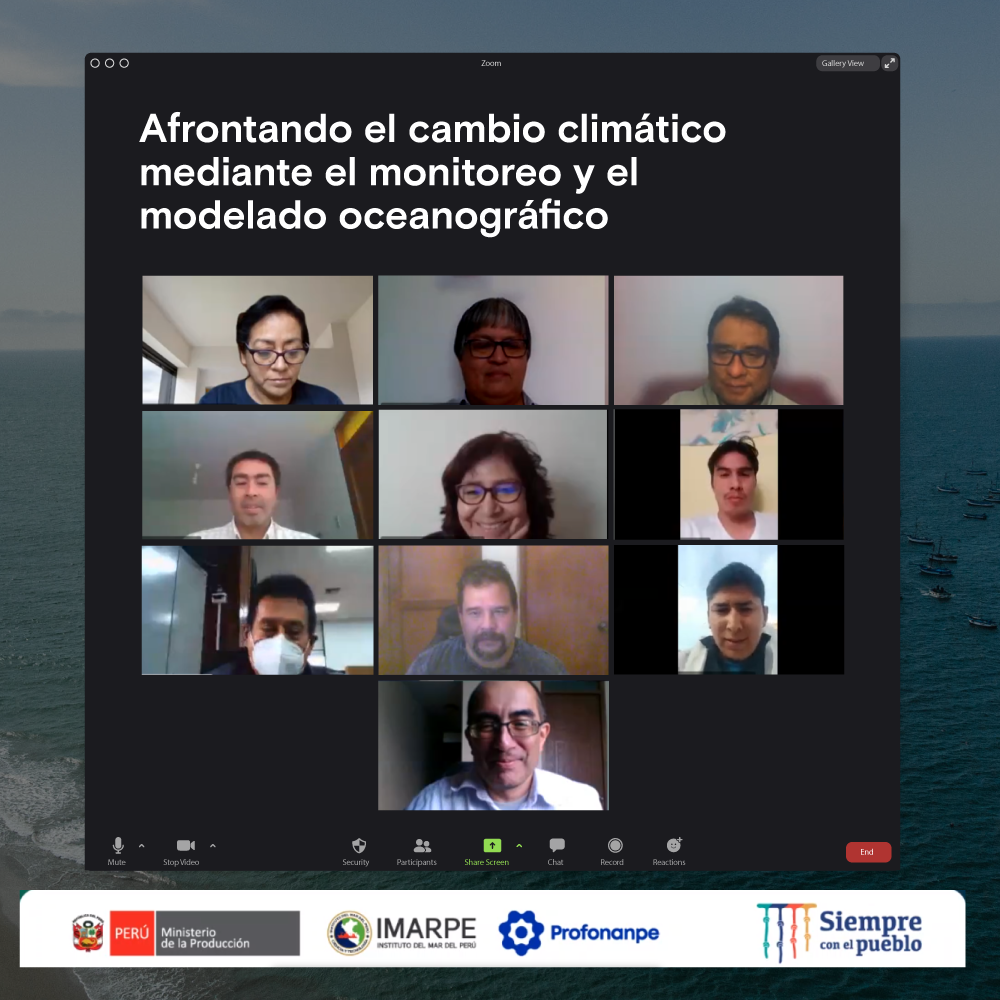
Within the framework of the Marine Coastal Adaptation (AMC) project, executed by the Ministry of Production of Peru (Produce) and the Peruvian Marine Institute (Imarpe), and implemented by Profonanpe, a new cycle of webinars was launched to publicize the progress and results obtained with the climate and oceanographic monitoring system.
During the meeting, the importance of using the gliders acquired by Imarpe and Profonanpe in 2020. As you may recall, three gliders were purchased and used for the automatic monitoring of different marine-coastal areas where the project is being developed.
Noel Domínguez, a researcher at Imarpe, commented on how the gliders They helped detect real-time information about events that can occur in the marine ecosystem. Currently, the high variability of the Peruvian sea has been detected, and the movement of the glider through the Imarpe website.
For his part, researcher Arturo Aguirre commented on the relationship between activities carried out near marine and coastal zones and climate change: “There are potential environmental stressors such as thermal anomalies, pollution, fishing, and physicochemical effects, among others, that are present along the Peruvian coast.” He also emphasized the importance of environmental monitoring in these areas, as it helps to better understand risky oceanographic events and how to predict them.
New dates for the webinars that are part of the conference series will be announced soon. You can find out about them and register through Imarpe's social media channels.Facebook, Twitter) and Profonanpe (Facebook, LinkedIn y Twitter)
About the Marine and Coastal Adaptation Project
The project “Adaptation to the impacts of Climate Change on the marine coastal ecosystem of Peru and its fisheries” focuses its interventions on two pilot areas: Huacho (Punta Salinas – Végueta) and Máncora (Cabo Blanco), to reduce the vulnerability of coastal communities to the impacts of climate change on marine-coastal ecosystems and their fishery resources.
In 2016, the project was approved for funding through Profonanpe, from the Adaptation Fund. The Ministry of Production is responsible for project implementation, in coordination with the Peruvian Marine Institute (IMARPE).