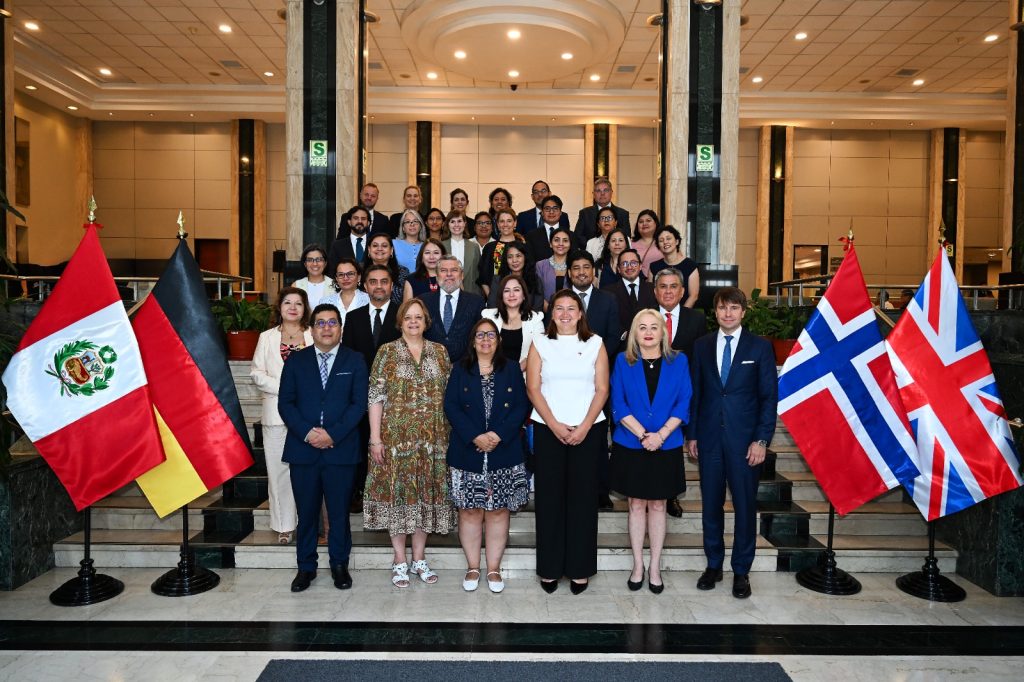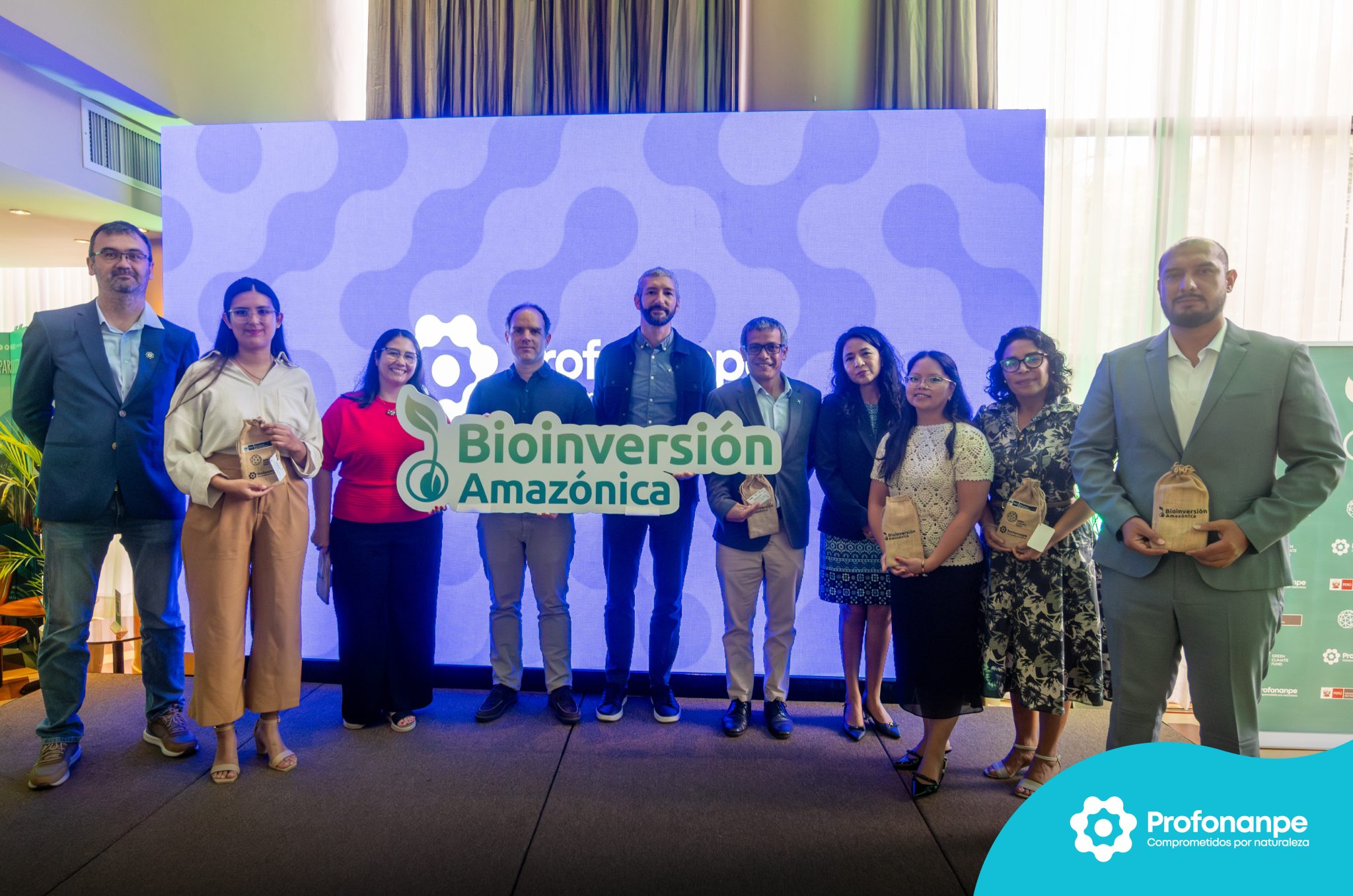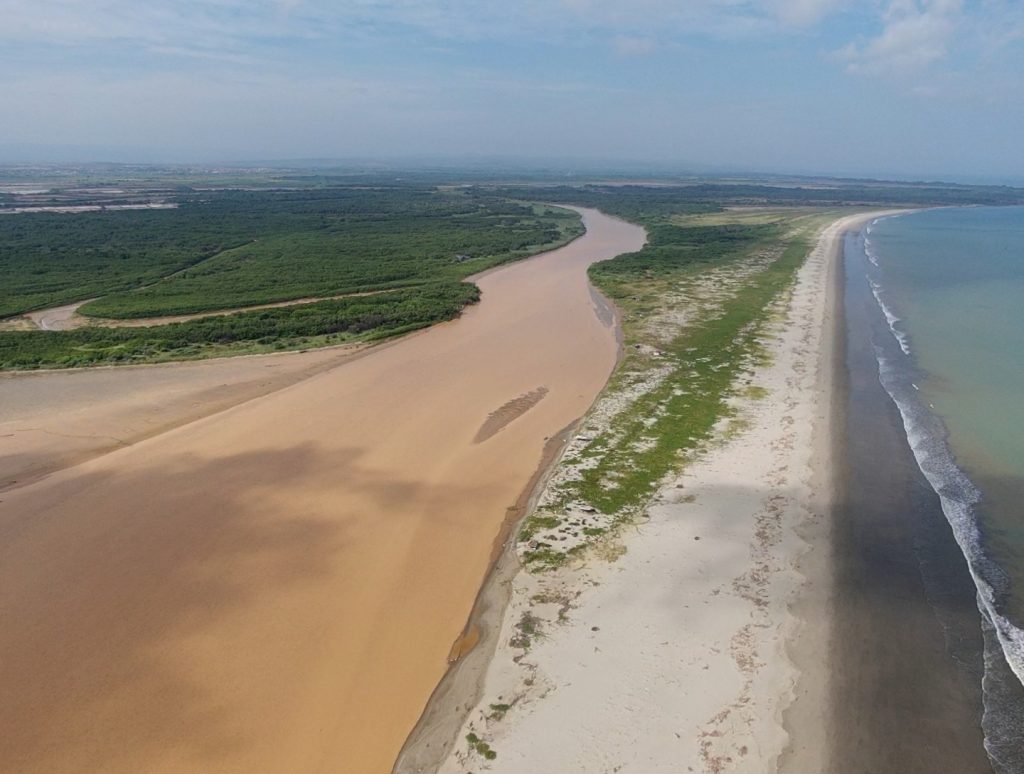
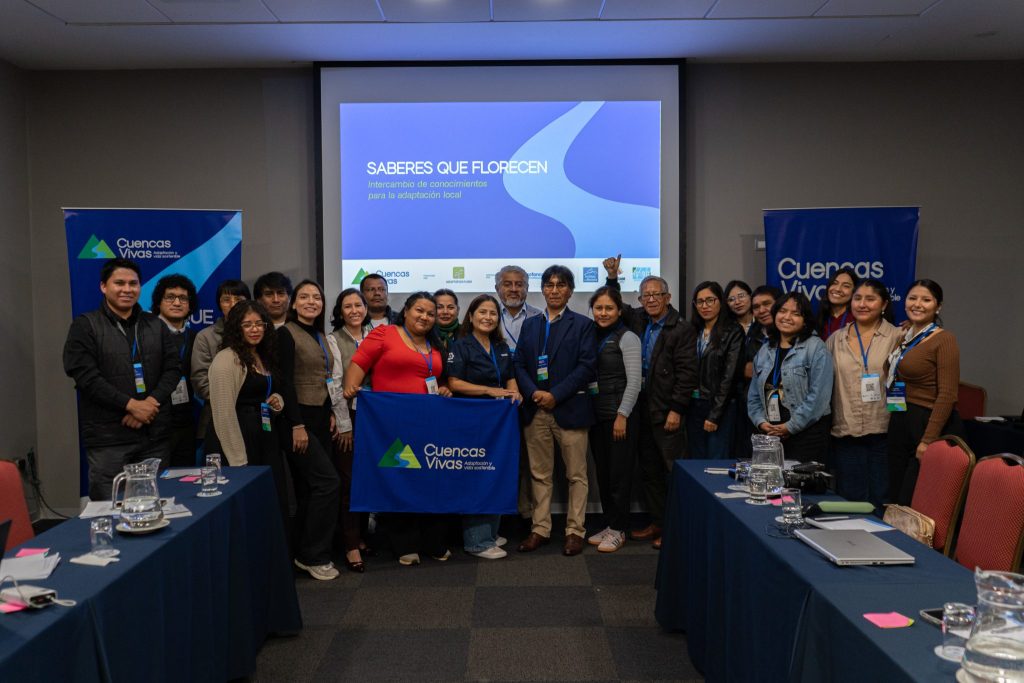
The “Knowledge that Flourishes” workshop brought together local leaders to exchange knowledge, experiences, and best practices, coordinating work across their territories: IdM in the Santa basin (Ancash), IMAR Costa Norte in the Chancay–Lambayeque basin (Cajamarca), and CODEPISAM in the Bajo Huallaga and Paranapura rivers (San Martín). The day began with remarks by Odile Sánchez, manager of Profonanpe’s Cuencas Vivas Project, who highlighted the importance of strengthening adaptation to climate change in these territories through collaborative work and shared learning.
Day 1: Knowledge for Safeguards
The first day began with a session dedicated to communication guidelines, presented by Gloria Ayala, the project’s communications officer. She emphasized that a consistent image across the three basins facilitates the project’s identity and reinforces its impact. Next, Rogger Morales, a specialist from the Ministry of the Environment (MINAM), explained the methodological guidelines for the formulation of Local Climate Change Plans as a planning tool for the Nationally Determined Contribution (NDC).
In the second block, participants worked in three rotating tables to delve deeper into the implementation of Safeguards and work with Indigenous and Native Peoples (PPIIOO) and communities, integrating information management and adaptation to climate change.
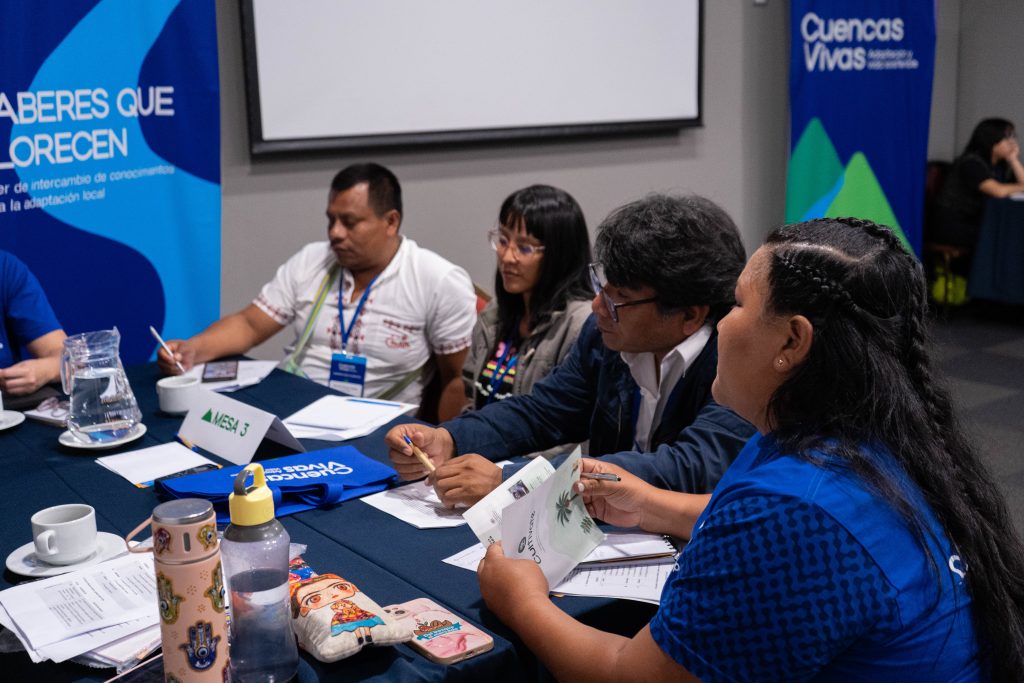
CODEPISAM working table. Photo: Eduardo Saavedra
Day 2: Knowledge exchange
The second day of the workshop focused on strengthening understanding of the sub-granting process and promoting exchange among Lead Partners. The day began with a presentation by Luis Roque Salazar, a specialist from MINAM, who explained how to incorporate adaptation into public investment projects and provided guidelines for formulating more resilient initiatives.
Afterwards, a collaborative session was held in which each partner shared their approach to intervention. This space allowed the territories to learn about each other’s strategies, their main experiences, and the lessons learned during the call for proposals process. The presentations were given by Samuel Pinedo on behalf of CODEPISAM, Víctor Santa Cruz on behalf of IMAR Costa Norte, and Vidal Rondán on behalf of the Mountain Institute.
After the presentations, a plenary session was held for knowledge management. This space allowed for capitalizing on the experience, systematizing the successes and barriers of the sub-grant process to promote concrete improvement actions in future calls for proposals, a fundamental step for the strategic alignment of the Lead Partners.
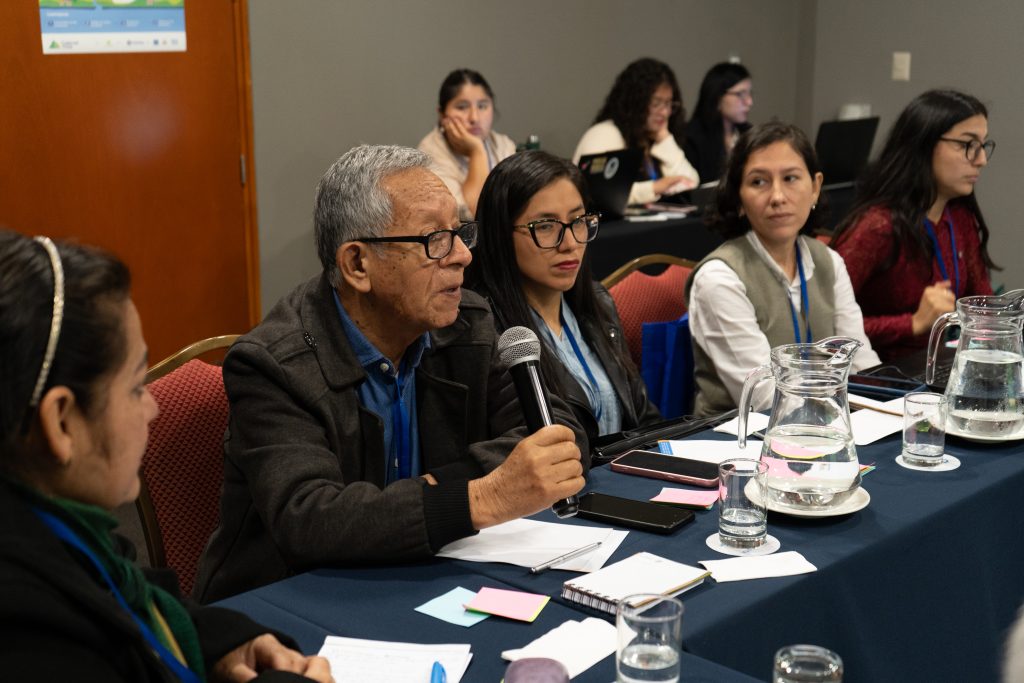
Plenary session for knowledge management. Photo: Eduardo Saavedra
Cuencas Vivas, implemented by Profonanpe with funding from the Adaptation Fund, will continue to promote climate adaptation measures through its local partners in the three watersheds. The aim is to strengthen their capacities and promote sustainable solutions that respond to climate challenges, using technical and ancestral knowledge.