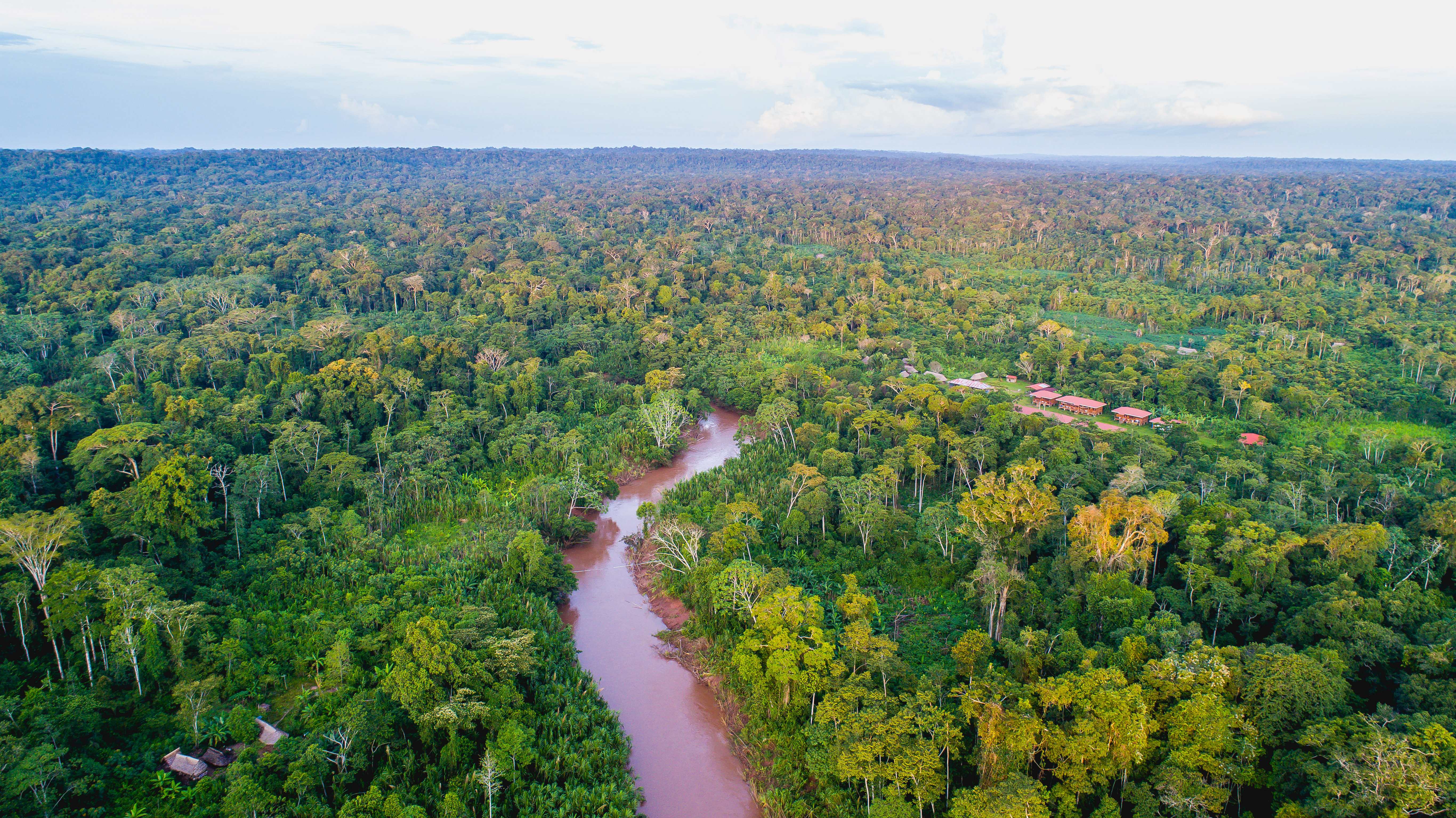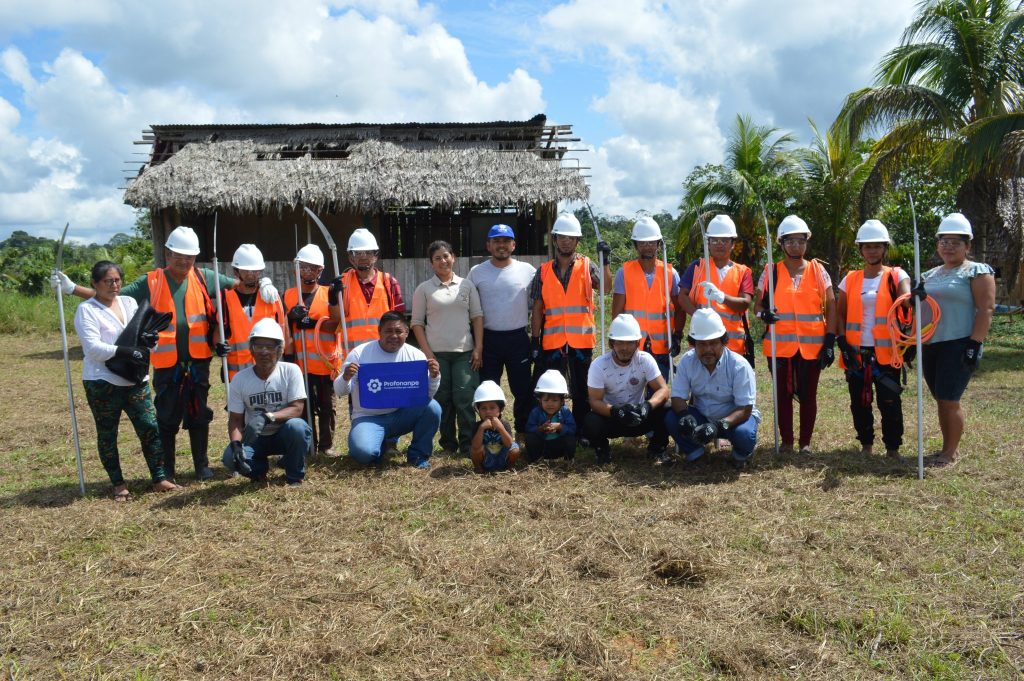
Approximately 35 aguaje palm producers from five native communities along the Blanco River in the province of Requena, Loreto, received scaling kits for their aguaje palm groves, aimed at reducing the deforestation of Amazonian palm trees. The equipment was distributed by SERNANP (National Service of Natural Protected Areas), USAID Pro-Bosques, and Profonanpe, Peru's private environmental fund, who collaborated in this area of Requena province to promote the sustainable use of natural resources.
The handover ceremony took place in the beneficiary communities: Nueva Esperanza, Frontera, España, Lobo Santarosino, and Nuevo Capanahua. Participants included the Apu, or community leaders, as well as the community members who harvest aguaje fruit.
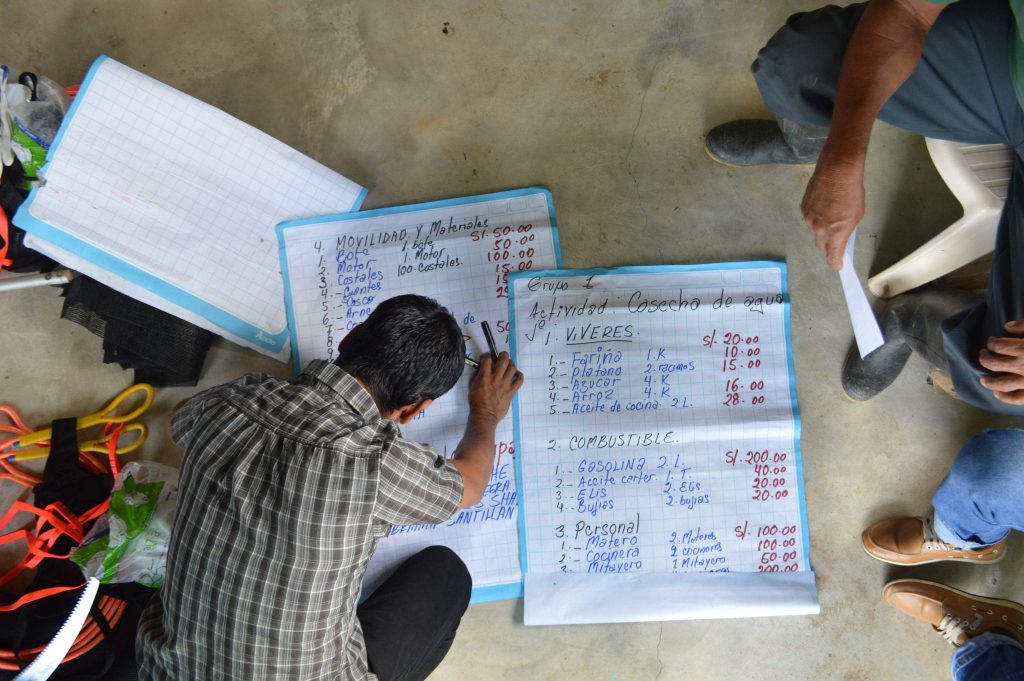
Community member calculates harvest, transport and sale of aguaje fruit.
They all received training on the use of tools for safe and effective scaling up. They were also provided with business management knowledge related to this emblematic Amazonian fruit, including how to estimate market prices, recoup their investment, and generate profits while considering all the costs involved in aguaje production.
According to Luis Olivero Peña, leader of the Lobo Santarosino community, this will motivate people in his community to make better use of the aguaje fruit, not only for consumption but also for sale. “These tools will help us take better care of the resource and generate more income for our community,” he says.

Men and women participated in the practical workshop on climbing aguaje.
During the talks, the community members made projections to market between 50 and 100 sacks of aguaje daily, considering that they can reach, mainly, markets such as the cities of Requena and Iquitos, the largest consumers of this fruit.
It should be noted that, since 2019, USAID Pro-Bosques has been providing technical assistance to Indigenous communities to achieve sustainable resource use. This is also made possible by providing them with the tools to help them achieve this goal.