Yesterday, the virtual ceremony for the Good Practices in Public Management Award took place. Following a qualification and selection process for the submitted initiatives, the final results and the list of winners were announced. The practice "Reactivating the Apachicuy, a solidarity initiative in times of crisis that alleviates hunger and promotes agrobiodiversity," carried out within the framework of the GEF Agrobiodiversity GIAHS Project – implemented in conjunction with the Ministry of the Environment, the Ministry of Agrarian Development and Irrigation, the Food and Agriculture Organization of the United Nations (FAO), and the Global Environment Facility (GEF) – won the Rural Subcategory of the Social Inclusion Category.
Last year, in the context of the national health emergency caused by the COVID-19 pandemic, the GEF Agrobiodiversity-GIAHS Project enabled numerous families living in the intervention areas, such as Cusco, Apurímac, Huancavelica, and Puno, to receive their products in a timely manner. These families were concerned about the lack of food supplies their relatives in cities like Lima, Arequipa, Tacna, Pisco, Nazca, and Ica were experiencing due to lockdowns and the inability to work.
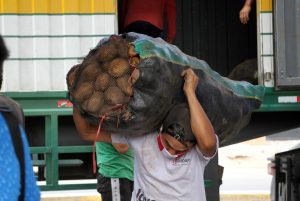
With the intervention of the Ministry of the Environment (MINAM) through the project, 3,776 trained and organized producers were able to connect with nine district municipalities to send remittances of agrobiodiversity products to their families in marginalized areas of various Peruvian cities affected by the pandemic. In this way, a total of 4,627 families and relatives of the beneficiaries of the GEF Agrobiodiversity GIAHS II Project—who were experiencing economic vulnerability due to the pandemic in the cities of Lima, Huancayo, La Oroya, Arequipa, Mollendo, Ica, Nazca, Ilo, Moquegua, and Tacna—received 300.18 tons of agrobiodiversity products valued at S/ 994,293, which helped mitigate the negative economic effects of COVID-19. This experience also highlights the role of agrobiodiversity as a source of nutritious food and solutions in the context of a food crisis. It is worth noting that the biosecurity measures and procedures implemented during the remittance process were effective in preventing COVID-19 infections, and no infections were reported as a result of this collective practice.
Currently, Apachicuy has expanded into a short supply chain model for family farms through the AGROBÍO platform, offering direct sales of these products via delivery to urban families. This service has increasingly attracted the interest of customers in Lima, Cusco, and Andahuaylas, and involves municipalities such as the one in Andahuaylas, which, on its own initiative, is implementing a virtual platform for AGROBÍO to support small farmers in this region of the country.
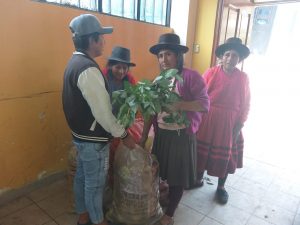
Following the launch of the call for nominations promoted by the School of Public Management at the Universidad del Pacífico for the "Good Practices in Public Management Bicentennial Edition 2021" awards, and through the General Directorate of Biological Diversity of the Ministry of the Environment (MINAM), the GEF Agrobiodiversity Project – SIPAM submitted a nomination in the "Social Inclusion, Special Award for Combating and Reducing the Effects of COVID-19" category. After the winners' deliberation process, Apachicuy received the Special Award for Combating and Reducing the Effects of COVID-19 for its efforts in coordinating the delivery of food remittances from rural farmers to their families living in cities, reviving an ancestral practice to alleviate their needs during the period of social isolation.
The fact:
- «Apachicuy» It is a Quechua word that means “"charge"” o “remittances”, It evokes an ancestral practice of Andean culture to support those less fortunate. This custom of Andean people sending remittances of local products to their relatives in the cities is a demonstration of their traditional solidarity and an effort to preserve their food traditions using products from the region's agricultural biodiversity.
- He Award for Good Practices in Public Management (BPG), that organized by the NGO Citizens for the Day CAD,It is an annual competition that aims to identify, reward, and publicize best practices in the public sector: activities or processes that have achieved outstanding results for the benefit of citizens and that can be replicated in other organizations to improve their effectiveness, efficiency, and innovation. It has been held since 2005.