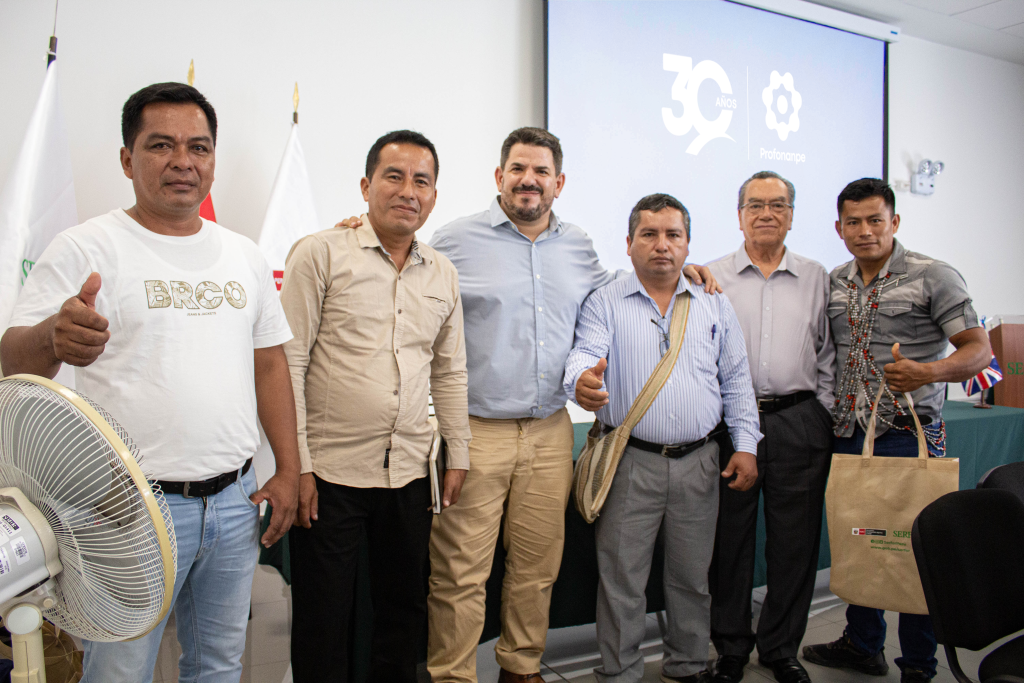
On March 13, at the Serfor auditorium, the “First seminar on the use and adoption of renewable energies in sustainable production chains of indigenous territories” was held, in which different companies, productive associations, and state institutions exchanged experiences on the use of clean energies and the importance of their implementation in sustainable production in Peru, with the aim of increasing competitiveness and combating climate change.
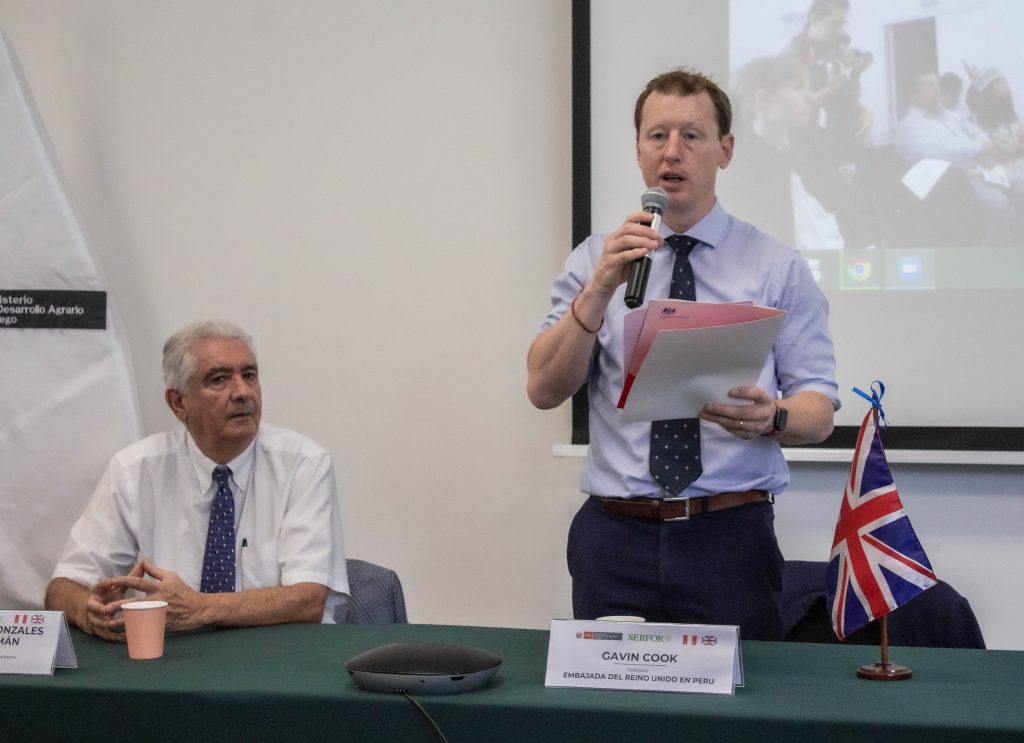
Luis Alberto Gonzales-Zúñiga, Executive Director of the National Forest and Wildlife Service (SERFOR), and the UK Ambassador to Peru, Gavin Cook, opened the event by highlighting the work being done by the State and the embassy to generate the exchange of technological knowledge, which promotes support for pollution-free value chains – with the aim of strengthening sustainable bio-businesses through the use of clean energy – from an environmental development perspective.
At the moment, “We are exchanging experiences and opportunities to explore new forms of support from the bioeconomy, articulating their efforts from green finance and market access, with clean energy and sustainable infrastructure.” Gavin Cook, UK ambassador to Peru, highlighted.
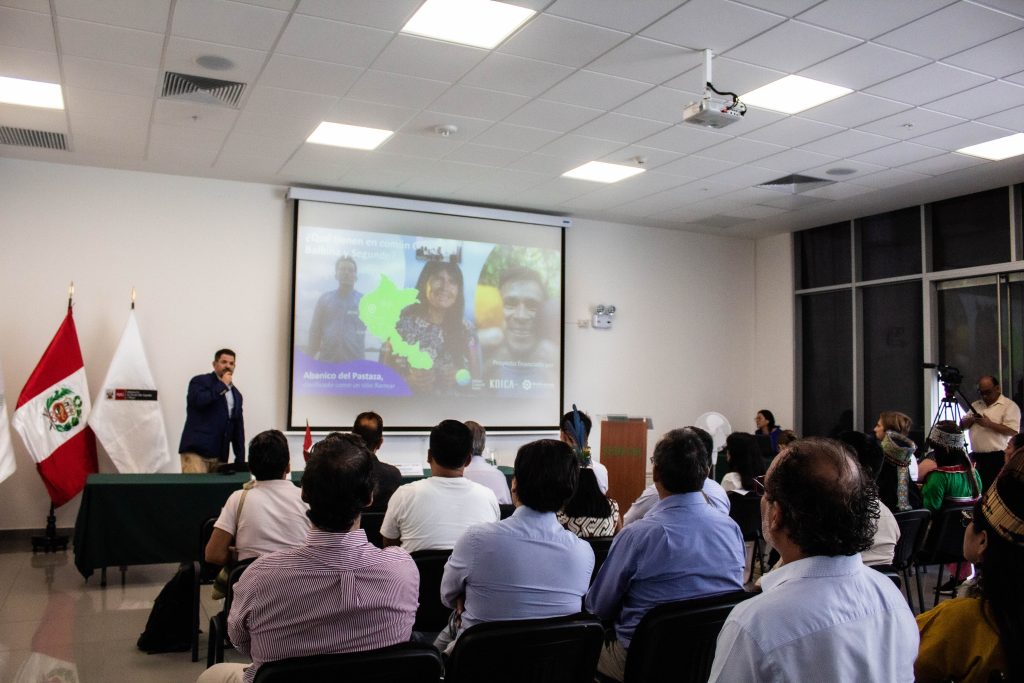
The event was attended by members of various projects such as Iñigo Maneiro, director of the Social and Cultural Area of the Binational Development Plan of the Peru-Ecuador Border Region; Tomás Luy, general manager of Novum Solar; and Luis Marino, director of the Business Alliance for the Amazon of Conservation International; Sandra Vergara, Coordinator of the Rural Sector Support Group at the Pontifical Catholic University of Peru; and Fanny Carhuancho, Professor of the Department of Environmental Engineering of the National Agrarian University La Molina; who from their fields presented the scope of their projects and research in renewable energies and how they have benefited different Amazonian communities.
Ignacio Piqueras, specialist in biobusiness of the project “Building Resilience in the Wetlands of Datem del Marañón, Loreto”, He presented the work and progress of the productive associations that have been developed and strengthened within the framework of Profonanpe, Peru's environmental fund. In this regard, it is highlighted that, to date, improvements have been made in quality by securing a reliable energy supply and increasing business productivity by approximately 150,000 tons.
Among the attendees were José Alarcón, President of the Achuar Shakaim Agrarian Cooperative, and Gabriel Cruz, President of the Association of Ungurahui and Aguaje Producers of Indigenous Peoples of the Marañón Sector – APUAPISEM, who highlighted the work done in conjunction with Profonanpe and has allowed their bio-businesses to generate, in the last year alone, a significant production of cocoa and chocolate, and more than 400 liters of aguaje oil respectively.
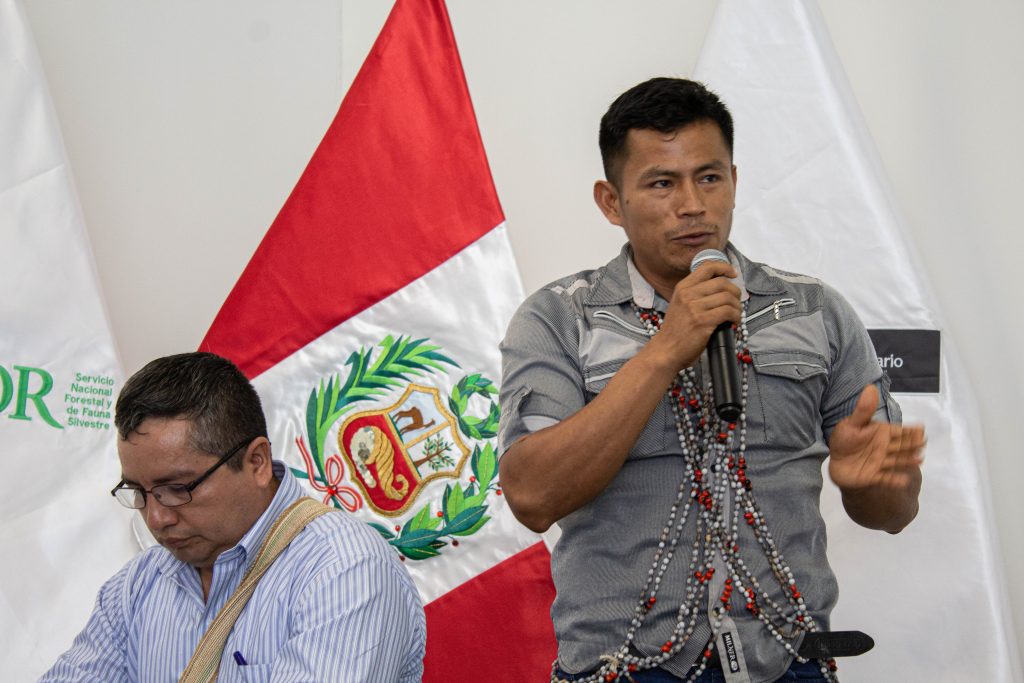
This forum highlighted the progress made in overcoming social inequalities and enabling the development of sustainable businesses. It also showcased best practices in the use of science to improve the resilience and living conditions of Indigenous communities, while simultaneously working to reduce carbon emissions.
About the Datem Wetlands project
Since 2017, Profonanpe has implemented the Datem Wetlands project, which focuses on improving the resilience of Indigenous communities living in the wetlands and reducing greenhouse gas emissions caused by deforestation. To date, more than 9,000 people have benefited from this initiative, and seven bio-businesses are currently operational.
To learn more about this initiative, visit: https://profonanpe.org.pe/humedales-para-la-vida/