
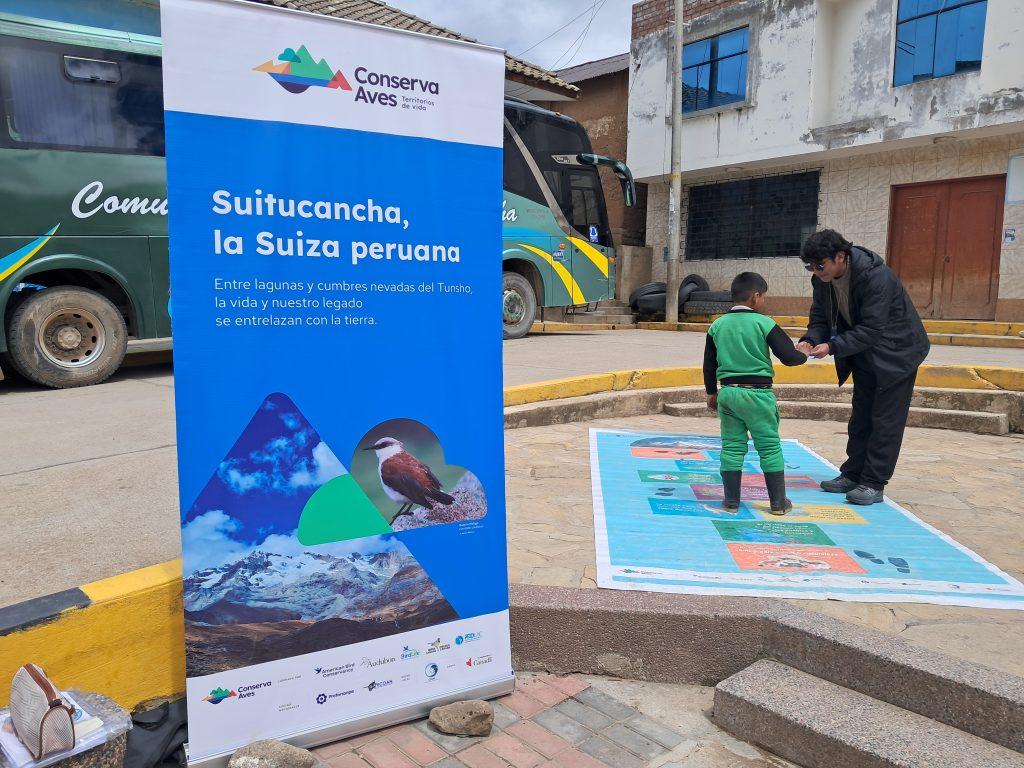
The Rural Community of Suitucancha has begun a process of recognition and revaluation of the White-bellied Waterhen (Cinclodes palliatus), known locally as “Huaca Pishjo”. This species, little known and valued by many, plays a vital role in the conservation of high Andean wetlands. Its delicate situation, classified as Critically Endangered according to the IUCN Red List of Threatened Species 2025, and recorded only in a few locations in the central Andes, including Suitucancha, reinforces the importance of its protection.
Community dialogue and intergenerational learning
In this context, the perceptions of the local community regarding the value of Huaca Pishjo and ways to protect its habitat are being gathered. With technical support from Conservación e Investigación Ambiental (CIAM), the initiative promotes community dialogue through educational materials, observation outings, and intergenerational spaces in schools and community meetings. These actions seek to strengthen local knowledge about the species, its relationship with wetlands and water, and promote sustainable conservation practices.
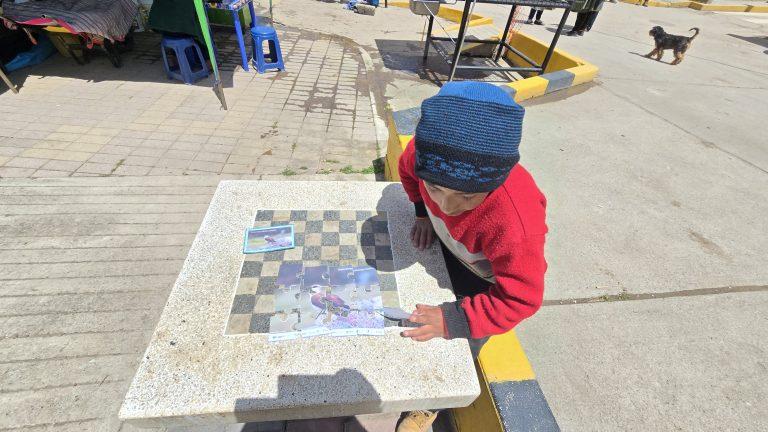
Children from Suitucancha discover the “Huaca Pishjo” through educational games – © CIAM
Through workshops and observation outings, children, youth, and adults in the community learn to identify the “Huaca Pishjo” in wetlands and streams, recognizing its link to water, the high Andean landscapes, and the livestock that sustain their livelihoods.
“We are rediscovering ‘Huaca Pishjo’. Many of us are learning about it now and understanding its true importance. This process unites us in caring for its habitats and, in doing so, protecting our water,” said the community team behind the initiative.
Towards the establishment of the Nevado de Tunsho Private Conservation Area
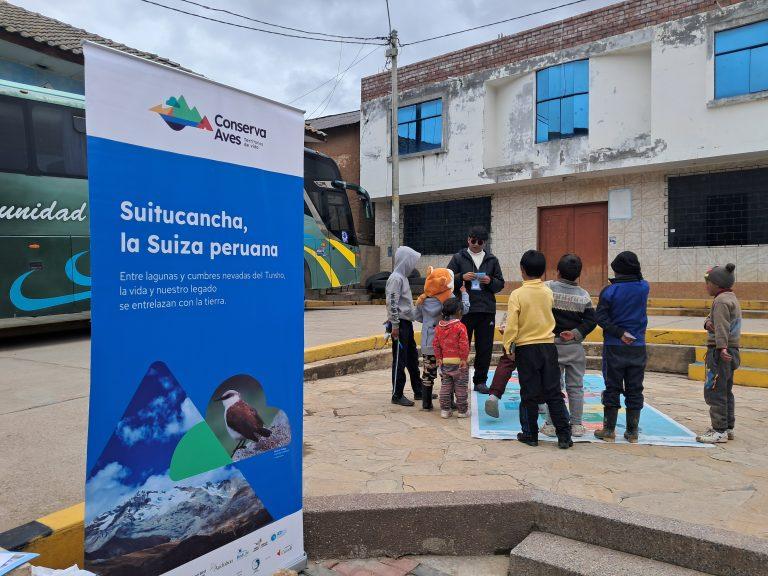
Games about the “Huaca Pishjo” help children in Suitucancha learn – © CIAM
With the support of the Conserva Aves Initiative and the leadership of the Suitucancha community and CIAM, as well as the support of Profonanpe and Ecoan, key actions are being promoted to recognize the Nevado de Tunsho Private Conservation Area (ACP) and promote participatory community management. The project seeks to consolidate a community conservation model with a gender and intercultural focus through biological monitoring of birds and strengthening local capacities. In the coming weeks, birdwatching and participatory recording sessions, habitat mapping, and awareness-raising activities in schools will continue, in parallel with the preparation of the application for recognition by SERNANP.