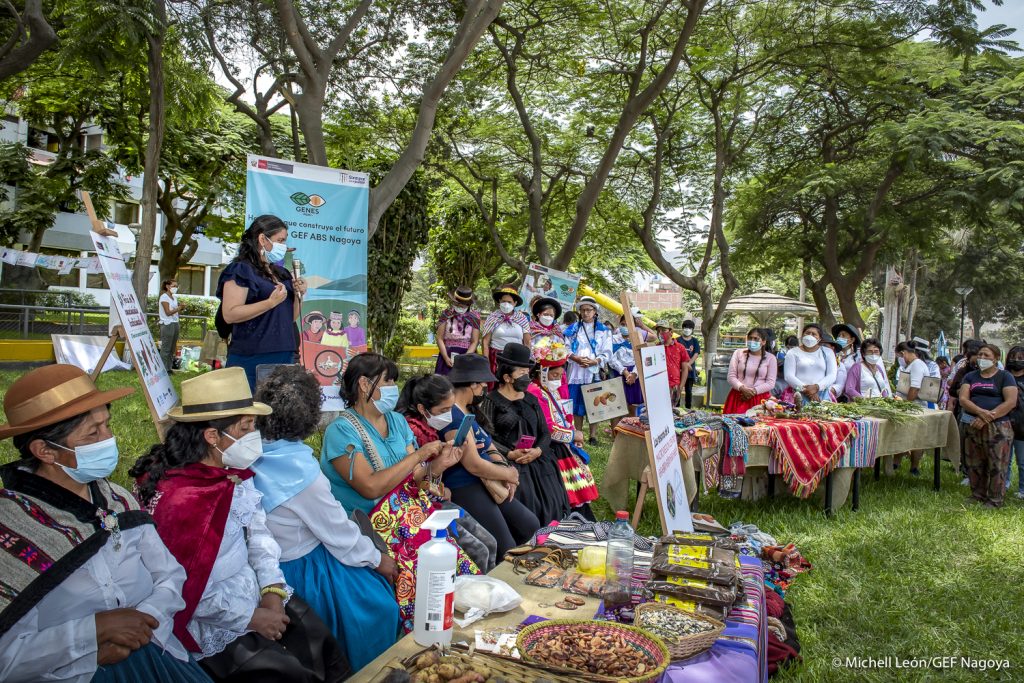
Karina Ramírez, national coordinator of the GEF ABS Nagoya Project, speaking to attendees of the fair.
On March 4th and 5th, the "Treasures of Biodiversity" fair was held, where each participant demonstrated the importance of passing on their understanding of biodiversity conservation to future generations for the benefit of human well-being in the country. The fair also highlighted the role of women in the conservation, transmission, and preservation of traditional knowledge related to the sustainable use of biodiversity. An example of this is the valuable knowledge about the use of medicinal plants that the indigenous peoples of our country have passed down from generation to generation.
Vilma Ucharico explaining the medicinal plants she works with.
Traditional knowledge, developed from experience
Hilaria Huamán, from the city of Urubamba, Cusco, told the group of women that, “between February and March, the rainy season, the women of my community organize ourselves to collect the panti flower (from the Quechua word 'panty') from the highlands. It only blooms at this time of year, so we gather some flowers and dry them to use throughout the year, as it relieves colds, the flu, and stomach aches caused by the cold at high altitudes.« These are acquired customs passed down from generation to generation, practices so ancient »even dating back to the time of the Incas,» Hilaria affirms.
Vilma Ucharico, originally from the city of Llave in Puno, explained that she was motivated to learn about medicinal plants from a young age. “It was necessary because I had to help my mother, who suffered from a serious illness,» she said. Today, at 22, she knows a great deal about plants and has become her family's doctor, as everyone consults her. Seemingly shy, Vilma's face lights up when she holds the bundle of plants in her hands, and with great confidence, she describes each of their properties, from where they grow to how they are used in her community to alleviate certain ailments.
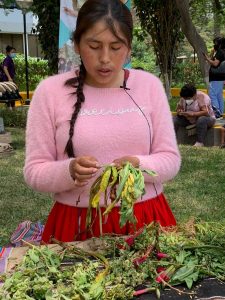
Vilma Ucharico
This initiative was spearheaded by the GEF-ABS-Nagoya Project in conjunction with the National Federation of Peasant, Artisan, Indigenous, Native, and Wage-Earning Women of Peru (FENMUCARINAP). Indecopi also participated, providing important information on the Intercultural Guides developed under Law 27811 as a tool for protecting traditional knowledge.
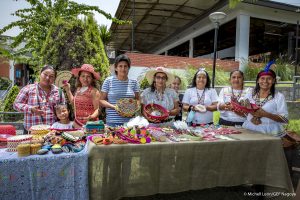
Exhibitors at the fair
About the GEF-ABS-Nagoya Project:
The project aims to strengthen national capacities for the effective implementation of access to genetic resources (AGR) and traditional knowledge (TK) regimes in accordance with the Nagoya Protocol, and to contribute to biodiversity conservation and human well-being in the country. This project is being implemented by the Ministry of the Environment with resources from the Global Environment Facility (GEF) and has Profonanpe, Peru's environmental fund, as a strategic partner.