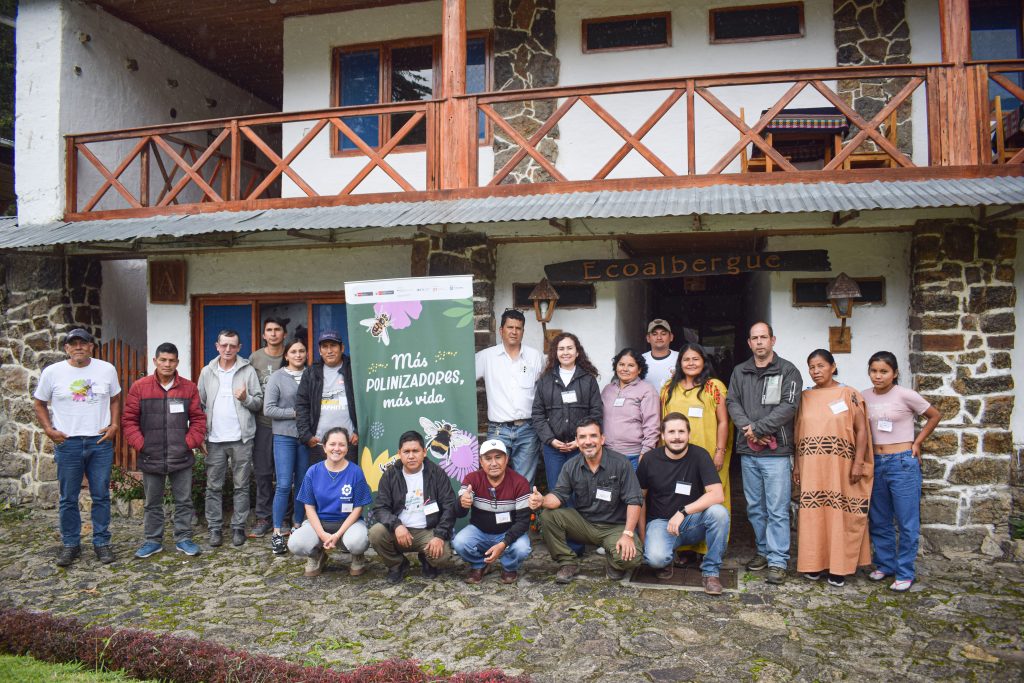
With the aim of strengthening the protection of native stingless bees and other pollinating insects, the Poli-LAC project developed the first workshop on meliponiculture in the Oxapampa-Asháninka-Yánesha Biosphere Reserve (BIOAY). This activity trained 20 key actors in the territory, including representatives of the Biosphere Reserve Management, native communities, Sernanp park rangers, beekeepers, and local producers.
During the workshop held at the Yanachaga Center (Huancabamba), participants learned to identify native bee species such as the “girl or boy bee” (Tetragonisca angustula) and the “curco bee” (Melipona eburnea), as well as basic techniques for their management and protection. Among the topics covered were the creation of a floral calendar, the preparation of attractants for responsible capture, the construction of rational boxes, and practical pest control techniques, always with a focus on respect for the ecosystem.
Carlos Maldonado, a meliponiculture instructor and workshop trainer, emphasized the importance of reevaluating these species. “Bees are very important in the ecosystem because they are pollinators par excellence. Thanks to them and other pollinators, our crops and forests are maintained,” he said.
He also pointed out that melipona bees play a key role in ecosystems and are currently threatened by deforestation, climate change, and the irresponsible use of agrochemicals. Added to this is the value of their honey, recognized for its medicinal properties, which represents an opportunity for sustainable economic development at the local level.
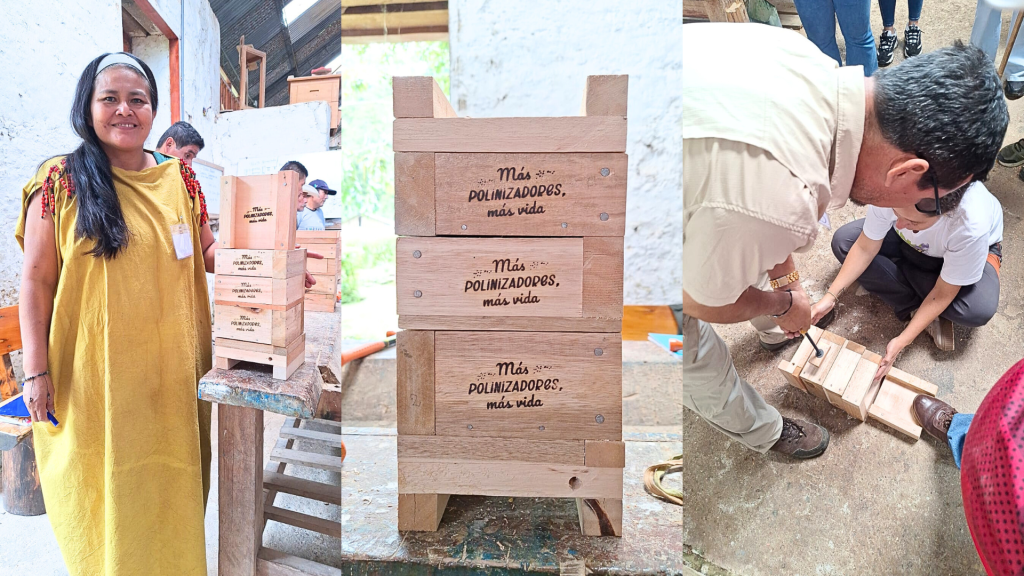
Making a rational box for breeding native bees. Photo: Profonanpe
“Within our Biosphere Reserve, pollinators such as our native bees, flies, beetles, and other insects are key to sustaining production chains. Knowing and valuing them is essential,” said Flor Sánchez, manager of BIOAY.
Participants were selected with the aim of becoming replicators of the knowledge acquired, promoting meliponiculture as a sustainable practice and ally of conservation.
In this regard, Gladis Shareva, head of the Belén Native Community, highlighted the importance of the workshop for her community, where native bees are disappearing. “These spaces allow us to learn how to protect them and share that knowledge with children and families, who still know little about pollinating insects,” she said, emphasizing the importance of training to strengthen bee care in their territory.
In Peru, 175 species of native stingless bees have been reported. The protection of these species and other pollinating insects is key to maintaining the balance of ecosystems, food production, and the well-being of local communities.
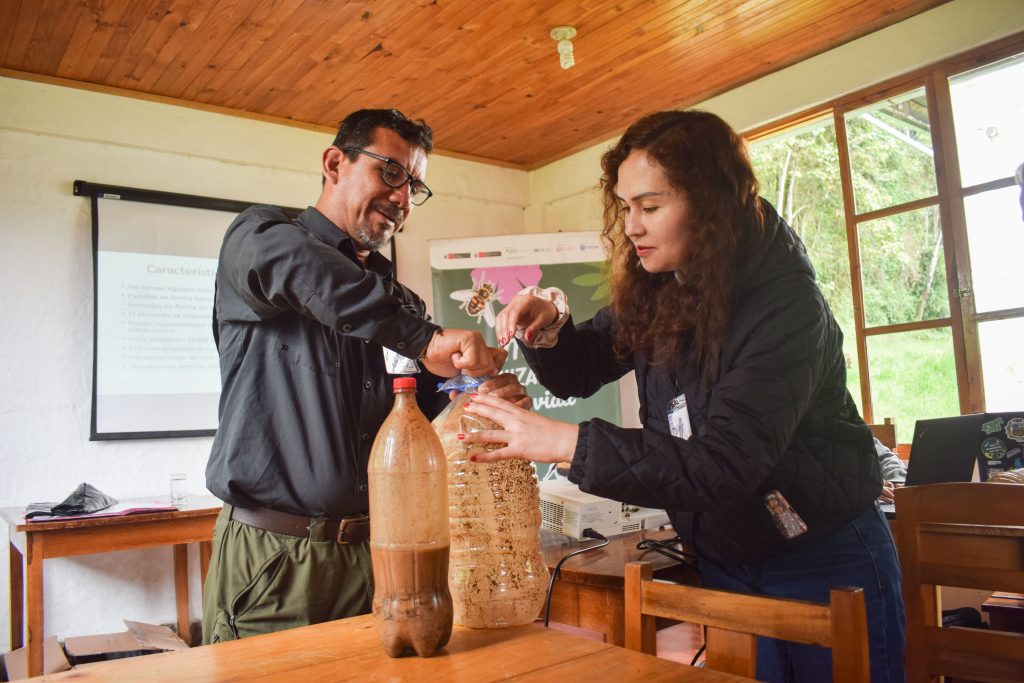
Preparation of attractant for native bees. Photo: Profonanpe
About Poli-LAC
In Peru, the regional project “Protection of Pollinating Insects in Latin America and the Caribbean (Poli-LAC)” is a joint effort by the Ministry of the Environment and the Ministry of Agricultural Development and Irrigation, in partnership with Profonanpe, with the support of German development cooperation, implemented by GIZ on behalf of the German Federal Government’s International Climate Initiative (IKI).