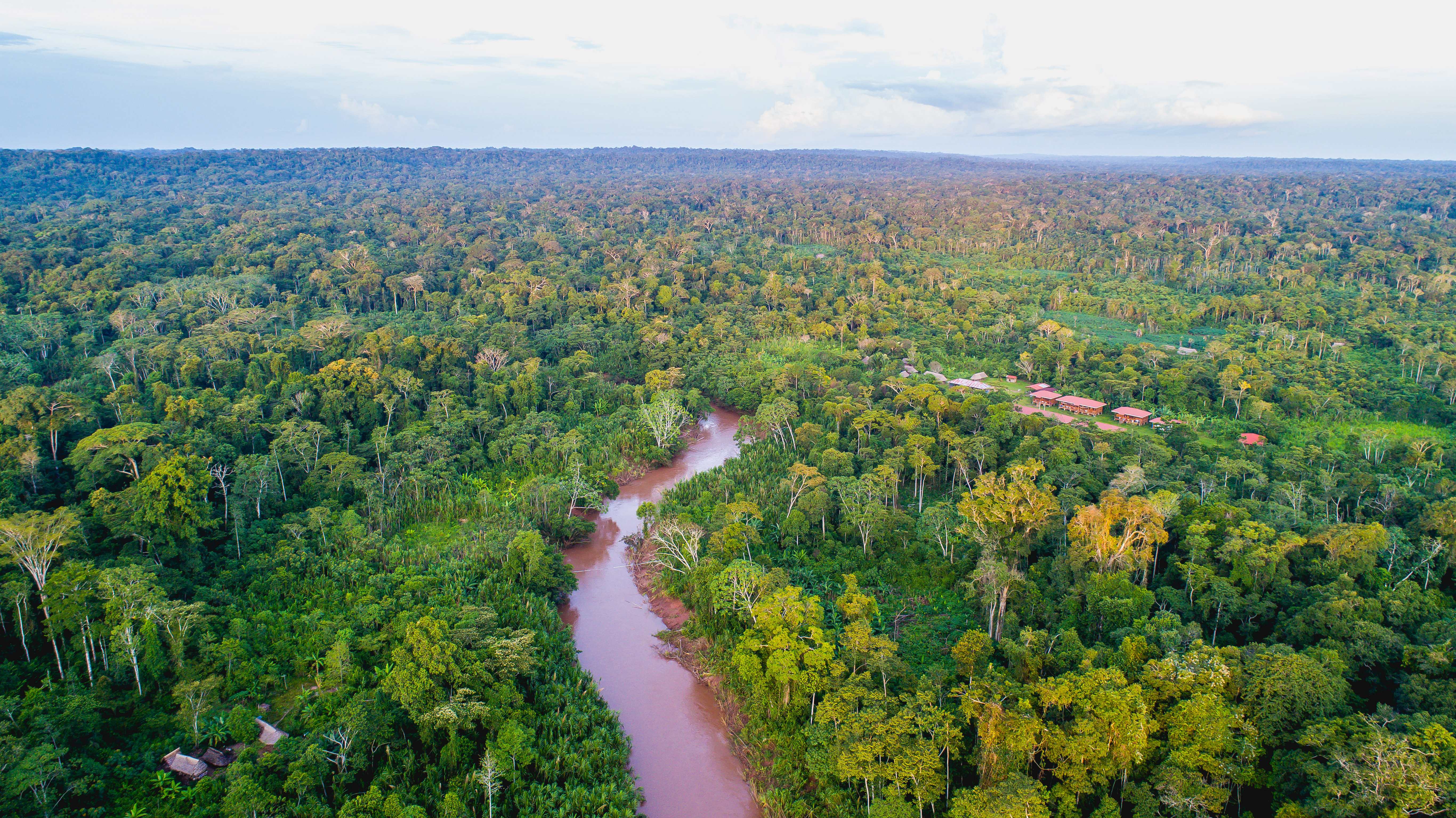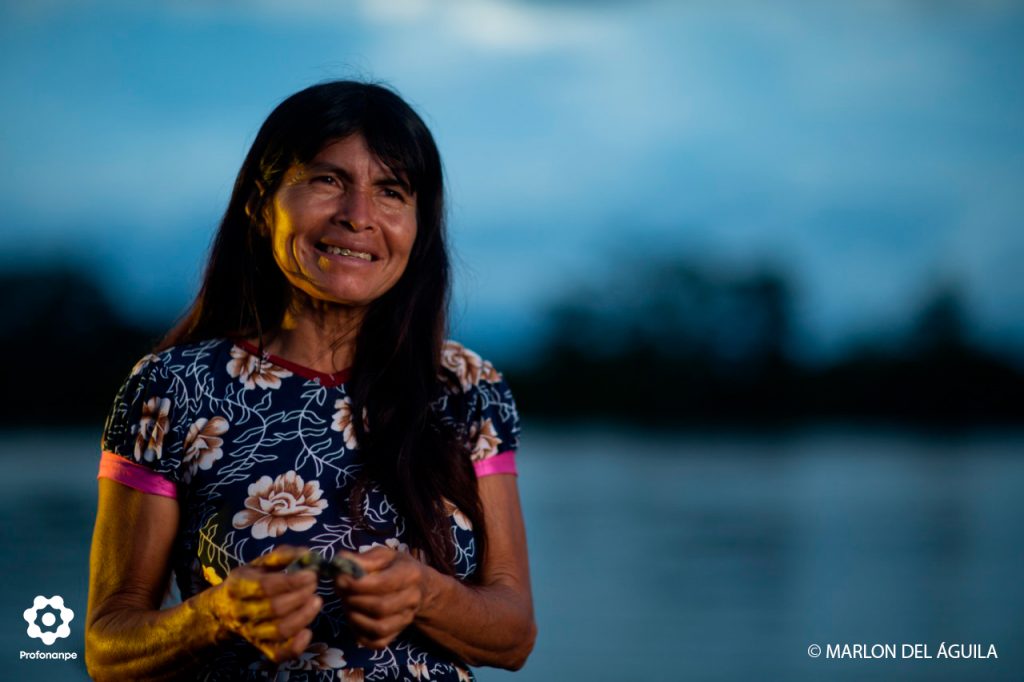
On a long and wonderful trip to the Datem del Marañón province, we found Balbina Sundi Akumbari, a leading woman in the Kandozi ethnic group, has been directing the taricaya turtle conservation project at Lake Rimachi, now Lake Musa Karusha, for the past eight years.. Together with a group of about 15 women, they are carrying out repopulation activities and selling taricaya turtle eggs. Currently, the Datem del Marañón Wetlands project, led by Profonanpe with support from the Green Climate Fund, is working on a taricaya turtle management plan, which is expected to be approved by the Regional Government of Loreto.
Balbina's work inspires other ethnic groups and women in the surrounding areas, who see her as a role model for the development of bio-businesses, in which the climate change agenda and the gender agenda converge. There are high expectations that Balbina can expand her knowledge and share it with other ethnic groups to generate sustainable collective financing mechanisms.
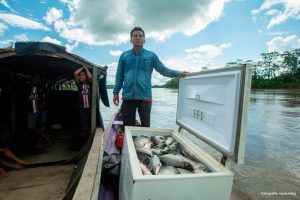
Gunter Yandari Hernando, like Balbina, also belongs to the Kandozi ethnic group and lives in the Musa Karusha community. At Lake Rimachi, they fish and then take the gutted fish back to the community. Once there, the men and women salt the fish and then dry it in the sun. Once dry, it is packaged and sold in Tarapoto and throughout the Amazon, where it is very popular. In addition to this artisanal technique, Gunter has taken charge of marketing fresh artisanal fish, which also involves bringing ice from Yurimaguas to maintain the cold chain. To expedite and facilitate this chain, Profonanpe has implemented two ice plants, which aim to produce ice in the same community using solar energy provided by 120 photovoltaic panels.. A unique sustainable model in the Peruvian Amazon, soon ready to begin operations.
The stories of Balbina and Gunter are representative of the scale of the projects being developed in the Amazon, projects with great prospects for short- and long-term growth. Although they may not be as visible, Bio-businesses are essential for the development of communities in particular, and of the country in general, as they are bastions of the sustainable use of our resources and the conservation of our biodiversity, which ensures that these will not run out in the future.
With that as a preamble, what would be the next step? Broadly speaking, more investment from development partners and technical support are still needed for existing bio-businesses, but it is also essential to foster the emergence and management of other initiatives that can be integrated into national production chains with the appropriate guidance. Much remains to be done, and many stories remain to be told.