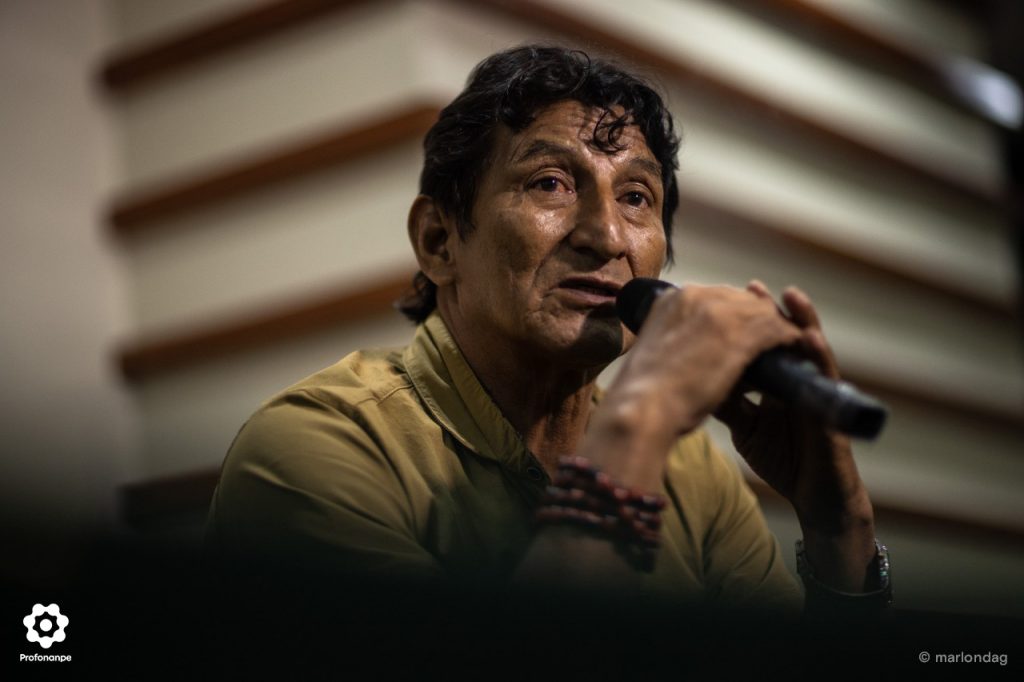
Apu Alfonso López, President of ACODECOSPAT
July 2021. – During the international event Peru Remedia, the Ministry of Energy and Mines (MINEM) revealed that Peru currently has 3,231 environmental liabilities generated by hydrocarbons, 152 of which are considered high-risk. According to MINEM, the lack of regulation between 1863, the year of the first oil exploitation in the country, and 1993 is one of the main causes of this problem, which is affecting communities in Loreto, Piura, Tumbes, and Puno.
The event, organized by Profonanpe, Peru's environmental fund, served as a forum to strengthen ties with native communities in the Peruvian Amazon affected by these environmental liabilities, as well as to reflect on and learn from international experiences in remediating areas impacted by hydrocarbons. This was done with a view to the rehabilitation process that Profonanpe is implementing within the framework of the Environmental Remediation Contingency Fund.
Apu Aurelio Chino, President of FEDIQUEP
In their speeches, the representatives of the indigenous communities of the Pastaza, Corrientes, Tigre and Marañón river basins in the Loreto region took the opportunity to mention the serious health problems that the citizens of these areas have been experiencing due to environmental liabilities. “Years of oil exploitation and no government in our country, no minister, no institution has bothered to defend our rights as any other human being,” stated Apu Aurelio Chino, president of the Quechua Indigenous Federation of the Pastaza (FEDIQUEP). In that regard, Apu Alfonso López, president of the Cocama Association for Development and Conservation of San Pablo de Tipishca (ACODECOSPAT), called for an «intercultural interpretation» of the term remediation to «meet the expectations of Indigenous peoples» and urged the authorities to implement clear regulations that allow the Profonanpe project to move forward.
Likewise, Apu Omar Saquiray, president of the Federation of Native Communities of the Corrientes River Basin (FECONACOR), recounted how the Indigenous peoples of the area used to “live healthy lives and had no problems or ailments»; however, today, due to hydrocarbon exploitation, «those of us who live in this area have lead in our blood.» Consequently, Apu Maguen Majipo, vice president of the Federation of Native Communities of the Upper Tigre (FECONAT), insisted that the process move forward more quickly. «The expectation is that we will see effective remediation in the future and that the companies will provide us with the technology to carry it out,» he noted.
Robinson Sandi, Representative of OPIKAFPE
Anton Willems, CEO of Profonanpe, emphasized the importance of this event, which allowed attendees to continue listening to the communities. “It is so important to learn from the communities who, working in the fields every day, know better than anyone the impact of hydrocarbons. Their support is crucial to ensuring that conservation efforts continue,” he stated. «At Profonanpe, we know we have work to do, but it’s also important to recognize the significant progress made in terms of the State’s and various sectors» concern. This focus on effectively remediating impacted sites is the way forward,” Willems added.
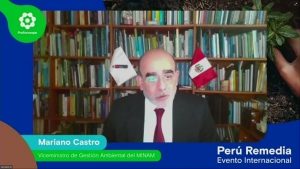
The Vice Minister of Environmental Management of MINAM, Mariano Castro, highlighted that to the extent that remediation processes are successful, the citizens of the affected areas will have the possibility of developing in a balanced environment; however, he indicated that to achieve this, political will, the allocation of resources and the identification of good practices are important.
For his part, the head of the Ministry of Energy and Mines (MINEM), Jaime Gálvez, valued the alliance of his portfolio with Profonanpe, the environmental fund of Peru, to work together for the remediation of sites impacted by hydrocarbons. «All countries in the world are in the process of energy transition; however, it will not be quick because replacing hydrocarbons is not easy. We have had insufficient environmental controls. The alliance with Profonanpe allows us to remediate sites impacted by hydrocarbons and areas of the jungle that have not received adequate environmental treatment,» Gálvez stated in his address.
Likewise, Venezuelan remediation expert Carmen Infante shared some of the South American country's success stories and emphasized to event attendees the importance of continuing to work for the benefit of the ecosystem. "It is important to restore the health of the damaged rainforest soil and thus recover the ecosystem, which entails rebuilding its ecosystemic spaces," she noted.
Among other points addressed at Peru Remedia, the invited international experts agreed that remediation requires constant studies, pilot projects, and compliance with standards, and that technology can be a great ally, depending on the ecosystem, as long as there is persistence in learning, adaptation, and—above all—community consent for its implementation.