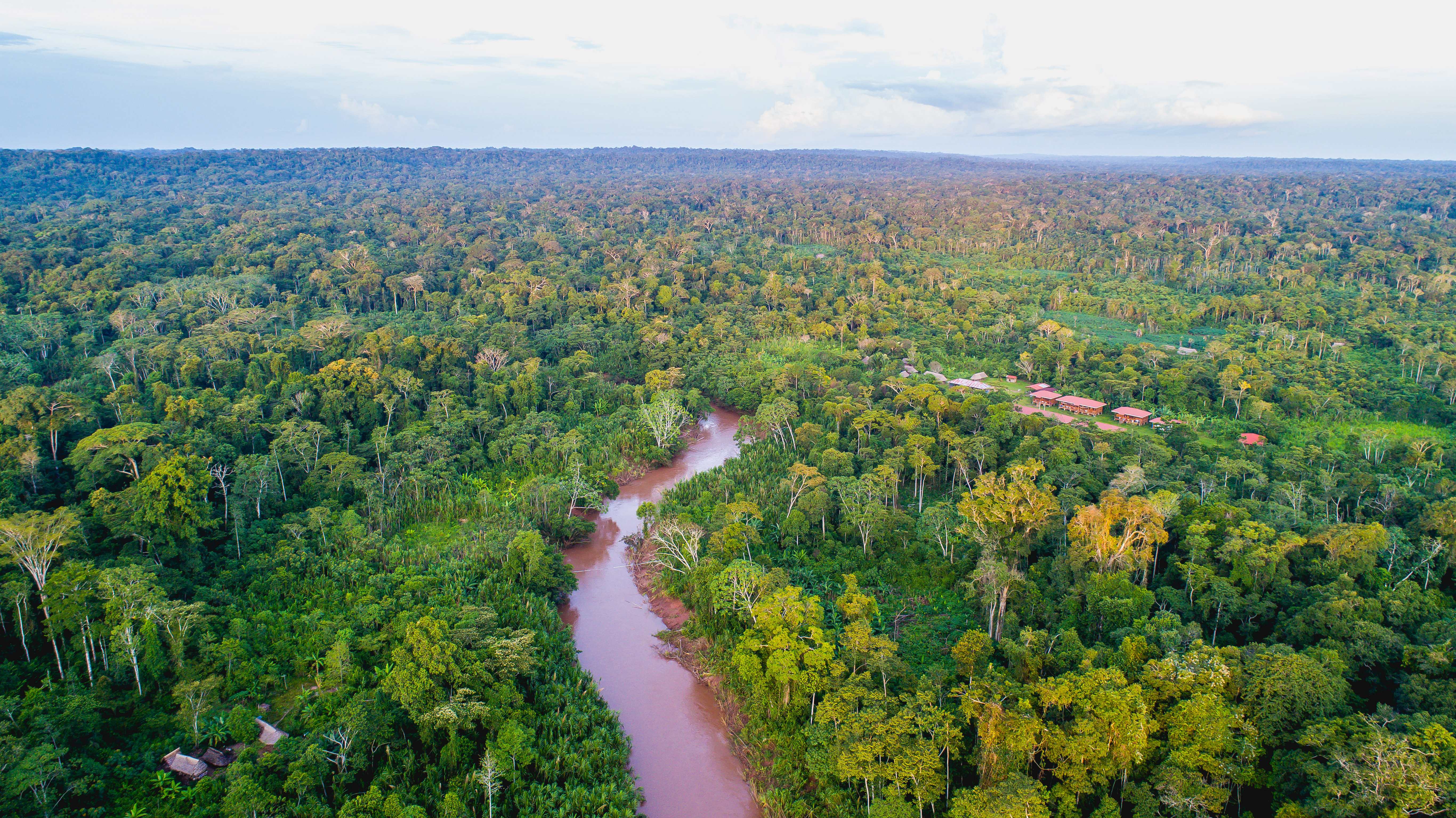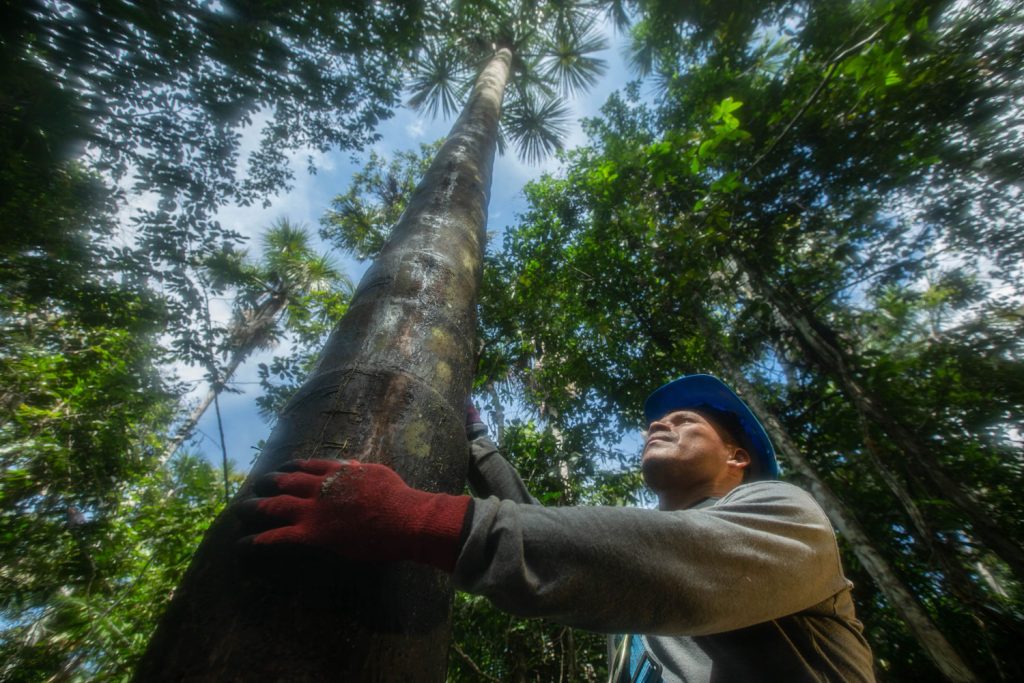
The aguaje palm (Maurita flexuosa) is one of the predominant species in the Amazon. The wetlands it forms, with its tall trunks and deep roots, retain large quantities of water, which it releases gradually, regulating the region's hydrological cycle. These palm swamps harbor a unique and complex fauna, whose mammals and birds feed, for the most part, directly on its fruit. The water released by the roots carries nutrients that allow for the metabolism of the water bodies and the development of fish. Thus, a single species plays a fundamental role in the structure of the forests throughout the Amazon biome.
However, despite their importance, the aguaje palm groves are at risk due to improper harvesting of their fruit. To understand the problem, it is necessary to know two things. First, aguaje palms are dioecious plants, meaning that their population includes both male and female specimens, and the balance between the sexes is essential for their reproduction: the females produce fruit after being pollinated.
Second, their height must be considered: palm trees can reach up to 35 meters in length, so felling them is the easiest way to extract their berries. With an axe or a chainsaw, it's possible to cut down between 50 and 100 palm trees a day, which is convenient for immediate harvesting, but profoundly detrimental to the sustainability of the ecosystem: the "felling of female trees" leaves behind barren forests that cannot regenerate. This drastically alters the quality of water sources, affects the habitat of native fauna, and severely restricts their reproductive cycle. However, this is not all.
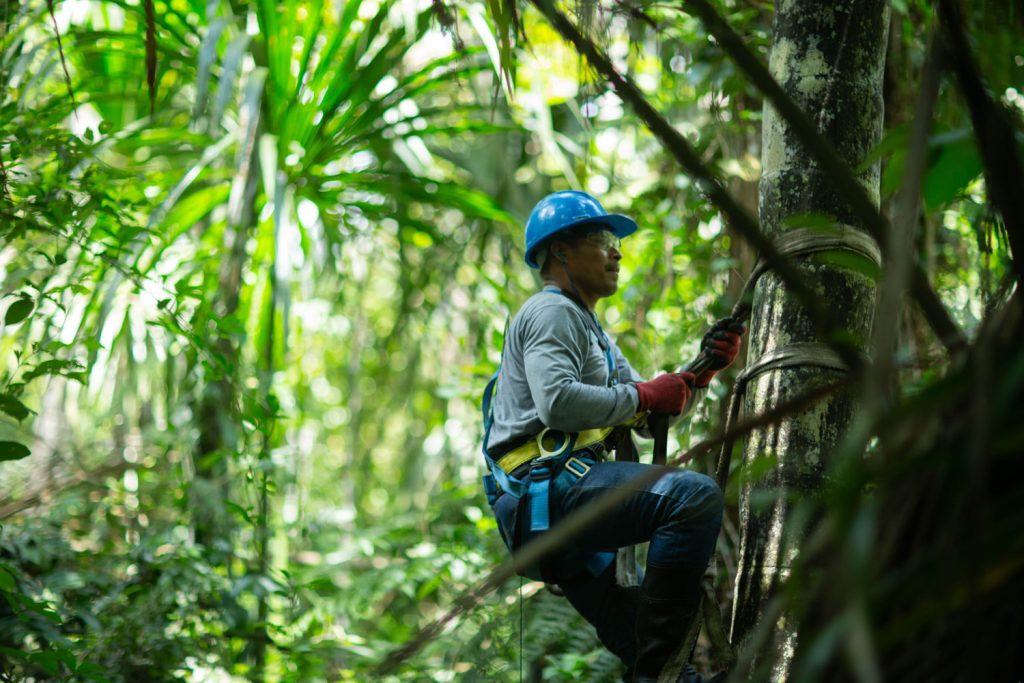
Segundo Chanchari is a technician specializing in the cultivation of aguaje palm trees and a trainer in local communities. He promotes the sustainable use of the aguaje palm fruit.
The organic soils of the aguajales (swamp forests) also store a large amount of carbon. The palm trees remove gases from the atmosphere and store them in the swampy soil, helping to regulate the planet's climate. In the Pastaza Fan, a vast complex of aguajales and floodplains located in the provinces of Datem del Marañón, Alto Amazonas, and Loreto, the carbon deposits represent the equivalent of the last 60 years of greenhouse gas emissions produced by human activities in Peru. Therefore, if we want to avoid climate catastrophe, these types of wetlands must be conserved to prevent the carbon accumulated over thousands of years from being released back into the atmosphere.
But the felling of females It's not just bad for the environment. According to researchers at the Institute of Amazonian Research of Peru (IIAP), in Loreto alone, 1,400 hectares of aguajales (palm swamps) are lost each year, seriously impacting the resource's productivity. Based on controlled observation, the researchers found that after five years of unsustainable harvesting, the number of productive palm trees decreases from 66 to 29 per hectare, representing a reduction from 132 sacks of fruit in the first year to 61 in the fifth. In other words, productivity decreases by more than 50% in the short term, with an exponentially negative trend in the medium and long term. The current situation is unsustainable.
What to do? Act immediately, establishing effective management plans for the palm swamps and implementing monitoring technologies by the authorities. Above all, it is crucial to change the extraction method: the proper way to obtain the fruit is by climbing the palm, which guarantees a harvesting cycle of between 40 and 50 years and the continuity of the ecosystem. This requires a significant shift in attitudes among the producing communities, intermediaries, and end consumers. It also involves investing resources: safe climbing equipment is expensive, and it is urgent to create synergies between the public and private sectors to achieve effective changes.
For over 10 years, Profonanpe, Peru's private environmental fund, and the National Service of Natural Protected Areas (SERNANP) have joined forces with communities in the Pacaya Samiria National Park to promote the sustainable harvesting of aguaje palm fruit using climbing technology. In recent years, following the participatory development of management plans, native communities in the Datem del Marañón region have begun a similar process. In the Kichwa community of Puerto Díaz, for example, the Chanchari family uses equipment that allows them to climb between 20 and 30 palm trees per day, and its members play an active role in changing practices. Segundo Chanchari, former president of the community, is dedicated to convincing neighboring communities of the importance of climbing palm trees instead of cutting them down. We must follow his example and convince the country of the urgency of this task.