Author: Adaptation Fund
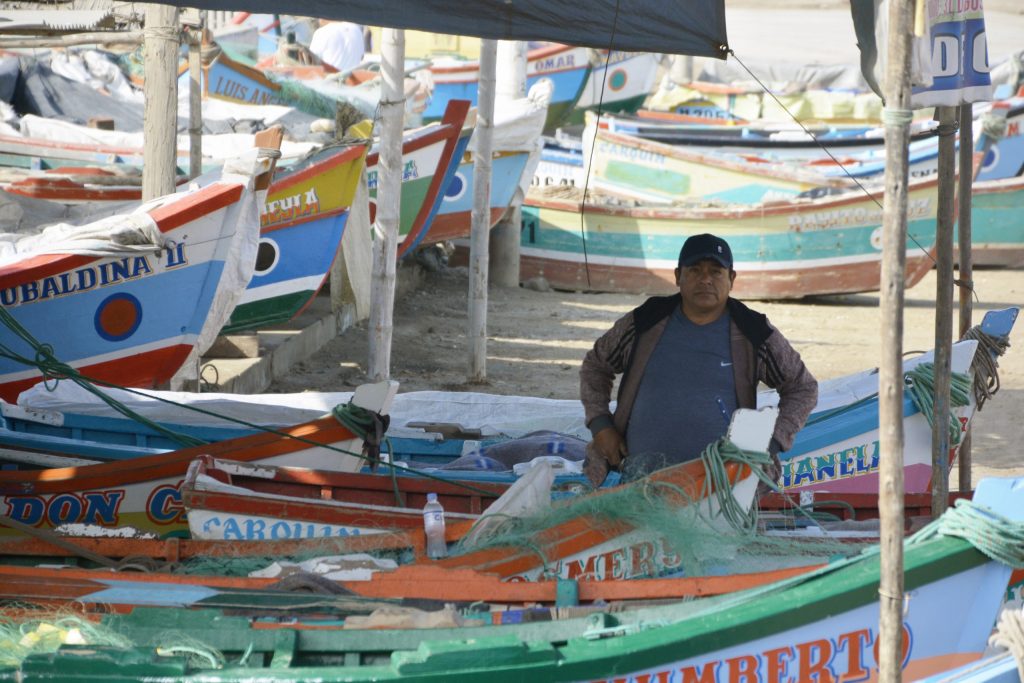
Peru has one of the world's most productive fishing grounds, thanks to its nutrient-rich waters. A large part of the sector is comprised of local artisanal fishers, most of whom live in poverty despite providing the primary source of food for many coastal residents.
However, changes are taking place. Through an innovative project funded by the Adaptation Fund and implemented by Profonanpe (Peru's Environmental Fund) and the Peruvian government (Institute of the Sea and Ministry of Production), small fishing communities on the northern and southern coasts are increasing their resilience to climate threats by adopting sustainable fishing practices, diversifying livelihoods, and improving food security and seafood quality, while restoring the natural marine ecosystems on which they depend and increasing their incomes.
The $7 million project, which began in May 2018, focuses on directly reducing the vulnerabilities of 500 fishermen in the coves of Máncora-Piura, El Ñuro, Los Órganos, and Cabo Blanco in the north, and 200 fishermen in the coves of Végueta and Carquín and the fishing port of Huacho-Lima in the south; at the same time, it will indirectly benefit thousands more people. “With effort, dedication, and care, you can achieve what you set out to do. And, with this project underway, the results will be much better. I would say it is working well and that we must continue,” stated Marcelino Gonzales, a member of the El Ñuro Artisanal Fishermen's Guild in Máncora, who has been able to sell products directly and participate in fishing fairs thanks to the project. For several years, he and other fishermen had had to market their products through multiple intermediaries.
Other measures of the project include improving employment in the fish processing stage, access to international markets through sustainable fisheries certifications, resource management and recovery of depleted species, the use of sustainable fishing gear (such as longlines, which reduce the capture of other species and fuel costs) and the diversification of aquaculture (such as the cultivation of scallops and clams in fishing cooperatives).
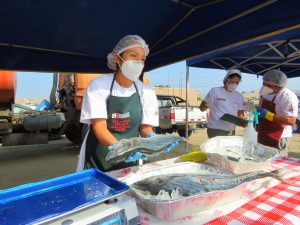
The project also aims to contribute to gender equality, as many women benefit from the creation of alternative livelihoods in ecotourism and the production of biofertilizers for fisheries, and obtain better prices when marketing their products. Luz María Jacinto and Josefa Ruiz, who sell fresh fish in Máncora, gained more experience marketing their products through the project. “We are gaining more experience, learning more. We feel like a family, because we have developed a friendship, more trust. We are like sisters because we support each other,” said Josefa.
Adapting to the COVID-19 pandemic
The COVID-19 pandemic disrupted many project activities, including the implementation of some local measures on the ground, but efforts to support fishing families affected by the situation were increased.
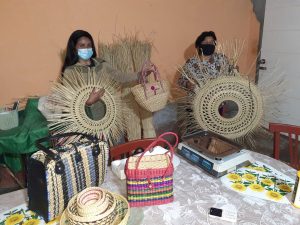
A women's association in Lima has successfully opened new channels to promote their handicrafts more widely, generating increased income. “We have relied on the project's support to continue developing our work during these challenging times. They provided us with all the necessary sanitary equipment to keep producing reed fiber,” said Yolanda Osorio, a member of the Medio Mundo Women Artisans Association in Huaura, which promotes women's empowerment through handicrafts. “Through the project, we created an online store. For now, it's the only way we can offer our products. This has allowed us to gain greater national recognition.”.
Before the pandemic began, studies were conducted to prepare climate vulnerability assessments of marine ecosystems and fisheries resources, and workshops were held with artisanal fishers at the pilot sites of Máncora and Huacho. When the health emergency began in March 2020, the fishing communities in these areas were severely affected because they were among the most vulnerable socioeconomic sectors due to environmental variability, climate change, and the negative economic impacts caused by pandemic restrictions.
The project continues to function well for its beneficiaries and in compliance with all health regulations and protocols. “2021 marks the beginning of the final phase of the project, with the consolidation of interventions at the pilot sites to improve the resilience of coastal communities, and this will contribute to the economic recovery of artisanal fishing communities affected by COVID-19,” said José Zavala, project coordinator.
Fishers in other areas of the country are also expected to benefit from the project through knowledge sharing. Project components with potential for expansion include: improvements in marketing and traceability in fisheries and aquaculture, management of natural fish stocks, fishery bioproducts, tourism, participatory environmental monitoring, and systems for
early warning.