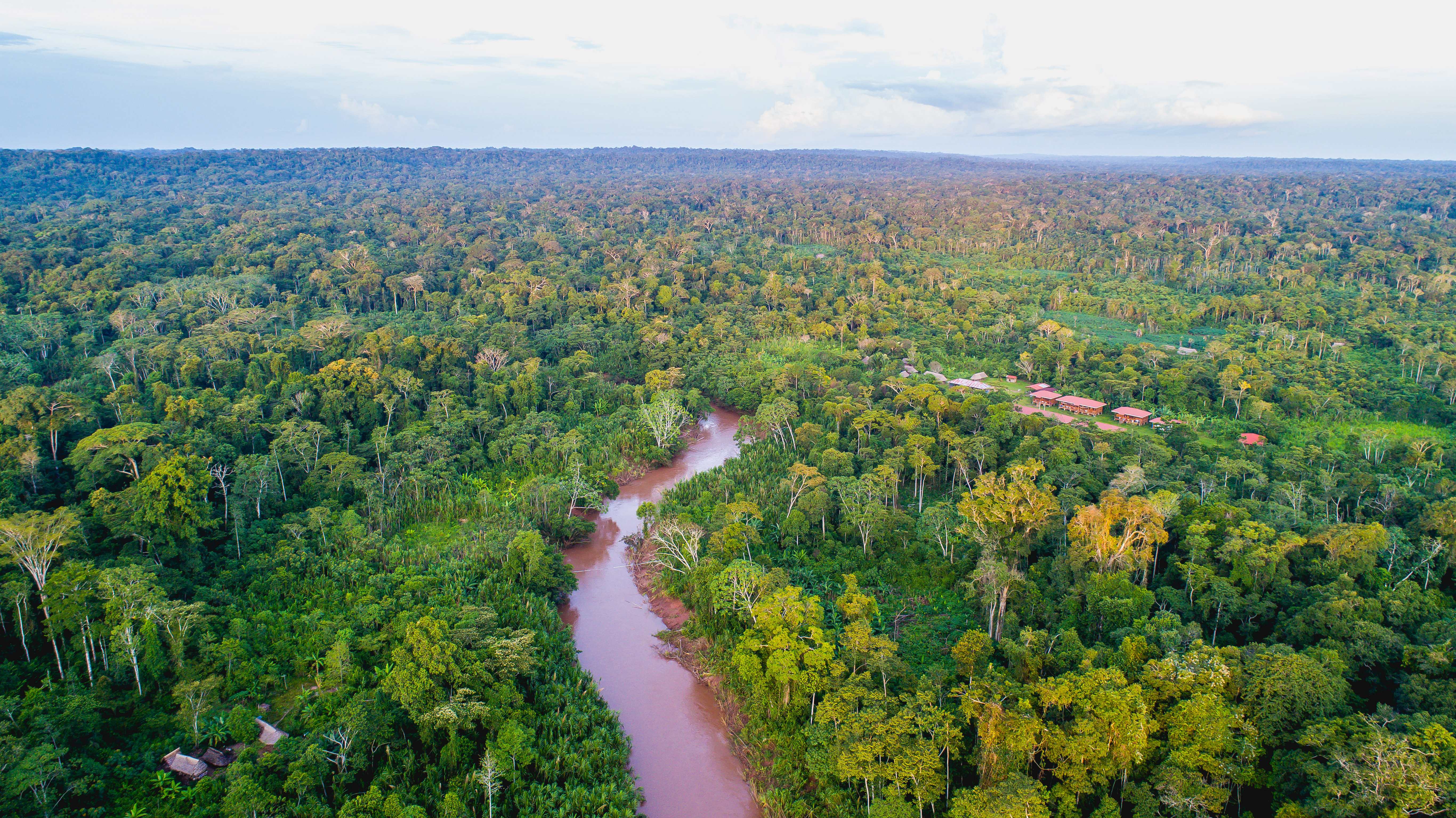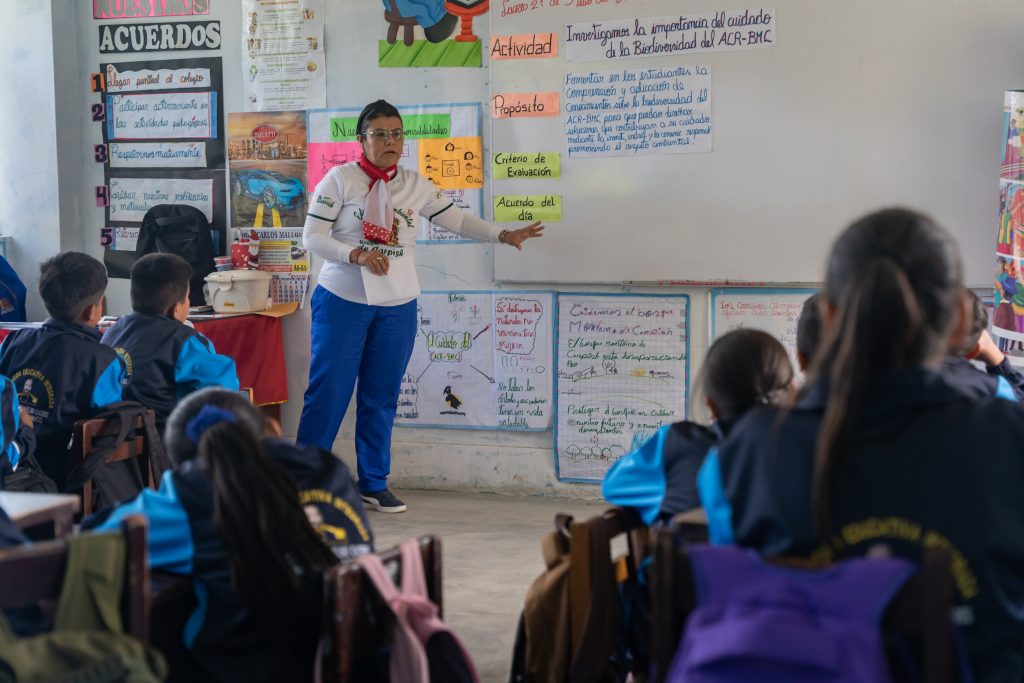
Within the Carpish Montane Forest Regional Conservation Area (RCA) in Huánuco, conservation is integrated into the school curriculum. Through the implementation of an environmental education plan aligned with the national diversified curriculum for Huánuco, 15 educational institutions within the RCA's area of influence have incorporated forest-related content into their lessons. As a result, more than 1,300 students are learning about biodiversity, water and air conservation, and sustainable practices in their communities.
“The biodiversity of the Carpish Montane Forest Reserve is taught in the school curriculum, including the number of species in math classes, for example. Students write poems in honor of the reserve, our natural resources, our rivers, streams, and lagoons, our endemic birds, and our spectacled bear,” explains Luis Augusto Garrido, head of the Carpish Montane Forest Reserve. This work is carried out with support from the Joint Declaration of Intent (JDI) Financial Mechanism, which supports the effective management of the reserve.
Furthermore, the learning acquired by students in the classroom is also being transferred to their homes: “Environmental education is being provided by teachers to students, but also by children to their parents.” In this way, a community is being created that is increasingly aware of environmental care, with children and adolescents as protagonists of change.
A proposal integrated into the school curriculum
Environmental education specialist Mayela Morales Villarreal, who leads the implementation of the plan, points out that the objective is for students to have knowledge about environmental education from a close and everyday perspective.
“What has been achieved to date is that the 15 educational institutions incorporate environmental education linked to the ACR into their annual work plan with the thematic axes: care of the environment, the biodiversity of Carpish, care of water and air and; finally, ”Environmental practices,” he explains. This is addressed in a coordinated way across areas such as science, communication, mathematics, art, and even English, at all educational levels.
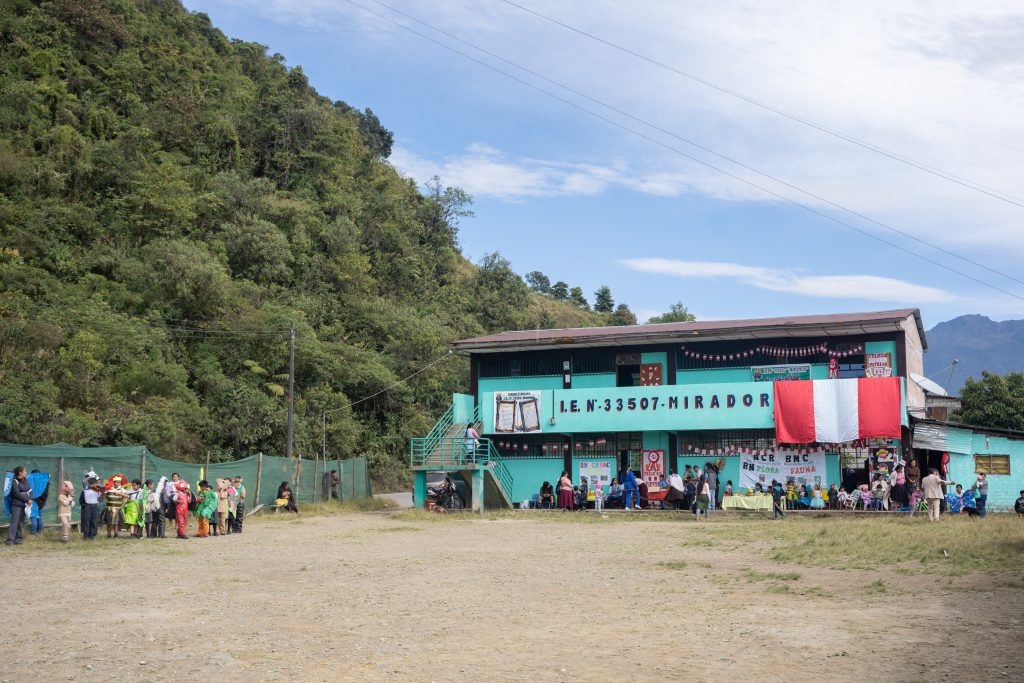
Educational Institution No. 33507 Mirador – Chinchao, one of the 15 schools implementing the environmental plan. (Photo: Profonanpe)
Morales emphasizes that this experience of connecting the community with conservation areas near their surroundings is pioneering in the country: “This activity is not prioritized in the national curriculum; it is only addressed in a general way as environmental education. But when the plan, guidelines, and intervention were presented to the Regional Directorate of Education, it was accepted as a capacity-building process in the selected communities.”.
Teachers committed to the territory
In educational institutions, the enthusiasm of the educational community is evident. Belda Reyes Jáuregui, director of IE 33507 in the El Mirador community, emphasizes: “We feel very committed to working from the classroom. Today, we are more involved and more committed from the educational institutions, and we are working with the environmental approach in a cross-curricular way across all subject areas.”.
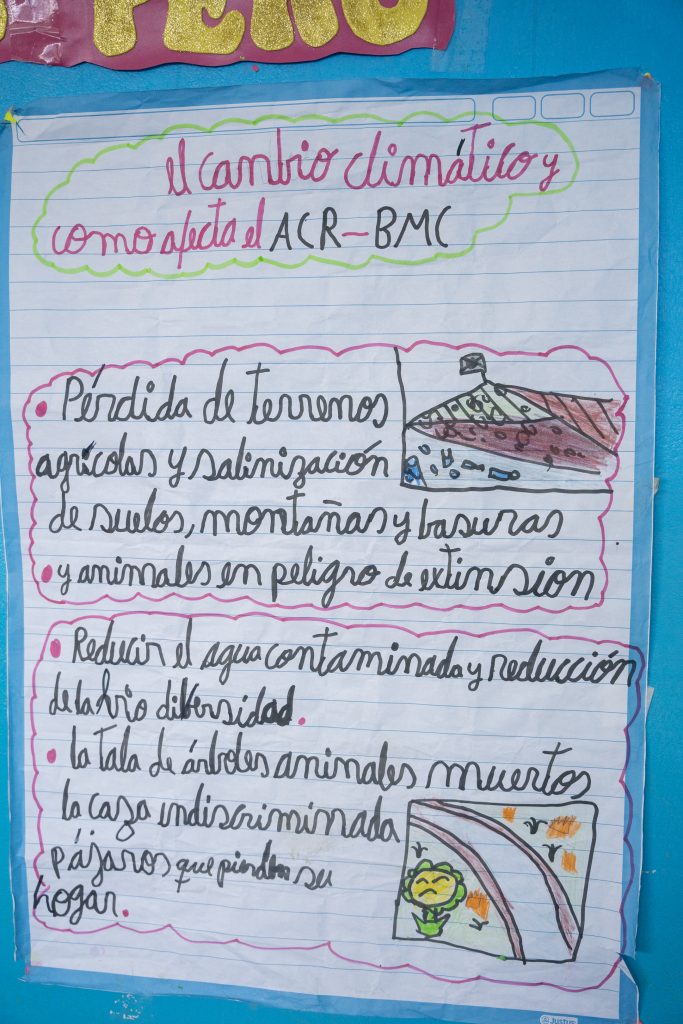
Classroom projects from fifth and sixth grade of primary school with themes related to the Carpish Montane Forest ACR (Photo: Profonanpe)
At that same school, Liz Gadi Rivera, a fifth and sixth grade teacher, recounts that her students, despite living near the forest, were unaware of its existence. “When they learned that they have an area here rich in flora and fauna, they were very excited. Children are always interested in new topics, and even more so if they are related to their surroundings.”.
The learning translates into activities such as creating infographics, role-playing, and group work. Third and fourth grade teacher Somalia Garay leads characterization activities with her students, who represent various species of flora and fauna from the ACR (Regional Conservation Area), such as the spectacled bear, the deer, the yellow-tailed woolly monkey, and various orchids.
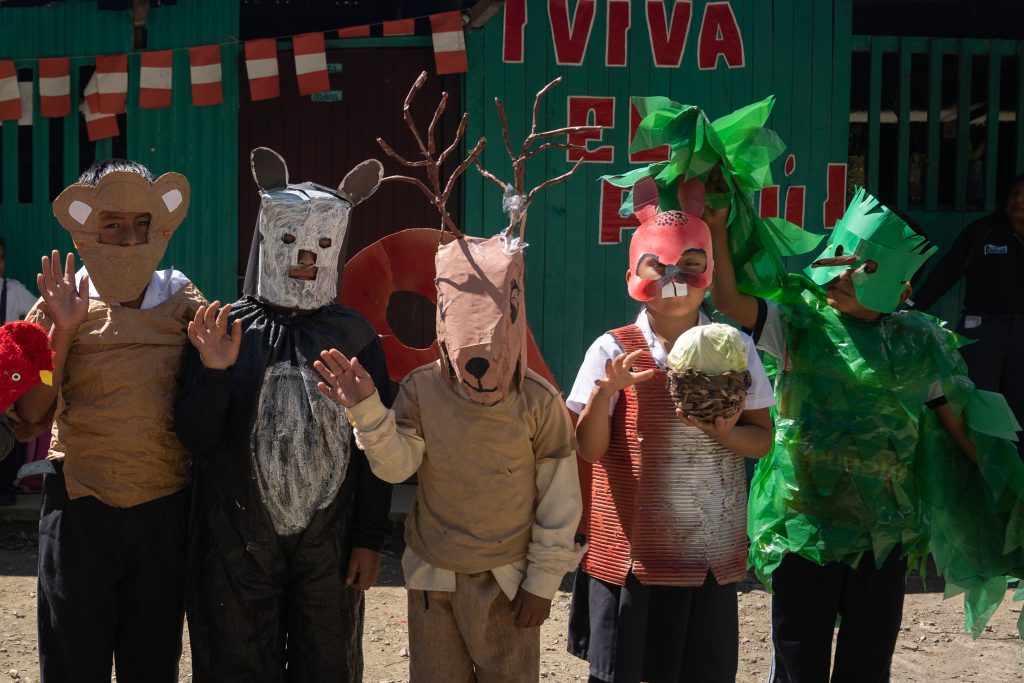
Third and fourth grade students from the first division of Educational Institution No. 33507 Mirador – Chinchao dressed as animals from the Carpish Montane Forest Regional Conservation Area. (Photo: Profonanpe)
For his part, Elías Cotrina Juipa, a secondary school science teacher, emphasizes that this approach allows him to connect learning with the immediate environment. “Almost all the living things in our environment are also found in the Carpish Montane Forest. So it’s a bit more practical, easier for students to relate the topics covered in the courses to their everyday experiences.”.
A model of education to scale
According to Luis Augusto Garrido, the Regional Directorate of Education has adopted this experience as a model with potential for expansion: “They have announced that they want to gradually scale this up throughout the region. It is the first experience of its kind at the national level to be officially developed for a protected natural area.”.
Specialist Mayela Morales adds that to guarantee the sustainability and strengthening of this plan, it is necessary to continue developing specific educational modules on biodiversity, as well as organizing guided visits for students and teachers to the Regional Conservation Area (ACR). “To institutionalize it, we first have to work with all the institutions at the regional level. Once that is achieved, we can request institutionalization and funding from the Ministry of Education. If this is scaled up to the ACR levels nationwide, we can reach up to one million students,” Morales states.
Regarding the Joint Declaration of Intent (JDI) – Phase 2
The Joint Declaration of Intent is a voluntary cooperation agreement signed by the governments of Peru, Norway, and Germany in 2014 to reduce greenhouse gas emissions from deforestation and forest degradation. The United Kingdom joined in the addendum signed for the period 2021–2025.
The DCI is led by the Ministry of the Environment and implemented by Profonanpe as the financial mechanism, with the participation of the Ministry of Agrarian Development and Irrigation, through SERFOR; the Ministry of Culture; the regional governments of San Martín, Huánuco, Ucayali, Loreto, Amazonas, and Madre de Dios; and the indigenous organizations AIDESEP, CONAP, and ANECAP. It also receives funding from the Norwegian Agency for Development Cooperation (NORAD). Learn more here.