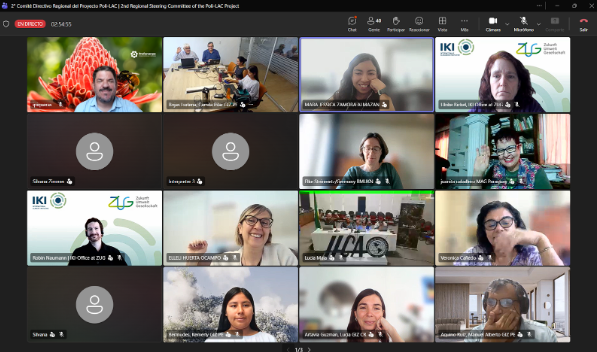
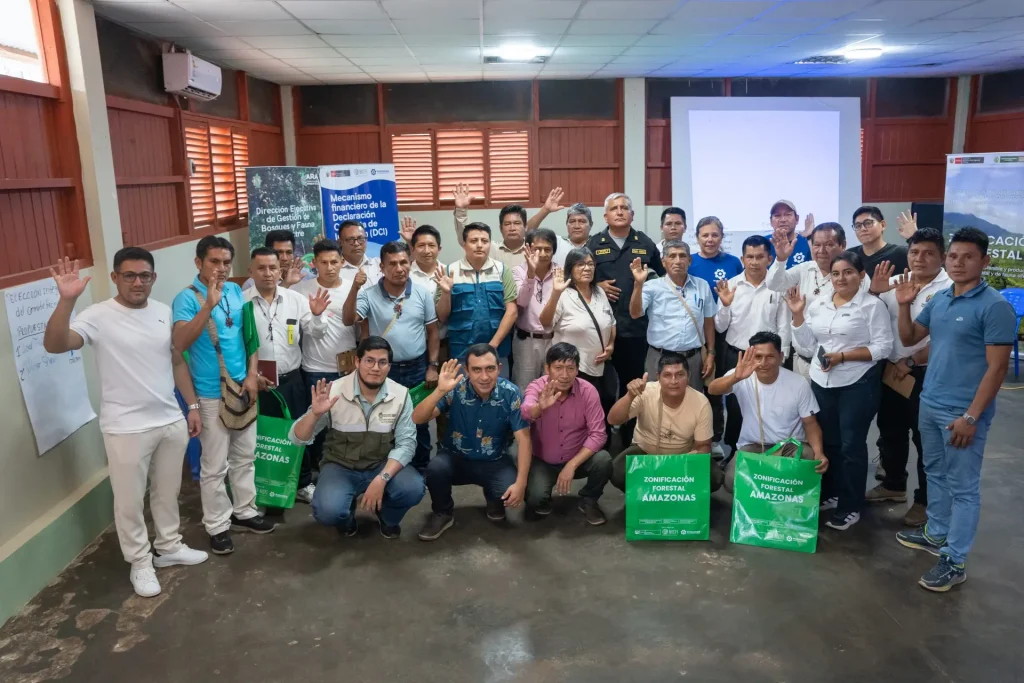
A total of 17 representatives from 11 Awajún and Wampis indigenous organizations in the provinces of Bagua and Condorcanqui participated in the workshop to raise awareness about forest zoning in the Amazonas region, which provided an opportunity to report on the progress of the process and appoint their representatives to the Technical Committee.
From Santa María de Nieva, key concepts of forest zoning were shared, including its stages, the progress of the process in the region, and the benefits it can generate for native communities. Likewise, a space for dialogue and listening was created, allowing for the exchange of opinions, the resolution of queries, and reflection on the importance of this process for the sustainable management of the territory.
What is Forest Zoning and why is it important?
Forest Zoning is a mandatory, technical, and participatory process that allows forest lands to be delimited according to their uses, potential, and limitations, under a comprehensive vision of the territory.
This process is carried out in compliance with the Forestry and Wildlife Law, the respective regulations, and the Methodological Guide for Forest Zoning approved by SERFOR. In the Amazonas region, its implementation has been declared of regional interest by Regional Ordinance No. 394-2017 GRA/CR, and is led by the Regional Government of Amazonas, through the Regional Environmental Authority and the Executive Directorate for Forest and Wildlife Management.
In this way, it organizes the territory, provides key information for decision-making, promotes the sustainable use of resources, and helps prevent conflicts over land use. It also constitutes a fundamental step for forest management and territorial planning at the regional level.
Participation of indigenous peoples in the Technical Committee
One of the central points of the workshop was the presentation of the roles and functions of the Amazonas Forest Zoning Technical Committee. This section of the workshop highlighted the importance of having representatives of indigenous peoples in this space, in order to guarantee a legitimate, participatory process that is in line with the territorial reality of native communities.
Joel Tiwi Jempe was appointed as a full member and Wilmer Shawit Chuin as an alternate representative on behalf of the Awajún people, while Mateo Impi Victor was elected as a full member and Geronimo Petsain Yakum as an alternate representative on behalf of the Wampis people.

Representatives of the Awajún and Wampis peoples appointed to the Technical Committee for Forest Zoning in the Amazonas region
Coordinated work for sustainable land management
The Forest Zoning process in the Amazonas region is led by the Amazonas Regional Government, with support from the Joint Declaration of Intent (JDI) Project, which provides technical assistance to strengthen institutional capacities and promote a participatory and informed process.
This support will continue in the next stage of the process, which includes the socialization and reflection phase of the Forest Zoning Module I proposal in the seven provinces of the Amazonas region, thus consolidating coordinated and decentralized work throughout the regional territory.
About the Joint Declaration of Intent (JDI), its Financial Mechanism, and the JDI Project
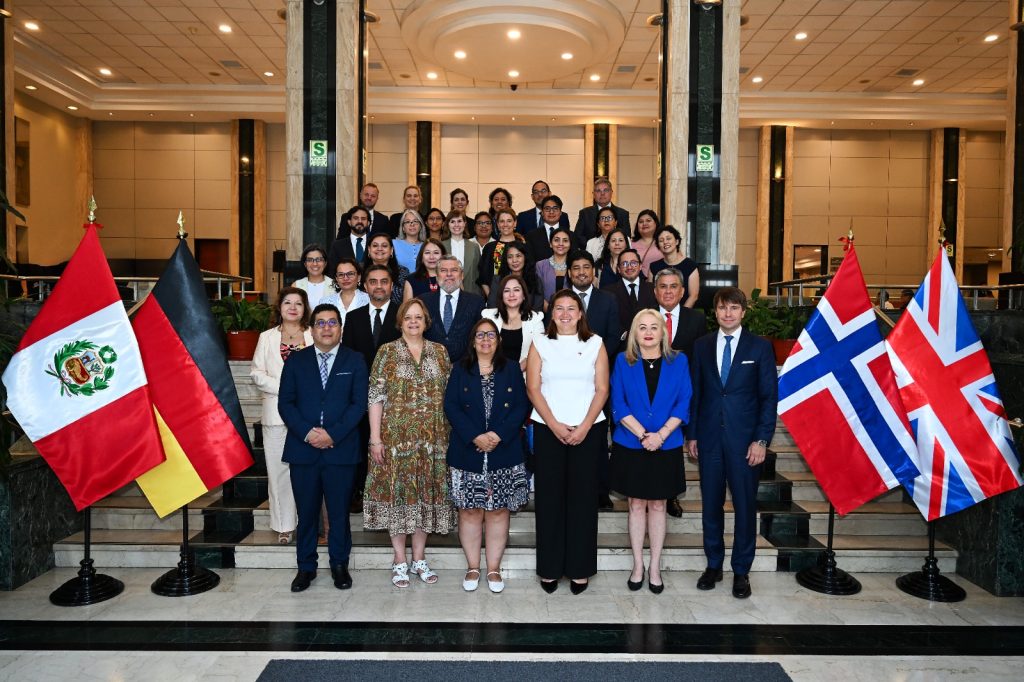
The Joint Declaration of Intent (JDI) is a voluntary cooperation agreement signed in 2014 by the governments of Peru, Norway, and Germany, aimed at reducing greenhouse gas emissions from deforestation and forest degradation. The United Kingdom joined the agreement in the addendum signed for the period 2021–2025.
The JDI has a Financial Mechanism, administered by Profonanpe, which manages the resources for the implementation of its phases. Within this framework, the JDI Project is currently being implemented, contributing to the implementation of the Updated Plan 2021–2025. It is led by the Ministry of the Environment and executed by Profonanpe, with funding from the Norwegian Agency for Development Cooperation (NORAD) through the Norwegian International Climate and Forest Initiative (NICFI), and the participation as implementing partners of the Ministry of Agricultural Development and Irrigation, through SERFOR; Sernanp; the Ministry of Culture; the regional governments of San Martín, Huánuco, Ucayali, Loreto, Amazonas, and Madre de Dios; and the indigenous organizations AIDESEP, CONAP, and ANECAP. Learn more here.