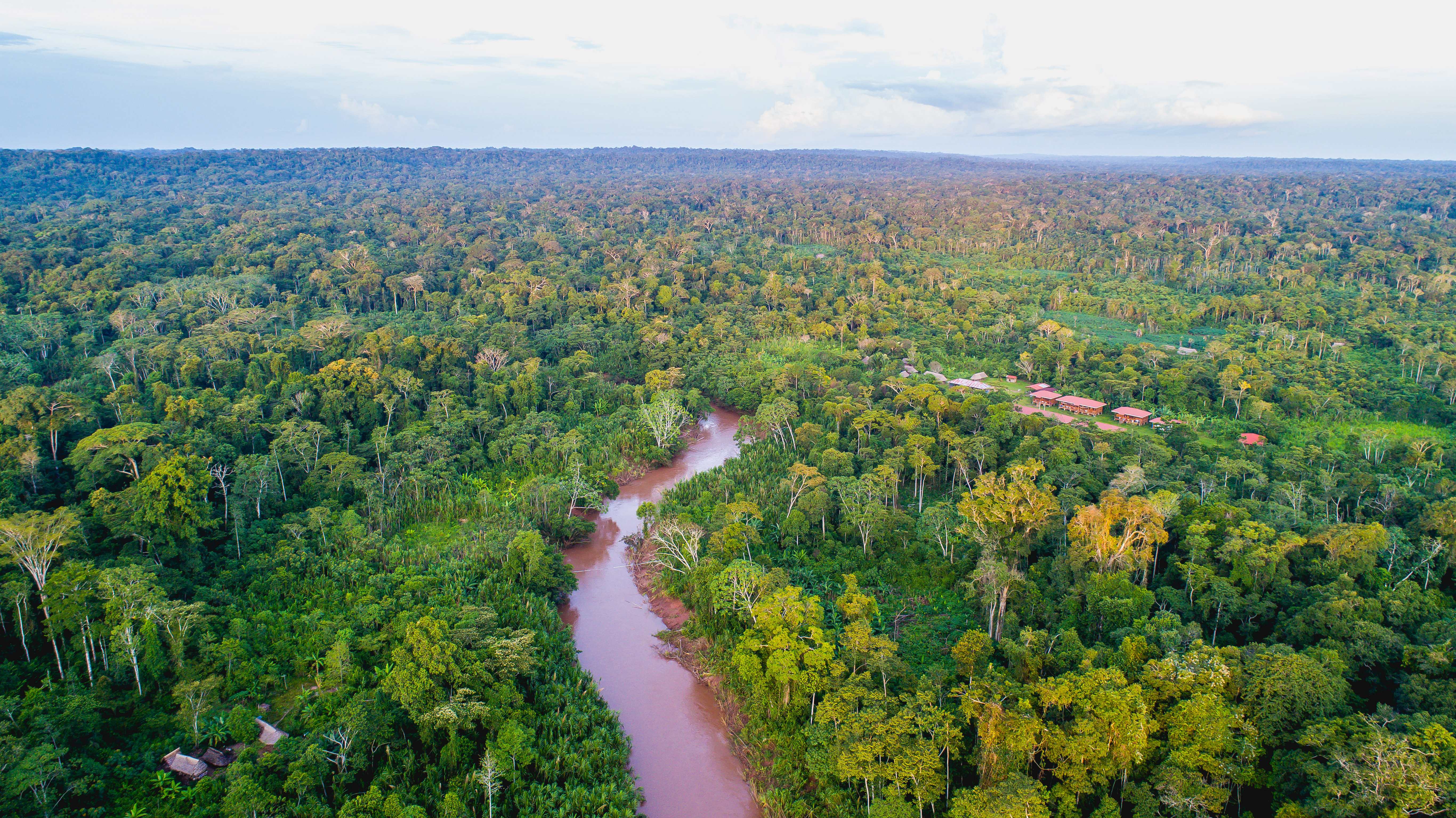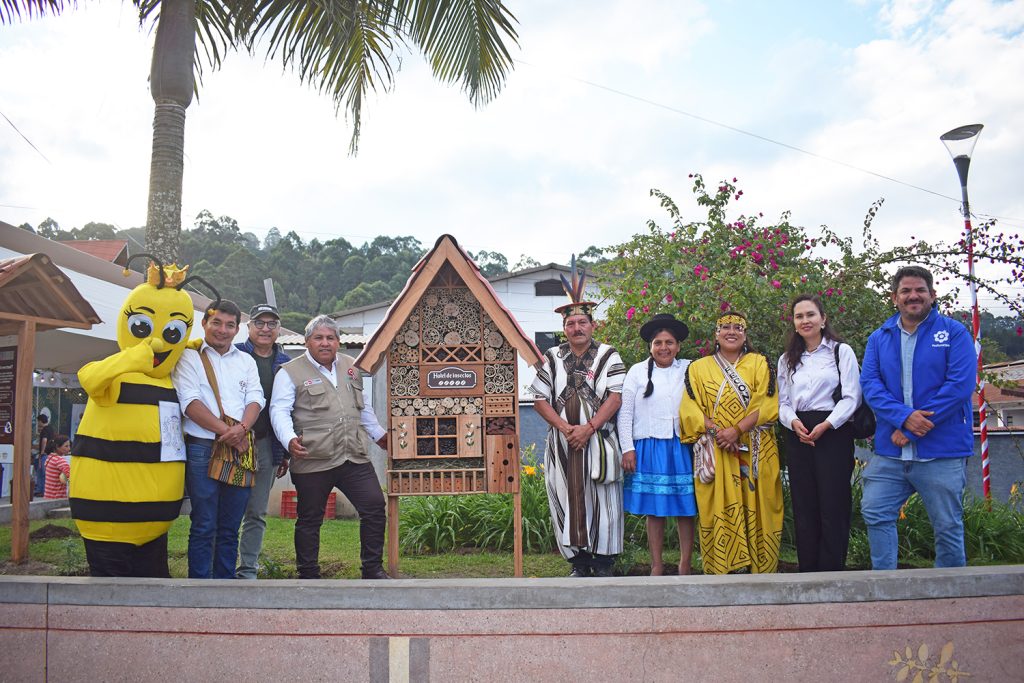
Opening of an insect hotel in the main square of Villa Rica.
Photo: Profonanpe
The land of the world's finest coffee now boasts its own insect hotel, a structure that provides refuge for diverse pollinator species, essential for biodiversity conservation and agricultural production. This initiative is part of the Poli-LAC project and was carried out in coordination with the Villa Rica District Municipality and the National Commission for Development and Life Without Drugs (Devida).
“With this project we promote practices that restore and regenerate, that teach us that small beings like bees, beetles or butterflies, are fundamental to sustaining life itself,” commented Eng. Ignacio Piqueras, landscape coordinator at BIOAY in Peru for the Poli-LAC project, during the inauguration.
The opening event of the insect hotel took place within the framework of the district's centenary and brought together representatives of the Oxapampa – Asháninka – Yánesha Biosphere Reserve (BIOAY), the Federation of Native Yanesha Communities (Feconaya), the Oxapampa Agrarian Agency and allied organizations of the territory such as the Kowen Antami Consortium, an inter-institutional articulation that reinforces the collaborative approach that drives the project.
In this context, Flor Sánchez, manager of BIOAY, highlighted the importance of strengthening collaborative work among institutions, organizations, and communities throughout the province to guarantee the conservation of pollinating insects. “We promote these types of activities because they foster sustainability and help ensure the survival of our pollinators, which are synonymous with life,” she commented.
As part of the ceremony, local authorities and representatives of the indigenous communities participated in a symbolic planting of native pollinating plants. A total of 40 new plants were planted in the main square, helping to create a more favorable environment for pollinating insects.
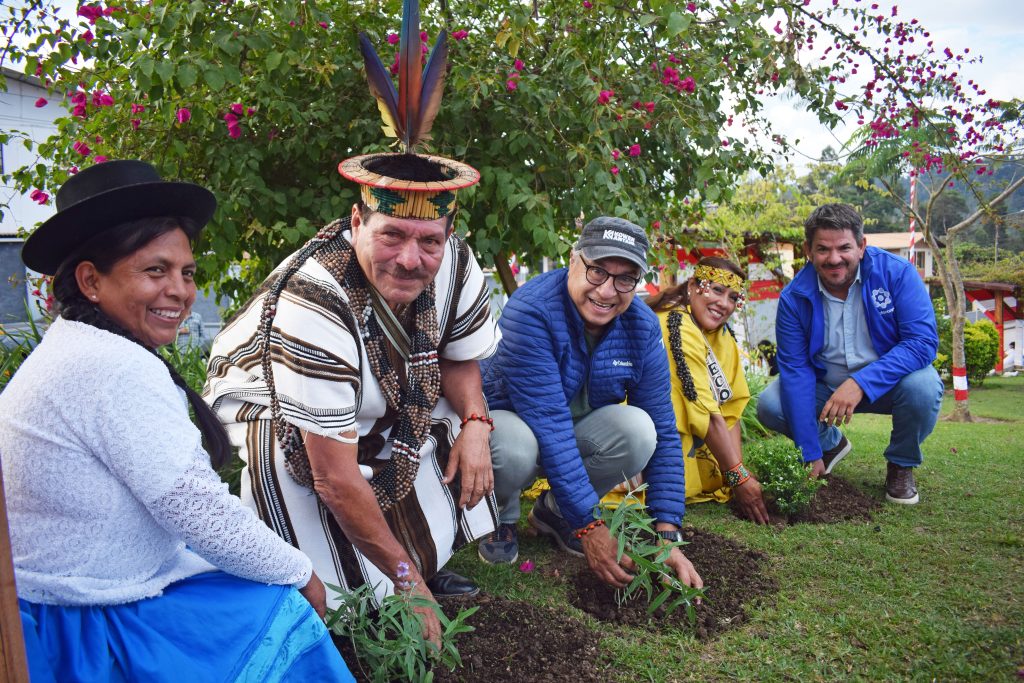
Symbolic planting of native polliniferous plants.
Photo: Profonanpe
It is worth noting that pollinating insects, especially native bees, influence more than 20% of coffee production, Villa Rica's flagship crop and a fundamental pillar of its local economy. Furthermore, nearly 80% of bee species are solitary and do not live in hives, thus requiring shelters such as insect hotels for protection and reproduction.
Along these lines, Florencio Santiago, zonal executive of DEVIDA, highlighted the need to protect these small allies to ensure agricultural productivity: “For us it is important that we have respect for our pollinators, since the increase in our productivity in the cultivation of coffee, cocoa and in all our agricultural activities depends on them.”.
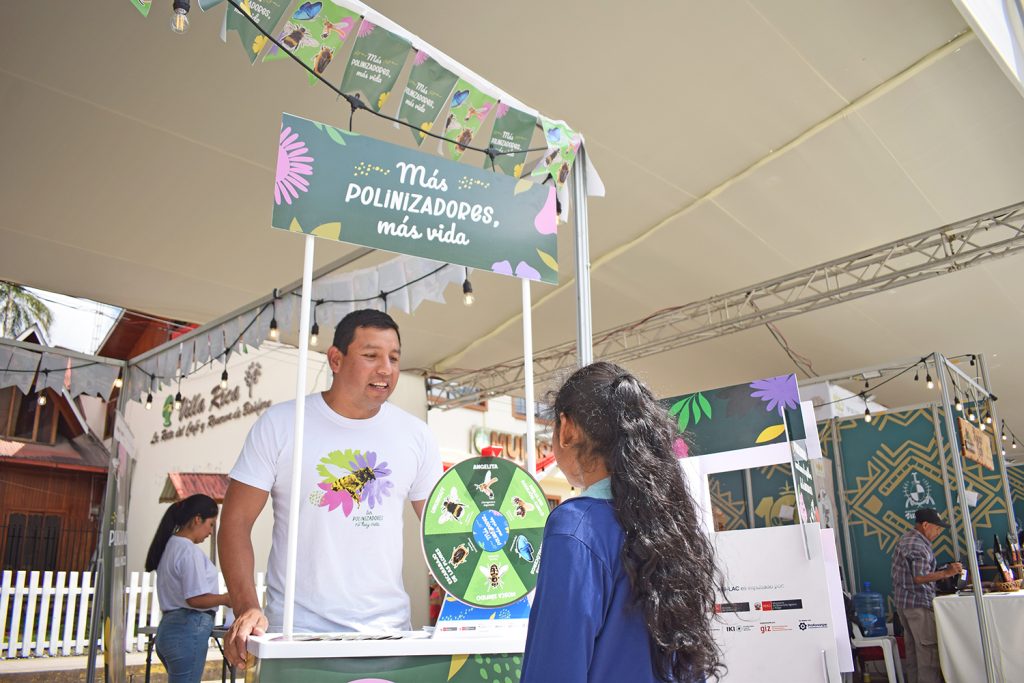
Educational stand of the Poli-LAC project at the Villa Rica Centenary Fair 2025.
Photo: Profonanpe
A space for learning and engagement with pollinators
As part of the celebrations, the Poli-LAC project also participated in the Villa Rica Centennial Fair 2025 with an educational stand, active from July 25 to 29, aimed at promoting practices friendly to pollinating insects.
Also, the workshop “My First Insect Hotel” was held, in which more than 30 girls and boys learned to build shelters for these small allies of biodiversity, using recycled materials.
At this same fair, allied associations in the territory such as the Yanachaga Chemillén Agricultural Corporation, the Cocoa Agricultural Cooperative of Constitución, the San José Valle Paucartambo Agricultural and Services Cooperative and the Koyaite Yotanero Asháninkas Association (AKYA), participated exhibiting products grown with sustainable and pollinator-friendly practices, demonstrating that it is possible to produce while conserving.
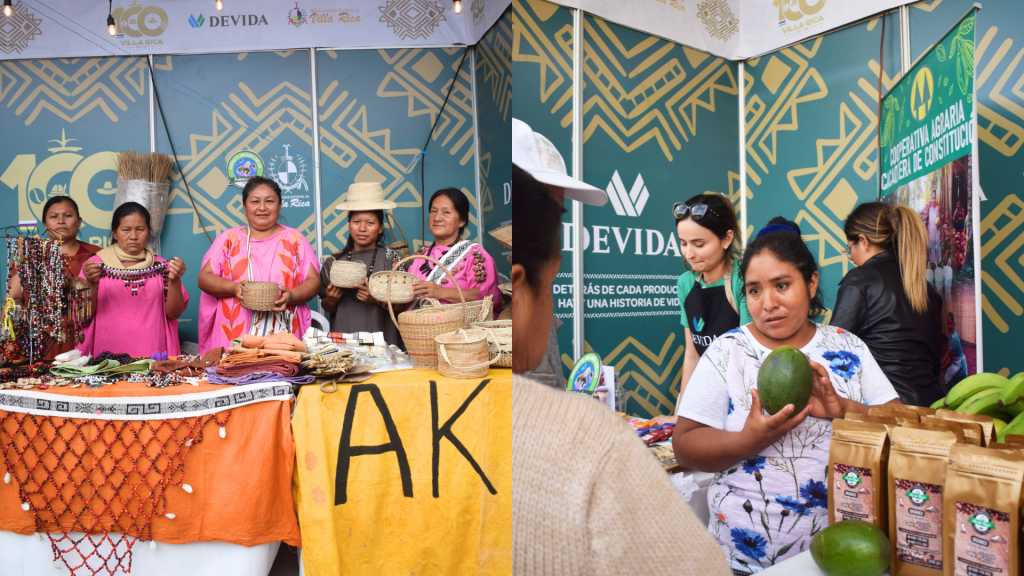
Members of the Koyaite Yotanero Asháninkas Association (AKYA) and the San José Valle Paucartambo Agricultural and Services Cooperative of Oxapampa, allies in the territory of the Poli-LAC project.
Photo: Profonanpe
About Poli-LAC
The Poli-LAC regional project in Peru is led by the Ministry of the Environment (MINAM), with the support of German development cooperation, implemented by the Deutsche Gesellschaft für Internationale Zusammenarbeit (GIZ) GmbH, commissioned by the German Federal Ministry for the Environment, Nature Conservation, Nuclear Safety and Consumer Protection (BMUV), with funds from the International Climate Initiative (IKI), and executed in the Oxapampa – Asháninka – Yánesha Biosphere Reserve (BIOAY) by Profonanpe, Peru's environmental fund.