A recent study measuring carbon stocks in peatlands (wetlands), conducted by the Institute of Amazonian Research of Peru (IIAP) and Profonanpe, revealed that the Pastaza Fan, in the Datem del Marañón (Loreto), is the third largest carbon sink in the world, after the ecosystems of Central Kalimantan in Indonesia and the Central Cuvette in the Republic of Congo. These are areas rich in carbon reserves, such as wetlands, palm swamps, alluvial forests, and herbaceous marshes, with the potential to mitigate climate change and contribute to the development of local communities.
This study seeks to measure the carbon stock stored in the ecosystems of the Datem del Marañón province, focusing on the area of influence of the Datem Wetlands Project, which is executed and managed by Profonanpe..“The findings are data that help us better understand the potential for climate change mitigation, reporting More than 6.7 billion tons of carbon equivalent, which is equivalent to 901,000 tons of emissions from all the cars in the world in a year. Protecting this resource is not only the responsibility of Peruvians but also of the planet.”, Anton Willems, CEO of Profonanpe, pointed out.
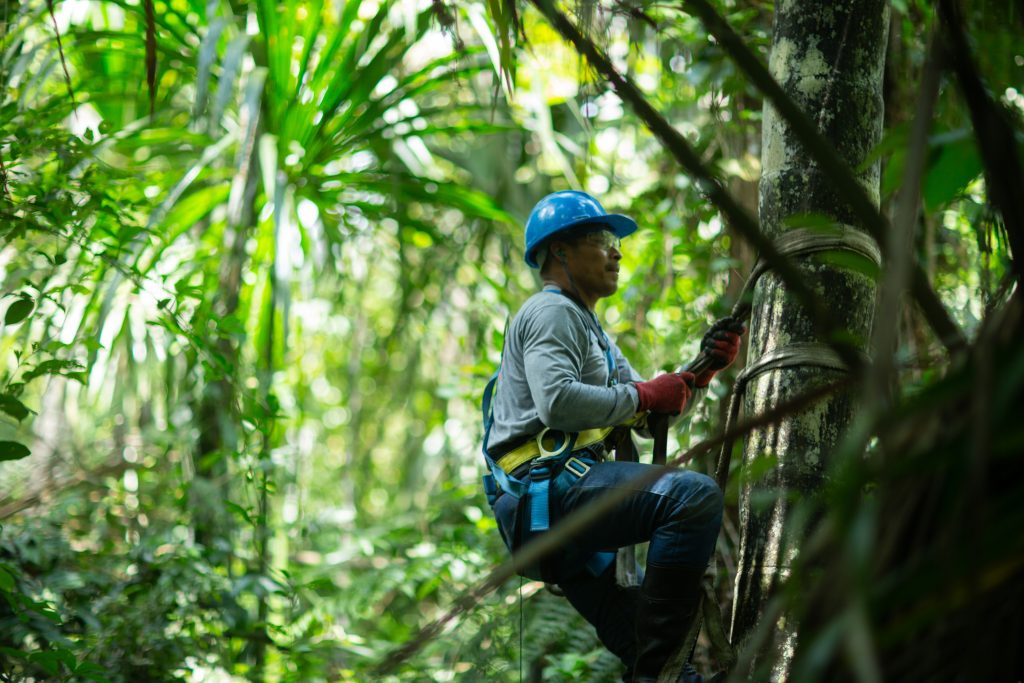
Likewise, the study shows the intervention scenarios of possible negative impacts from poor management by communities of non-timber forest resources (fruits of Amazonian palms, hydrobiological, medicinal, ecosystem services, etc.), where models of sustainable economic activities (biobusinesses) are being generated, through a governance of the territories, implemented by Profonanpe together with 7 native indigenous peoples: Awajún, Achuar, Chapra, Kandozi, Kichwa, Wampis and Shawi.

The Datem del Marañón is understood as a carbon sink that is neutralizing harm beyond the national territory; it is a global asset. whose value also lies in the biodiversity and intercultural richness of its territories. “The potential of Datem leads academia, government, and the population to reflect on the risk if this ecosystem is damaged by the emergence of illegal mining, logging, or drug trafficking, which is why it is necessary to invest as a priority in its conservation through modern climate finance instruments and global commitments.”, said Anton Willems, CEO of Profonanpe.
Recently, representatives from the governments of the United Kingdom, Norway, and the United States, global players in environmental protection, traveled to Datem del Marañón along with the Vice Minister of Strategic Development of Natural Resources of MINAM, Nancy Chauca, and Profonanpe, with the aim of showcasing this natural asset and the coordinated effort between government, business, and community to protect this ecosystem, as well as strengthening the State's presence in the territory for the implementation of better public services that allow the conservation of this ecosystem, so valuable for mitigating and adapting to climate change.
For the study, the Peruvian Amazon Research Institute (IIAP) employed widely used methodologies for monitoring and quantifying carbon in Amazonian forests. Among its conclusions, the report warns that the main threats and risks in the area are illegal activities such as illegal mining, wildlife trafficking, roads, and limited state capacity to enforce permits.
Other key data:
- Swamps and other peatlands play a fundamental role in mitigating climate change by preventing carbon dioxide from being released into the atmosphere.
- It comprises an area of forests of swamp (1,142,077 ha), alluvial floodable (1,421,431 ha) and the forests of mainland (2,049,597 ha), which are the ecosystems with the largest extent in the study area, and it is understood as the third largest carbon reservoir in the world.
- The analysis shows that 75% of the carbon stock in the Datem del Marañón is stored in the soil of the peatlands with an estimated 5,251 million tCO2eq.
- The present study reports a maximum peat depth of 810 cm in the town of Puerto América, which is one of the deepest sites, with the most noticeable peat thickness in the Peruvian Amazon.
- Peat bogs are wetlands where the soil remains covered with water for most of the year. They can support large trees or only small plants such as herbaceous plants. The term “peatland” derives from European words, such as German. torf or Finnish turve and it is still little known in our region and country.
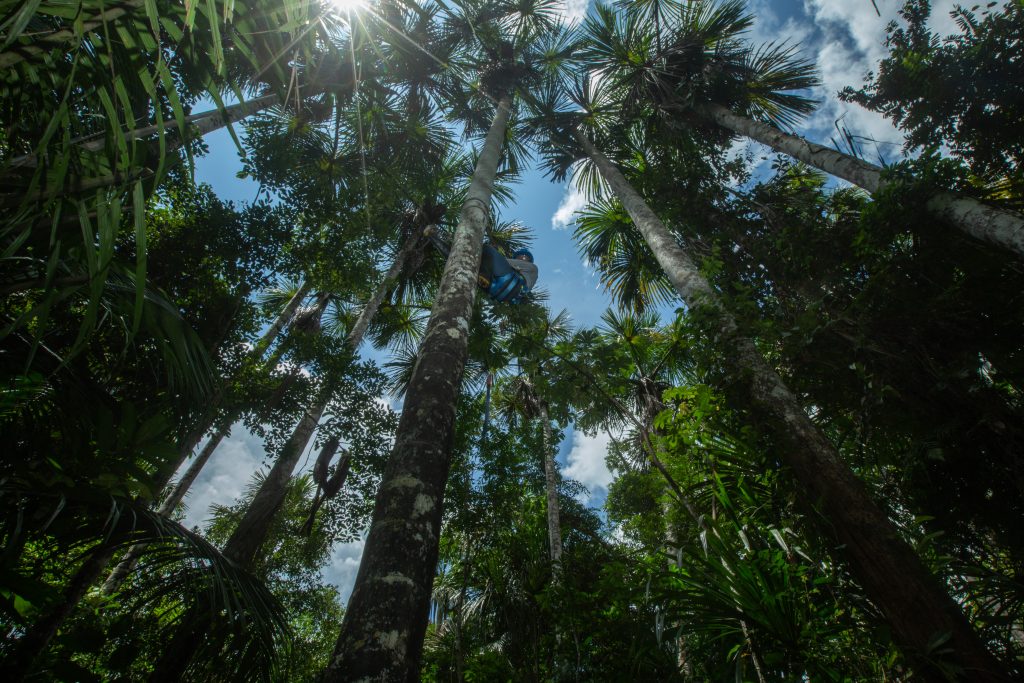
- The state of the fauna and flora in the province reports a healthy state and access to food for the communities, but risks resulting from the felling of female aguajales due to market demand are also evident.