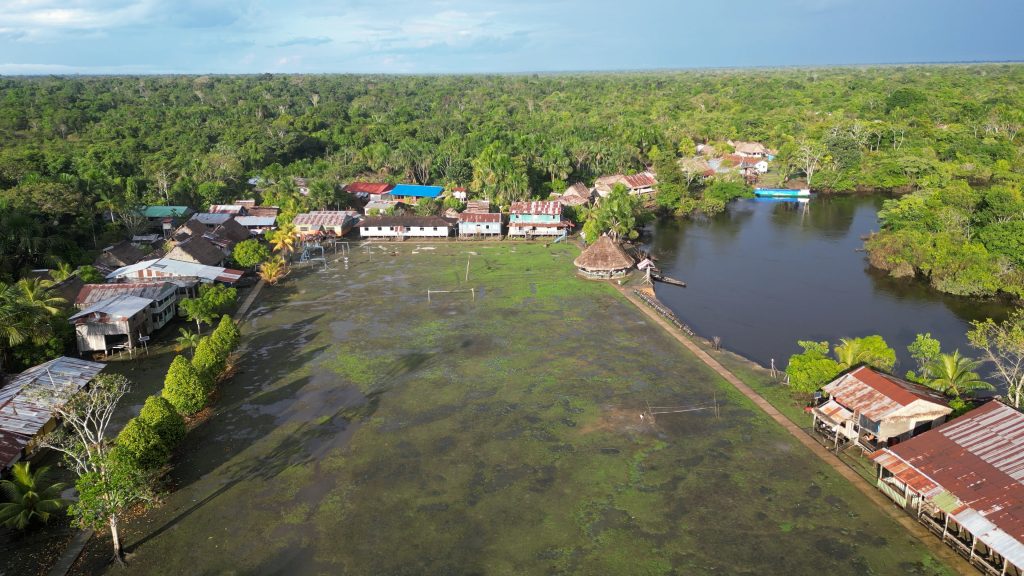

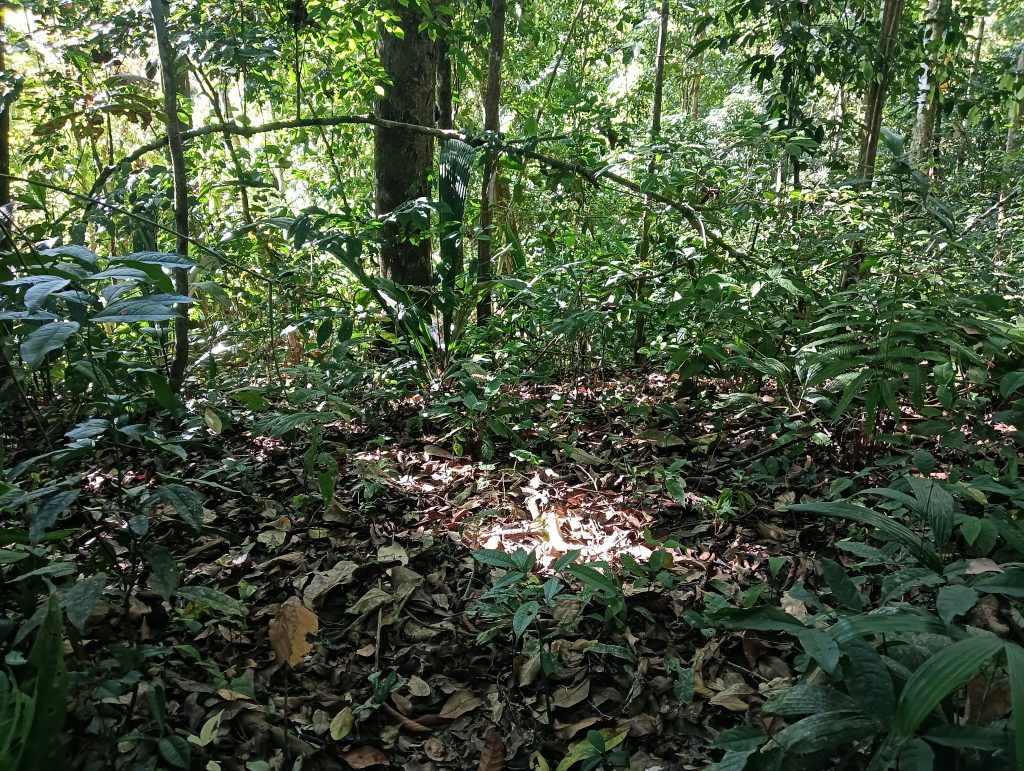
On the Amazonian border between Peru and Brazil, the forests of the Nueva Bella and Sawawo Hito 40 indigenous communities, located in the province of Atalaya in Ucayali, reveal extraordinary biological richness.
During assessments carried out between July 7 and August 5, specialists and local community members documented a high diversity of flora and fauna species, reaffirming the importance of these territories as key natural refuges for conservation in the Ucayali region.
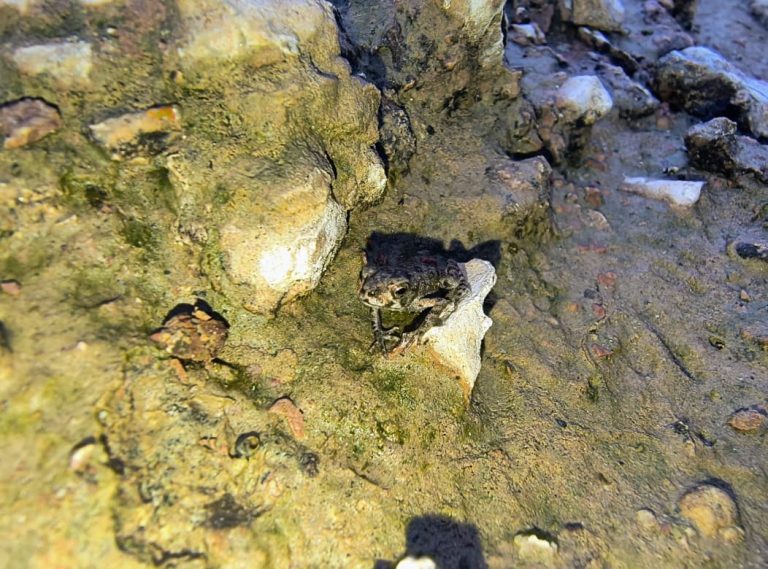
A specimen of Rhinella marina, known as the giant toad or marine toad, rests on rocky, damp ground. Photo: Jofre Torres
The study is part of the progress toward the creation of Private Conservation Areas in the communities of Nueva Bella and Sawawo Hito 40, a proposal promoted by the communities with the support of ProPurús and the backing of the Conserva Aves initiative, led by Profonanpe and ECOAN in Peru. Preliminary results show outstanding ecological richness in both communities:
Nueva Bella Native Community
- Flora: 45 genera belonging to 22 botanical families.
- Birds: 143 species recorded, distributed across 22 orders and 43 families.
- Mammals: 15 species.
- Reptiles: 13 species.
Sawawo Hito 40 Native Community
- Flora: 42 genera belonging to 18 botanical families.
- Birds: 141 species, distributed across 21 orders and 39 families.
- Mammals: 15 species.
- Reptiles: 20 species.
Among the species recorded during the assessments, several are considered important for conservation, according to Peru’s List of Threatened Species of Legally Protected Wildlife (D.S. 004-2014-MINAGRI). The macaws Ara macao, Ara chloropterus, and Ara ararauna are classified as Vulnerable (VU), a category that indicates that their populations face a high risk of disappearing in the wild due to habitat loss and illegal trafficking.
Likewise, species such as the Mealy Parrot (Amazona farinosa), the Great Whistling-Tyrant (Nyctibius grandis), the Crowned Heron (Pilherodius pileatus), and the Phaethornis ruber hummingbird are considered Near Threatened (NT), a status that indicates they could move to a threatened category if pressures on their ecosystems continue. Added to this are species that are indicators of well-preserved environments, such as the sunbird (Eurypyga helias) and the flycatcher (Tyranneutes stolzmanni), whose presence reinforces the ecological value of the territory and demonstrates the integrity of the forest that communities seek to protect.
These records confirm that the forests of Yurúa are home to a diversity comparable to the most pristine areas of the Peruvian Amazon, consolidating their ecological relevance within the conservation efforts led by indigenous communities.
The natural wealth of these communities is no coincidence: it is the result of years of communal management and sustainable practices that prioritize forest protection against the threats of logging and land trafficking. Through Field Schools, the community members of Nueva Bella and Sawawo Hito 40 are trained in territorial surveillance, environmental governance, and the use of technological tools such as GPS to strengthen the monitoring of their territory.
“Our forest is our life. Taking care of it means securing the future of our families and the animals that live with us,” says Edwin Perez, community leader.
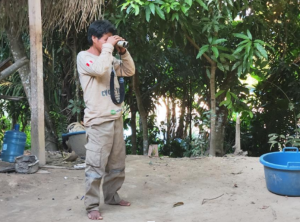
An Amazonian community member observes the forest with binoculars, participating in environmental monitoring and surveillance activities in his territory. Photo: Jofre Torres
The information gathered in these assessments will serve as the basis for the creation of Private Conservation Areas in the communities of Nueva Bella and Sawawo Hito 40, which seek to protect more than 25,649.30 hectares of Amazonian forests, home to endangered bird species and valuable ecosystems that regulate the climate and sustain local life.
The project is part of the international Conserva Aves initiative, led by American Bird Conservancy (ABC), National Audubon Society (Audubon), BirdLife International, and the Latin American and Caribbean Environmental Funds Network (RedLAC), with the participation of ECOAN, Profonanpe, and ProPurús, and financial support from the Bezos Earth Fund. Its objective is to promote the creation and consolidation of subnational protected areas that safeguard endangered endemic and migratory birds and their habitats, strengthening community governance.