In 2025, the Loreto region consolidated a key set of regulatory instruments that strengthen the effective, sustainable, and orderly management of its Regional Conservation Areas (RCA). These advances are part of the institutional strengthening process supported by the Joint Declaration of Intent (JDI) Project, led by the Ministry of the Environment and implemented by Profonanpe, with funding from the Norwegian International Climate and Forest Initiative (NICFI).
The approval of four regional management resolutions represents a decisive step toward improving environmental governance in the territory, optimizing mechanisms for protecting natural heritage, and promoting the responsible use of resources for the benefit of the populations linked to the RCA.
Tools for more participatory and coordinated management
Effective management of RCAs requires identifying who is involved in the territory, how they relate to each other, and what roles they play. In this regard, the “Methodological Tool for Participatory Management: Stakeholder Maps and Participation Radar” provides a structured methodology for analyzing, organizing, and strengthening the participation of key stakeholders in management processes.
This document allows for the systematization of information on public institutions, local organizations, communities, the private sector, and other actors linked to RCAs, contributing to more coordinated, transparent, and results-oriented management.
The tool was approved by Regional Management Resolution No. 055-2025-GRL-GGR-GRAM.
Towards sustainable tourism
Tourism can become a strategic ally of conservation when it is developed under clear and sustainable criteria. The “Guide for Granting Tourism Rights in the Regional Conservation Areas of Loreto” establishes the technical and administrative framework for granting rights related to tourism and recreational activities within the RCAs.
This guide provides clarity on the modalities, procedures, and conditions that provide greater legal certainty and promote formalization for the granting of rights, encouraging companies and the local population to develop tourism and recreational activities in a formal, orderly, and sustainable manner. The aim is to boost local economies that are compatible with conservation and strengthen legal certainty in land use.
This guide was approved by Regional Management Resolution No. 060-2025-GRL-GGR-GRAM.
Strengthening the threat alert system
The protection of RCAs requires mechanisms to detect and respond to threats or impacts in a timely manner. The “Guide for the Implementation and Response to Early Warnings” establishes procedures for the identification, recording, evaluation, and response to alerts related to possible impacts on RCAs and other conservation areas.
This instrument strengthens institutional response capacity and improves coordination between competent authorities, promoting a preventive and timely approach to the defense of natural heritage.
The guide was approved by Regional Management Resolution No. 061-2025-GRL-GGR-GRAM.
Criteria for remuneration for the use of resources
The use of resources within the RCAs must be carried out under the principles of sustainability and equity. Within this framework, the guideline “Criteria for establishing monetary and non-monetary remuneration for the right to use forest resources, wildlife, and natural landscape resources within the RCAs” was approved.
This instrument establishes technical parameters that allow for the ordering of resource use, ensure transparency in the determination of compensation, and guarantee that the use contributes to the financial sustainability and conservation objectives of the RCAs.
This instrument was approved by Regional Management Resolution No. 064-2025-GRL-GGR-GRAM.
With the approval of these instruments, Loreto consolidates enabling conditions for effective management of its RCAs, based on participation, prevention, and sustainability. These results demonstrate how institutional strengthening is a key component in ensuring long-term conservation and development compatible with the territory.
About the Joint Declaration of Intent (JDI), its Financial Mechanism, and the JDI Project
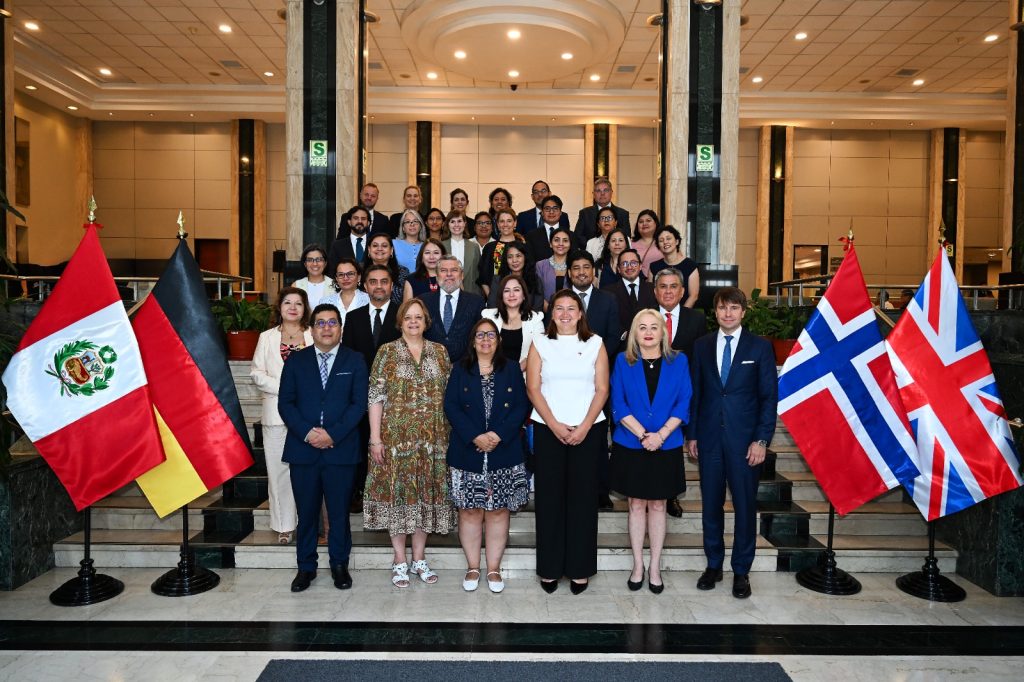
The Joint Declaration of Intent (JDI) is a voluntary cooperation agreement signed in 2014 by the governments of Peru, Norway, and Germany, aimed at reducing greenhouse gas emissions from deforestation and forest degradation. The United Kingdom joined the agreement in the addendum signed for the period 2021–2025.
The JDI has a Financial Mechanism, administered by Profonanpe, which manages the resources for the implementation of its phases. Within this framework, the JIP Project is currently being implemented, contributing to the implementation of the Updated Plan 2021–2025. It is led by the Ministry of the Environment and executed by Profonanpe, with funding from the Norwegian Agency for Development Cooperation (NORAD) through the Norwegian International Climate and Forest Initiative (NICFI), and the participation as implementing partners of the Ministry of Agricultural Development and Irrigation, through SERFOR; Sernanp; the Ministry of Culture; the regional governments of San Martín, Huánuco, Ucayali, Loreto, Amazonas, and Madre de Dios; and the indigenous organizations AIDESEP, CONAP, and ANECAP. Learn more here.