
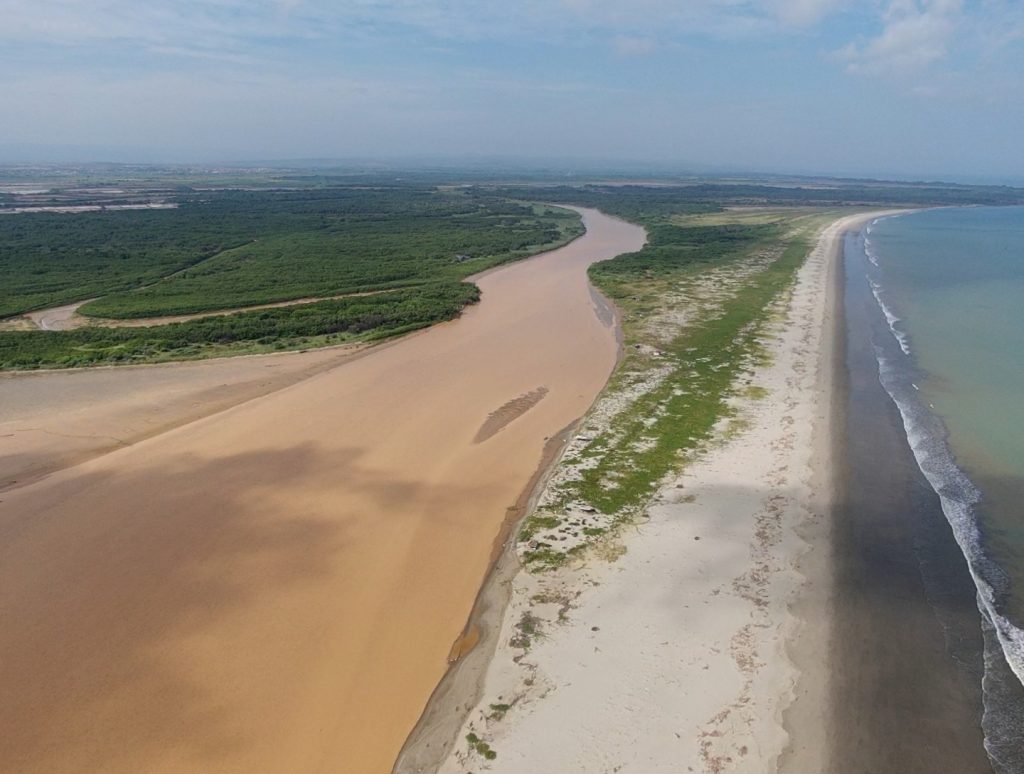
On Peru’s northernmost coastline, where the sea and land intertwine to give life to the country’s largest and most representative mangrove ecosystem, the Conserva Aves Initiative is making steady progress toward the creation of the Los Tumpis Mangroves Regional Conservation Area (RCA). This project, led by the Regional Government of Tumbes and with technical support from the Northwest Peru Mangroves Consortium (CONMANOPE), which executes the Los Manglares de Tumbes National Sanctuary Management Contract, seeks to ensure the protection of more than 4,800 hectares of mangrove ecosystems and adjacent areas through a participatory, scientific, and sustainable management approach.
The creation of the RCA is part of the Birds for Latin America and the Caribbean Initiative, implemented in Peru with technical support from ECOAN and PROFONANPE, which aims to promote the creation of new conservation areas and strengthen local capacities for biodiversity management.
Los Tumpis Mangroves RCA represents a historic opportunity for Tumbes to integrate areas of high biodiversity that still lack formal protection, strengthen conservation processes in Tumbes Mangroves National Sanctuary, and ensure the sustainability of the ecosystem services that sustain local life and the economy.
Implementation of the monitoring protocol for key birds in the mangrove ecosystem
One of the most significant advances during this period has been the implementation of the “Protocol for Monitoring the Relative Abundance of Key Birds in the Tumbes Mangrove Ecosystem,” a technical-scientific document that marks a turning point in the management of knowledge about the birdlife associated with this ecosystem. The protocol seeks to conserve key mangrove species through continuous and systematic monitoring that generates accurate information on their presence and abundance, which is essential for making management decisions, prioritizing conservation actions, and assessing the health of the ecosystem.
The protocol focuses on monitoring 32 bird species, including Nearctic migratory species, species endemic to northwestern Peru, and those threatened by habitat loss, which act as bioindicators of the environmental status of the mangrove.
Monitoring is carried out by traveling through different areas of the mangrove swamp, on foot or by boat, following the tides and taking advantage of the early morning hours when the birds are most active. Permanent monitoring sites include critical areas of the mangrove such as Estero La Tortuga, Estero La Culebra, Playa El Venado, Sendero Jeli, Isla de Los Pájaros (Puerto Pizarro), El Mulo sector, Río Tumbes, and Isla Palo Santo.
This protocol will provide the information necessary for the Tumbes mangrove forest to be internationally recognized as an Important Bird Area (IBA). This recognition will increase its ecological importance and highlight its role as a vital habitat for migratory birds in the Eastern Pacific.
In addition, this technical instrument lays the foundation for the implementation of a participatory monitoring system that can be replicated in other coastal conservation areas in the country, promoting citizen science and shared responsibility in biodiversity management.
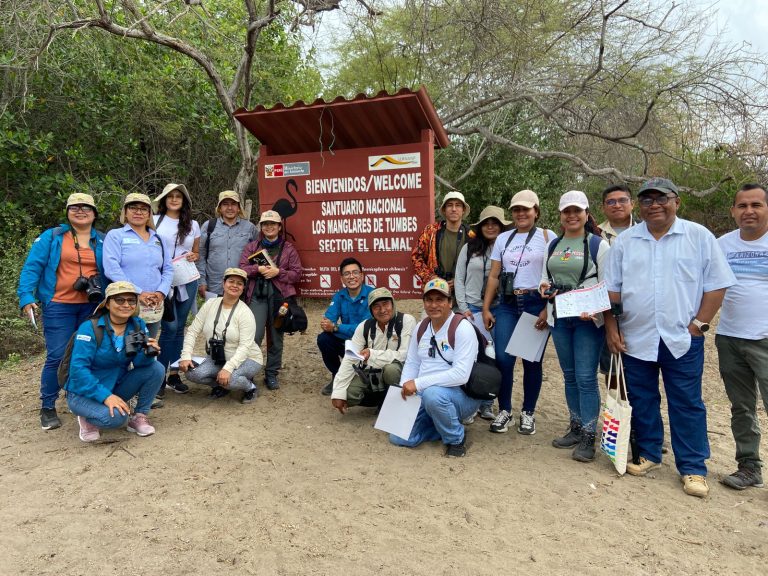
Biological monitoring training by ECOAN
Photo: CONMANOPE
Consultation with the aquaculture sector for the Los Tumpis Mangroves ACR proposal
The second major milestone achieved was the process of engagement and consultation with companies in the shrimp sector, whose productive role and territorial presence within the proposed area make their participation a key component for the sustainability of the initiative. This process reflects a model of territorial governance based on dialogue, transparency, and environmental co-responsibility.
The Regional Government of Tumbes, through the Regional Office of Natural Resources and Environmental Management, together with the Northwest Peru Mangroves Consortium, led a series of technical meetings and field visits between September and October 2025 with representatives and managers of the main companies in the aquaculture sector.
The main objective is to promote compatibility between aquaculture production activities and conservation objectives, integrating sustainability principles within the proposed RCA “Los Tumpis Mangroves” area, which covers approximately 4,800 hectares. This dialogue made it possible to identify opportunities for implementing the “Conservation-Production” model. The active participation of the private sector, which has been invited to form part of the future RCA area, has been fundamental in strengthening the social and technical legitimacy of the proposal, seeking a balance between environmental conservation and regional development.
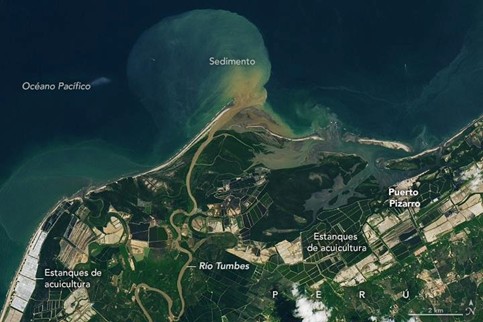
Image from NASA’s Earth Observatory by Lauren Dauphin, using Landsat data from the United States Geological Survey. Report by Emily Cassidy.
Towards a comprehensive and participatory management model
The Tumbes Bird Conservation Initiative continues to consolidate itself as a space for coordination between public institutions, local communities, scientists, and the private sector, with a technical and participatory approach that guarantees the generation of knowledge, capacity building, and shared responsibility for the conservation of Tumbes’ natural heritage.
Each monitoring session, workshop, and consultation meeting represents another step toward the creation of Los Tumpis Mangroves Regional Conservation Area, a process that reaffirms the commitment of the Regional Government of Tumbes and the Manglares del Noroeste del Perú Consortium to the comprehensive management of the mangrove ecosystem.
Los Tumpis Mangroves Regional Conservation Area not only seeks to protect an ecosystem, but also to strengthen a management model where science, sustainable production, and citizen participation converge to ensure the future of one of Peru’s most valuable ecosystems.