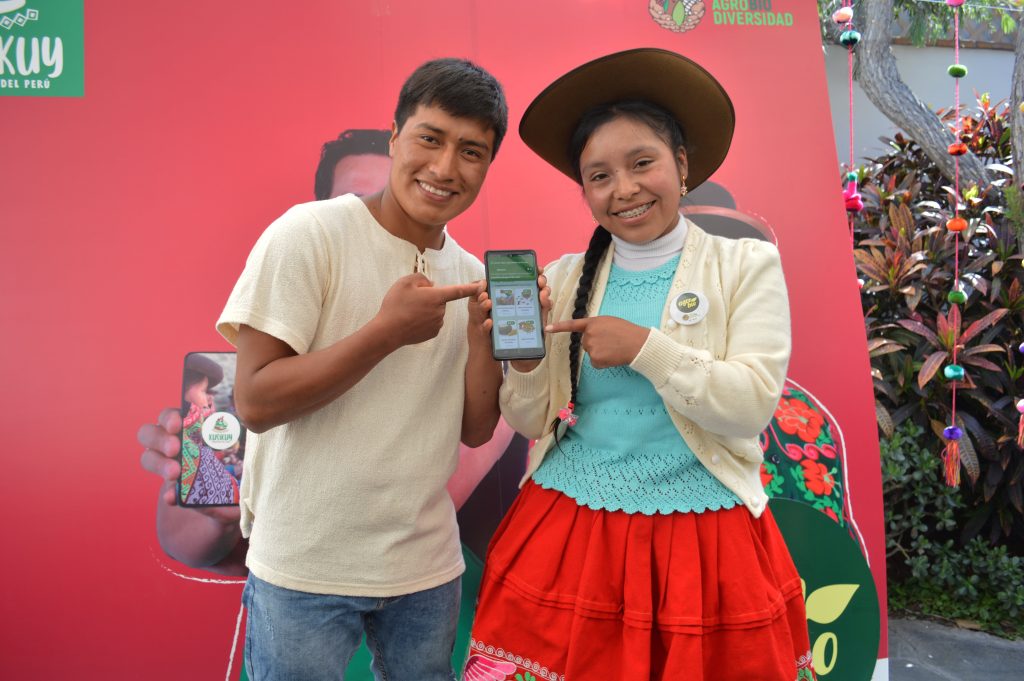
You can now download the Kusikuy app, a platform where Peruvian consumers can discover and purchase a variety of foods that are part of our agrobiodiversity. The app is launching with a flat delivery fee of S/ 6 to various districts of Metropolitan Lima, offering products from Cusco, Puno, and Apurímac. Plans are underway to expand delivery to more regions of the country in the coming months.
Kusikuy showcases native foods cultivated using the ancestral knowledge of over 500 farming families, who have rescued more than 70 endangered native species from oblivion. Among the varieties offered, sold directly to consumers under the AGROBIO brand, are black quinoa, mashua, oca, various types of corn, native potatoes, black chuño (freeze-dried potatoes), and others.
With this initiative, more than 500 families dedicated to preserving our agrobiodiversity will be able to connect with consumers in Peru. Anton Williams, CEO of Profonanpe, stated that “the inclusion of native products in the market will ensure the sustainability of production and, at the same time, strengthen farmers' commitment to the conservation of agrobiodiversity.” He also emphasized the role of consumers in promoting the local consumption of these foods, bringing us closer to our roots and ensuring that our legacy continues to endure.
The launch of the Kusikuy mobile application took place within the framework of National Potato Day, and was attended by Flavio Solórzano, renowned chef of the Peru brand, who together with Yolanda Catacora, protector of native foods from Puno, personify the essence of Kusikuy: Connecting consumers and farmers.

Representatives from Minam, Midagri, FAO, ASPEC and Profonanpe attended the event.
This initiative has been made possible thanks to the joint work of various public and private institutions, such as the Ministry of the Environment (MINAM), the Ministry of Agrarian Development and Irrigation (MIDAGRI), the Food and Agriculture Organization of the United Nations (FAO) and Profonanpe, the private environmental fund of Peru, with financing from the Global Environment Facility through its GEF Agrobiodiversity GIAHS Project in partnership with the Peruvian Association of Consumers and Users (ASPEC).