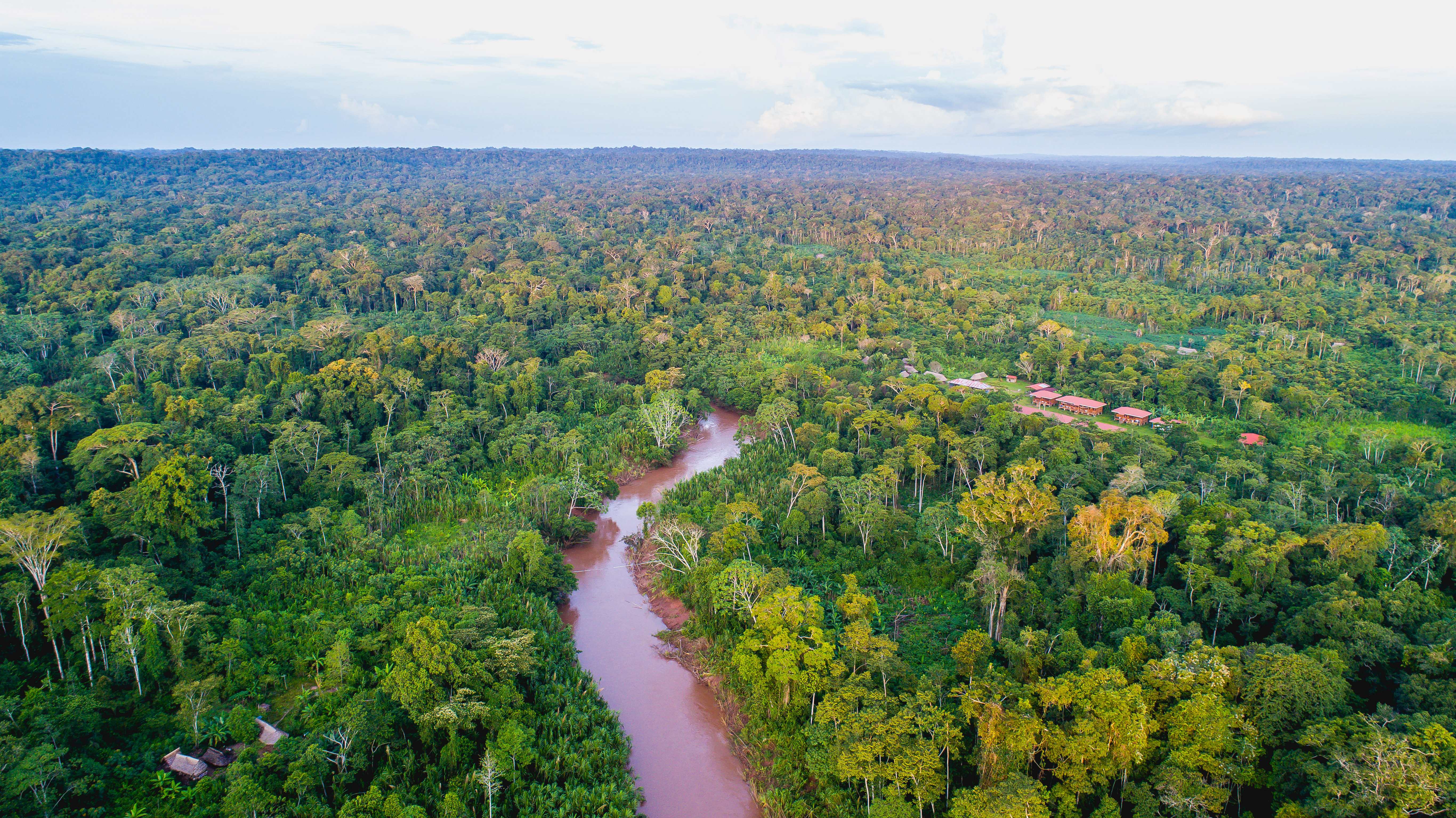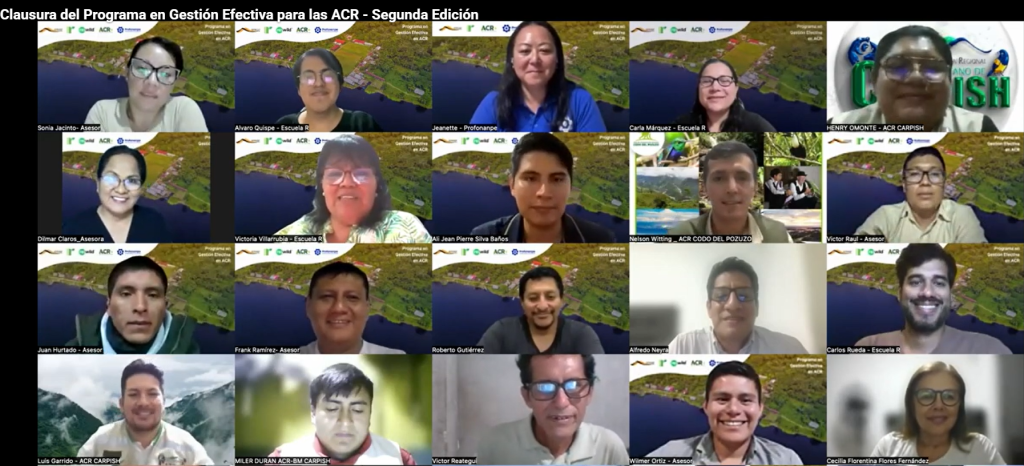
The Effective Management Program for Regional Conservation Area (RCA) Teams concluded its 2nd Edition of Module I, breaking with the traditional training model to focus on direct on-the-job training, combining virtual and in-person sessions during 12 weeks of intensive and collaborative learning, integrating methodologies of Design Thinking and Artificial Intelligence tools. This allows management teams to learn about and apply tools they have created to strengthen the monitoring and surveillance of their ACRs, with mechanisms for coordination and response to the challenges and threats of illegal activities.

Face-to-face technical assistance session in Loreto.
Methodology and results
The program combined in-person technical assistance with two types of virtual sessions: general sessions with expert instructors, and small group sessions where teams worked and exchanged experiences on the Mural platform with guidance from an advisor and a specialist facilitator. The sessions were held twice a week, and even in the face of connectivity challenges or weather conditions specific to each region, the working dynamic ensured the contribution of all participants and collective learning.
The success of this first stage is reflected in the tools created by the teams using a "learning by doing" approach, adapted to their Regional Conservation Areas (ACRs) and validated by SERNANP. These tools include the Conservation Status Report, the Participation Radar, the Map of Actors and Power Relations, and the Calculation of Gaps in the Monitoring and Control System, among others.
The module also recorded an average attendance of 90 % and a satisfaction rating of 96 % among participants, demonstrating the value of a learning model that strengthens technical capabilities while recognizing and leveraging the prior knowledge of managers in the territory.
Recognition and new steps
As a highlight of this second edition of Module I, the team from the Carpish Montane Forest Regional Conservation Area (ACR Bosque Montano de Carpish), in Huánuco, was recognized as the best performing group, standing out for their commitment to the course and the management of this area established in 2020. The completion of this module also marks the beginning of Module II, focused on the sustainable use of natural resources and new technical specializations, with the aim of further strengthening the management of Regional Conservation Areas.
 On-site technical assistance in San Martín.
Profonanpe, through its projects ACR+ y Joint Declaration of Intent (JDI), accompanies the SERNANP in the process of strengthening the management of Regional Conservation Areas. With the support of the organization Re:wild and the technical execution of School R, The second edition of Module I of the training program was developed with the commitment of the ACR teams of 14 Regional Governments: Lima, Metropolitan Lima, Callao, Loreto, San Martín, Ucayali, Huancavelica, Tacna, Huánuco, Ayacucho, Junín, Ica, Puno and Áncash.