Photo: Profonanpe
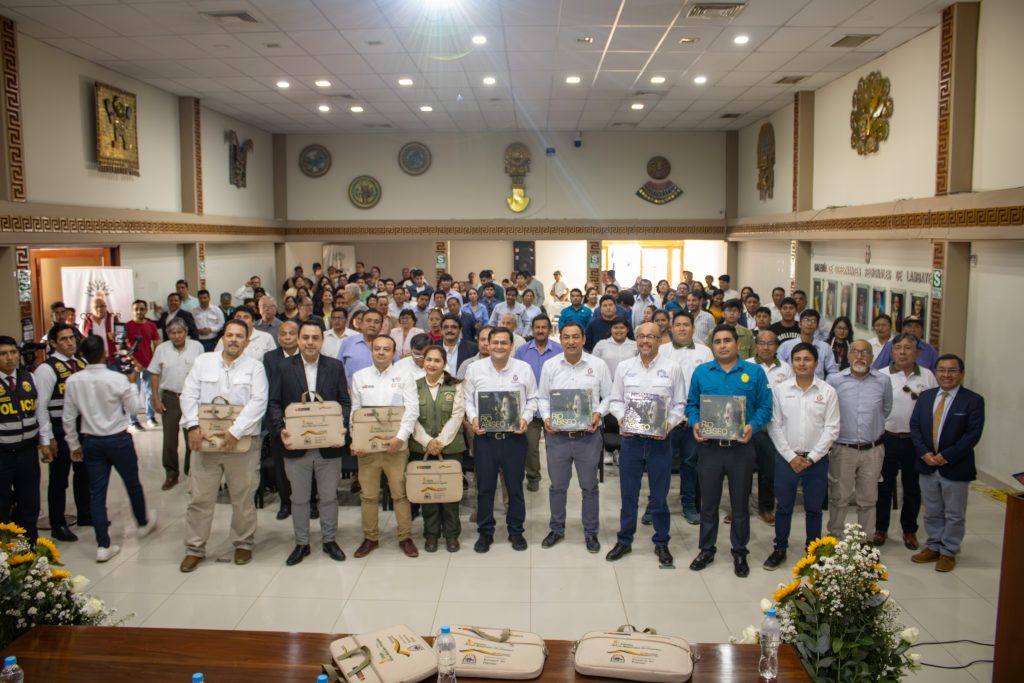
Chiclayo. December, 2024. During the VIII Regional Forestry Congress COREFOR, organized by the Regional Government of Lambayeque and the Macro-regional Platform Forests of the North, in coordination with the Dry Forest Project of the Ministry of Environment, the need to take immediate measures to restore the dry forest of the northern coast of Peru, a territory that in recent years has been lost or degraded almost entirely, was highlighted.
In a context of climate change, COREFOR highlighted the value of knowledge to generate public policies, as well as the need to improve the practices being developed for the recovery of this ecosystem. “We need to influence institutional and financial strategies for the recovery of degraded areas. As a country, we have the commitment to recover 30% of them by 2030,” said Mirbel Epiquién, Director of Biological Diversity of the Ministry of Environment.
COREFOR is an annual technical meeting that brings together researchers, experts, educators, policy makers and entrepreneurs who have an impact on the dry forest ecosystem of the northern coastal region. This year it was emphasized that knowledge and alliances will be the basis for regional governments to articulate and have a joint vision of macro-regional territorial development.
“The dry forest is a valuable ecosystem because of the diversity of species it harbors and also because of the economic opportunities it provides for 2.6 million people. If we do not take immediate measures for its recovery, especially in the midst of a climate crisis, it is possible that it will disappear. From the Dry Forest project we seek to promote spaces such as COREFOR, in which we link the knowledge generated by various institutions, the sustainable initiatives that are being promoted and those who make political decisions,” said Sergio Lazo, coordinator of the Dry Forest project.
Agreements for the dry forest
In order to generate commitments for the northern macro-region, the various stakeholders from academia, business and the political sector concluded that it is necessary:
- Greater involvement of academia to carry out studies related to the dynamics of the flora and fauna of the dry forest, which will allow policy decisions to be made.
- Involve the private sector in financing mechanisms related to dry forest restoration processes.
- Recognize experiences in restoration processes, generation of deforestation-free value chains and sustainable agriculture that can be replicated and scaled up to public policies.
- Establish mechanisms to allocate resources for environmental investment projects.
- Strengthen the Bosques del Norte Macro-regional Platform.
- Promote income from restoration (MERESE), involving the business community in the recovery of dry forest ecosystem services.
These commitments will be part of the work plan of the Northern Forests Macro-regional Platform, a working group of regional governments to generate public policies for the macro-region, for the conservation of dry forests.