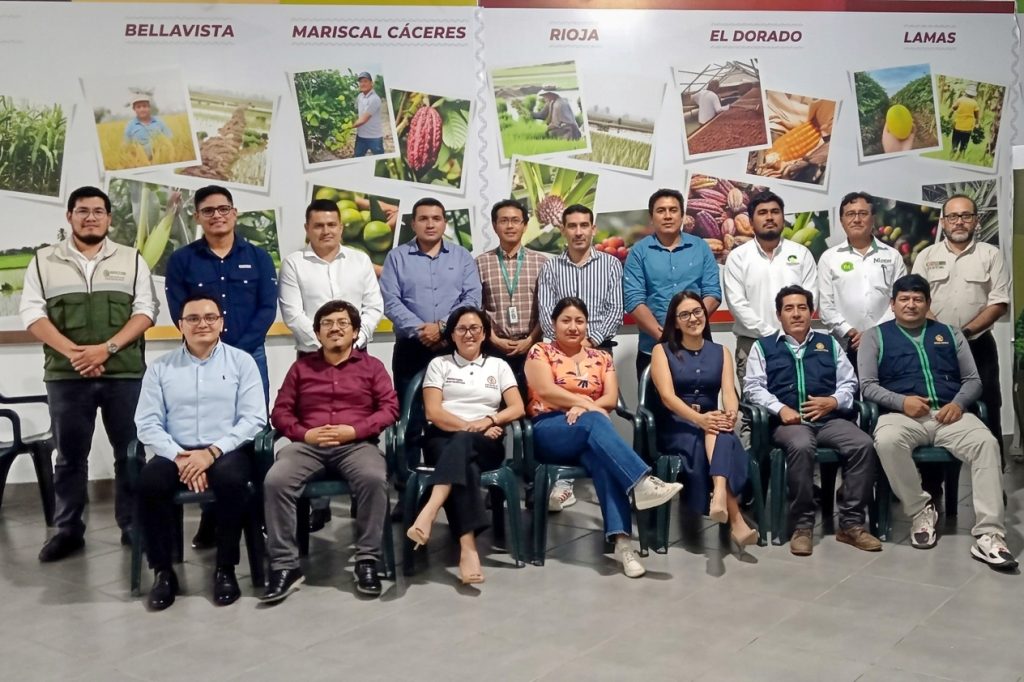
In Tarapoto, San Martín, the “Exchange of experiences, evaluation and multi-regional integration of the Amazonian Regional Forest and Wildlife Control and Surveillance Boards (MRCVFFS)” took place, a key space for articulation between the National Forest and Wildlife Service (SERFOR) and the Regional Governments to strengthen the control and surveillance of natural resources in the Amazon.
Technical representatives from Amazonas, Huánuco, Loreto, Madre de Dios, San Martín and Ucayali met to share progress, challenges and lessons learned from their territorial experience, highlighting the importance of inter-institutional coordination to more effectively address problems such as illegal logging and wildlife trafficking.
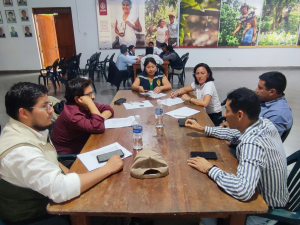
Caption: Working groups identified challenges and agreed on improvement actions.
As a result of the meeting, multi-regional lines of action were prioritized and the role of the MRCVFFS as strategic spaces for the prevention, detection and attention to illegal activities in the Amazon was reaffirmed. Agreements were reached to improve the flow of information between institutions, standardize technical criteria and strengthen coordination mechanisms in the field, key aspects for more efficient and timely intervention.
Strengthening the MRCVFFS within the framework of the DCI Project
The workshop was developed with the support of the Joint Declaration of Intent (JIU) project, which contributes to capacity building and inter-institutional coordination to improve the management of forest control and monitoring in the country. Within this framework, between 2024 and 2026, 32 sessions of the MRCVFFS and 29 spaces for capacity building were held in the regions of Huánuco, Amazonas and Madre de Dios, with the participation of key actors such as the Specialized Environmental Prosecutor's Office (FEMA) and the Environmental Division of the Peruvian National Police.
In addition, during 2025, 10 technical assistance programs were provided to regional governments and workshops were held in the regions of Amazonas, Loreto, San Martín, Huánuco and Madre de Dios, which helped to consolidate the operability of the MRCVFFS in the territory, improve coordination between entities, promote joint actions to address problems such as deforestation and wildlife trafficking, and strengthen the use of information for decision-making.
In regions such as Huánuco, this coordinated work is already showing results in the territory. Coordination between entities has made it possible to move from technical analysis to the implementation of joint actions against illegal mining and logging, strengthening the response to deforestation. These advances demonstrate the contribution of the roundtables to a more effective management of forest control and surveillance.
About the Joint Statement of Intent (JIU), its Financial Mechanism and the JIU Project
The Joint Declaration of Intent (JIU) is a voluntary cooperation agreement signed in 2014 by the governments of Peru, Norway and Germany, aimed at reducing greenhouse gas emissions from deforestation and forest degradation. In the addendum signed for the period 2021-2025, the United Kingdom joined the agreement.
The ICD has a Financial Mechanism, administered by Profonananpe, which manages the resources for the implementation of its phases. Within this framework, the ICD Project is currently being executed, which contributes to the implementation of the Updated Plan 2021-2025. It is led by the Ministry of Environment and executed by Profonanpe, with funding from the Norwegian Agency for Development Cooperation (NORAD) through the Norwegian International Climate and Forest Initiative (NICFI), and the participation as implementing partners of the Ministry of Agrarian Development and Irrigation, through SERFOR; Sernanp; the Ministry of Culture; the regional governments of San Martin, Huanuco, Ucayali, Loreto, Amazonas and Madre de Dios; and the indigenous organizations AIDESEP, CONAP and ANECAP. Learn more here.