He Regional Government of Lambayeque, with the technical assistance of Ministry of the Environment and the support of Profonanpe through the phe Cuencas Vivas (Living Watersheds) project, developed the Climate Change Risk Analysis Study as part of the process of updating the Regional Climate Change Strategy (ERCC). This study made it possible to identify areas vulnerable to floods, water shortages, increased temperatures and other extreme weather events, providing key information for planning and decision making in the region.
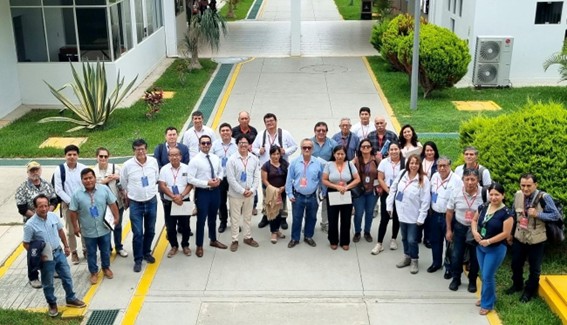
The process involved the participation of the Lambayeque Regional Environmental Commission (CAR), which brought together more than 30 representatives from public and private institutions. As a result, adaptation measures were identified in line with the Nationally Determined Contribution (NDC), which establishes the country's climate change goals. These include the strengthening of irrigation systems and the protection of headwaters, the restoration of ecosystems in high Andean areas and dry forests, and the promotion of resilient agricultural practices such as crop diversification.
Photo: Regional Government of Lambayeque - Workshop for the Analysis of Climate Exposure and Vulnerability of the Lambayeque Region: (February 18, 2026))
The study indicates that, by 2050, the greatest climate risks will be concentrated in the Chancay-Lambayeque, Motupe-La Leche, Zaña and Olmos-Cascajal basins. In these areas, effects such as ecosystem degradation and pressure on water resources are observed, with consequences for production and livelihoods. Faced with this scenario, it is proposed to prioritize a progressive implementation of adaptation measures, combining actions at the district level with interventions at the basin level.
“This process will allow proposing actions, activities and projects aimed at strengthening climate change management in the region, through the implementation of adaptation and mitigation measures.”, said Juan José Inoñan, Specialist in the Regional Management of Natural Resources and Environmental Management (GRRNGA) of the Regional Government of Lambayeque.
In addition, “The big challenge now is to complete and implement the Regional Climate Change Strategy, The information will be translated into measures that will directly benefit the citizens”.”, said Rogger Morales, a specialist in climate risk management at the Ministry of the Environment.
Living Basins, is implemented by Profonanpe with funding from the Adaptation Fund and led by Imar Costa Norte in the Chancay-Lambayeque watershed. Its mission is to strengthen the resilience of communities and ecosystems in northern Peru in the face of climate change, contributing to national adaptation goals.