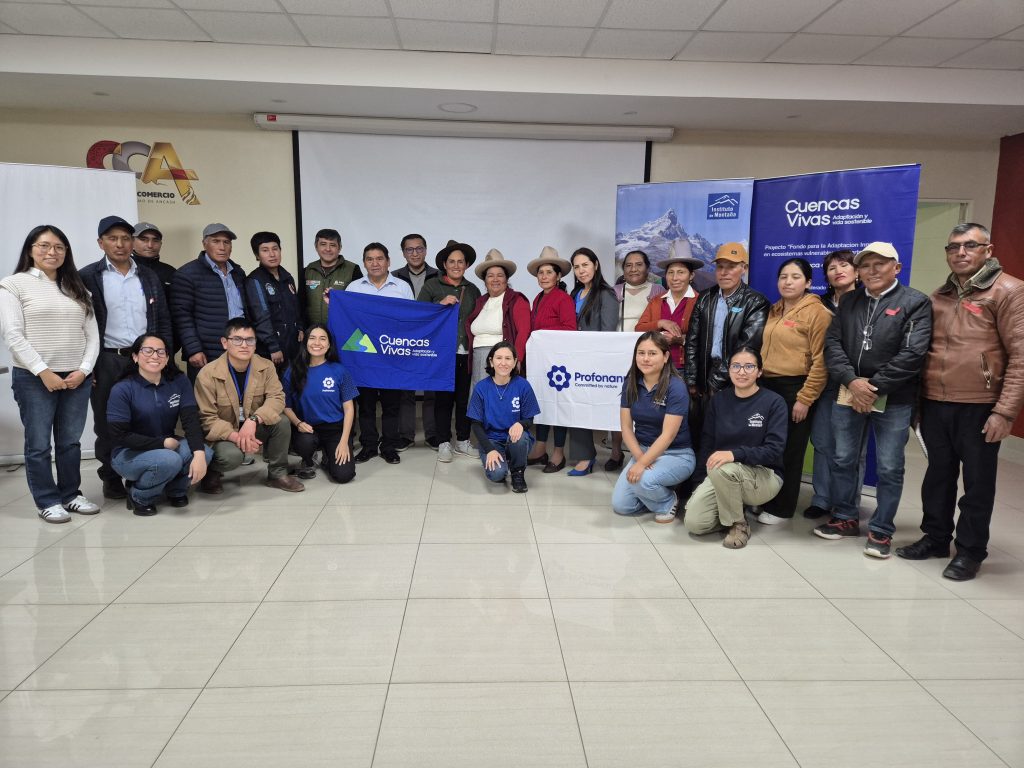
The dialogue in Áncash helped bridge the gap between technical information and the experience of those who manage water, crops, pastures, and their productive activities on a daily basis in the Río Negro sub-basin, helping to strengthen the communities’ preparedness for the risks associated with the El Niño phenomenon (FEN).
The meeting brought together representatives from eleven local initiatives in Huaraz, Olleros, and Recuay, as well as institutions involved in climate information, risk management, and agricultural support. The event was organized by Profonanpe, through the project Living Basins, along with the Mountain Institute (IdM), the lead partner in the project.
During the meeting, threats such as heavy rains, floods, landslides, and water shortages were identified, in addition to recurring events such as frosts and hailstorms. Through participatory work, the organizations analyzed how these events could affect water collection and distribution systems, irrigation infrastructure, crops, pastures, livestock, and small animal husbandry, and proposed prevention, response, and recovery measures that can be implemented by the organizations themselves and coordinated with the relevant institutions.
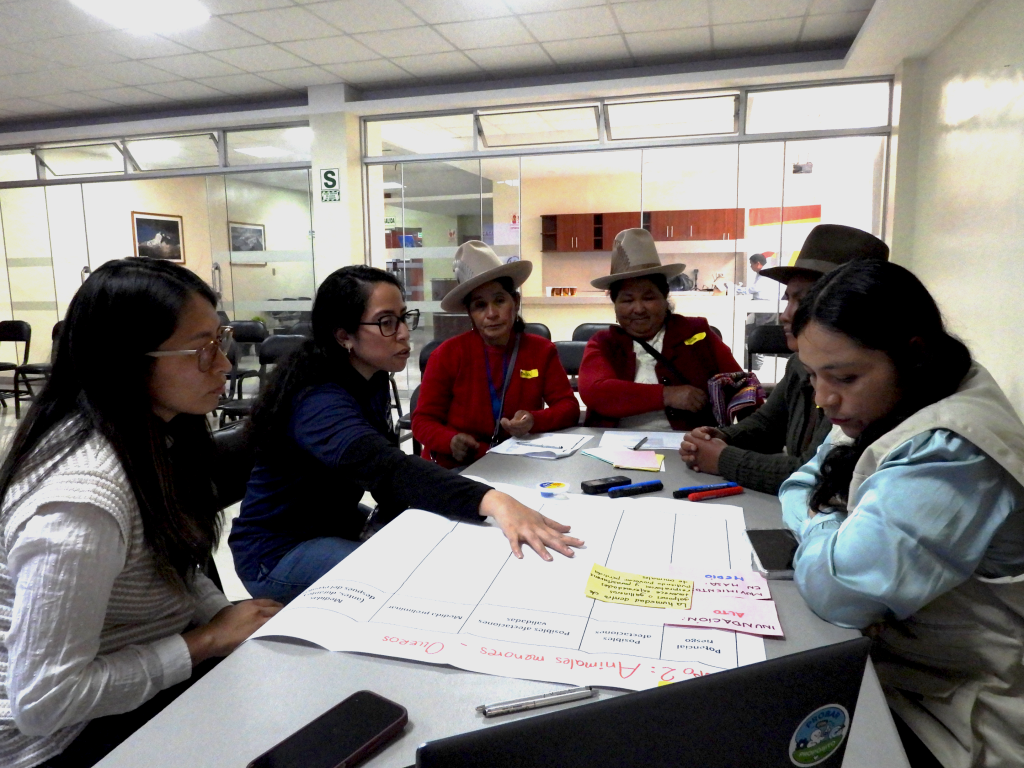
Local initiatives and institutions are analyzing climate risks and preparedness measures in response to the FEN during working group sessions. Photo: Profonanpe
The exchange continued the next day with a field trip led by representatives of local initiatives and IdM, who led the tour and presented the progress, challenges, and solutions they have been developing in the region. The visit covered the Negro River sub-basin, moving from the upper reaches to the lower reaches, providing insight into issues related to water availability and quality, as well as initiatives for water collection and efficient use of the resource, bioremediation, pasture management, and productive activities—all of which are interconnected throughout the region and aimed at strengthening families’ livelihoods in the face of a changing climate.
For the organizations themselves, these changes are already part of the decisions they must make regarding the future of their territories. “The snow-capped mountain that supplies us with water is receding, and we know we can’t always rely on that source. That’s why we’re looking for new alternatives and improving water collection and irrigation to ensure a water supply and sustain our productive activities in the coming years,”, Nadje Quiñones, president of the Huaripampa Users“ Committee, which is implementing the local initiative titled ”Implementation of the Water Collection and Distribution System,” noted: “Implementation of the Water Collection and Distribution System.” Her experience shows how communities are moving from recognizing the effects of climate change to implementing concrete measures to reduce their vulnerability.
The tour also created a space for learning among communities, institutions, and organizations by allowing them to compare the information discussed during the dialogue with the actual conditions in the sub-watershed. To IdM, this exchange also opens up the possibility for locally developed initiatives to be strengthened and shared with other regions. “These initiatives show that adaptation is built from the ground up and in collaboration with communities. The challenge is to strengthen the solutions they are already promoting, coordinate among institutions, and ensure that these experiences can be shared and replicated in other sub-basins,”, said Vidal Rondán, Project Coordinator for the Santa del Basin IdM.
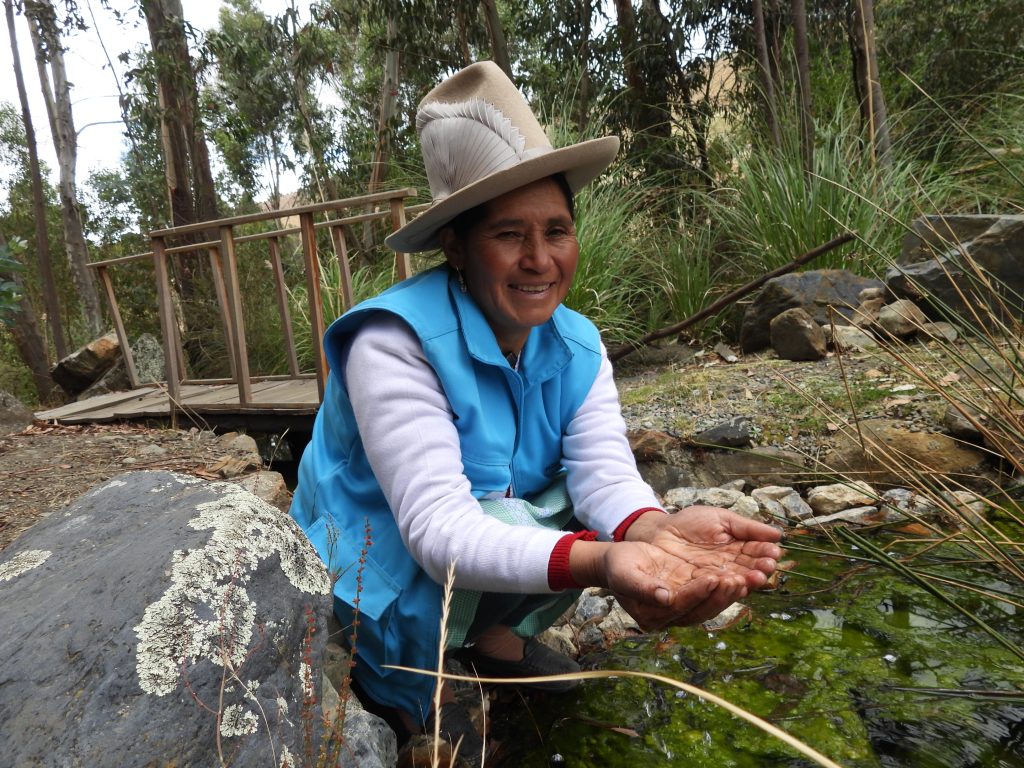
Delia Rodríguez shows the treated water coming out of the pilot bioremediation plant, which aims to improve its quality for irrigation. The initiative is already being implemented in the Canrey Chico area thanks to the Cuencas Vivas project. Photo: Profonanpe
Through Living Basins, Profonanpe It promotes adaptation to climate change that builds on local knowledge and capacities and is strengthened through coordination among communities, organizations, and institutions. In Áncash, this process aims to ensure that solutions related to water management, production systems, and ecosystem conservation are not isolated actions, but rather part of a regional response that helps increase the resilience of rural populations in the face of climate challenges.