Photo: Profonanpe
Of the total number of proposals, 53 came from Madre de Dios, 23 from Satipo (Junín), 15 from Ucayali (Purús and Atalaya), 14 from Cusco, 4 from Apurímac and 2 from Puno (Carabaya and Sandia). Of these initiatives, 15 were led by indigenous peoples and 5 by women, demonstrating the diversity of stakeholders interested in contributing to the sustainable development of their territories.
“This level of response confirms that there is an ecosystem of attentive, committed and capable actors in the Southern Amazon. The organizations know their territories and are developing concrete solutions to conserve them,” said Cecilia Huamanchumo, head of the Tropical Forests project.
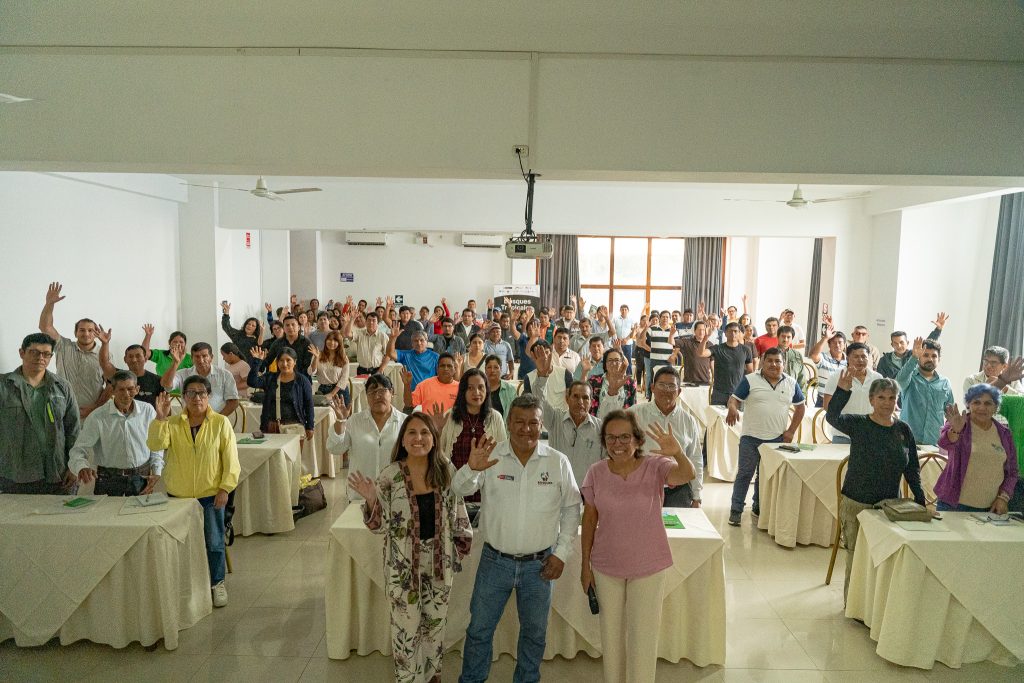
Photo:Profonananpe
After the evaluation stage, a total of 46 applications were admitted to move on to the next phase. The majority corresponds to initiatives in Madre de Dios (23), followed by Cusco (9), Ucayali (6), Satipo (5), Puno (2) and Apurimac (1). Entities admitted include NGOs, companies, conservation area owners, producer organizations, native communities, universities and individuals.
The topics most addressed by the proposals were the strengthening of economic activities with a focus on sustainability, the management of natural protected areas, governance and articulated landscape management, and the financial sustainability of natural protected areas in all their categories.
In total, more than USD 1.5 million will be channeled to the winning entities, with the aim of implementing projects that protect biodiversity, restore degraded ecosystems and strengthen local capacities. The selected entities will sign a donation agreement with Profonanpe, and must implement an operational plan with clear goals and continuous monitoring mechanisms to ensure tangible results.
The winning projects will be announced on October 13.
About the Tropical Forest Competitive Fund
In September 2023, Peru and the United States signed a Debt Swap Agreement under the U.S. Tropical Forest and Coral Conservation Act (TFCCA). The agreement will provide approximately USD 20 million over 13 years (until 2036) for the conservation of Amazonian tropical forests, with the aim of increasing the well-being of communities and the country's resilience to climate change.
Profonananpe, Peru's environmental fund, is the administrator of the counter-value fund and grants, and is supported by the Ministry of Environment (Minam), the National Service of Natural Areas Protected by the State (Sernanp) and the international donor organizations: Conservation International (CI), Wildlife Conservation Society (WCS), World Wildlife Fund (WWF) and The Nature Conservancy (TNC).
The second call of the fund will be maintained in the same regions of the Southern Amazon prioritized in this first edition. The dates will be announced soon.
Communications contact:
Katherine Castañeda | comunicacionbosquestropicales@profonanpe.org.pe |