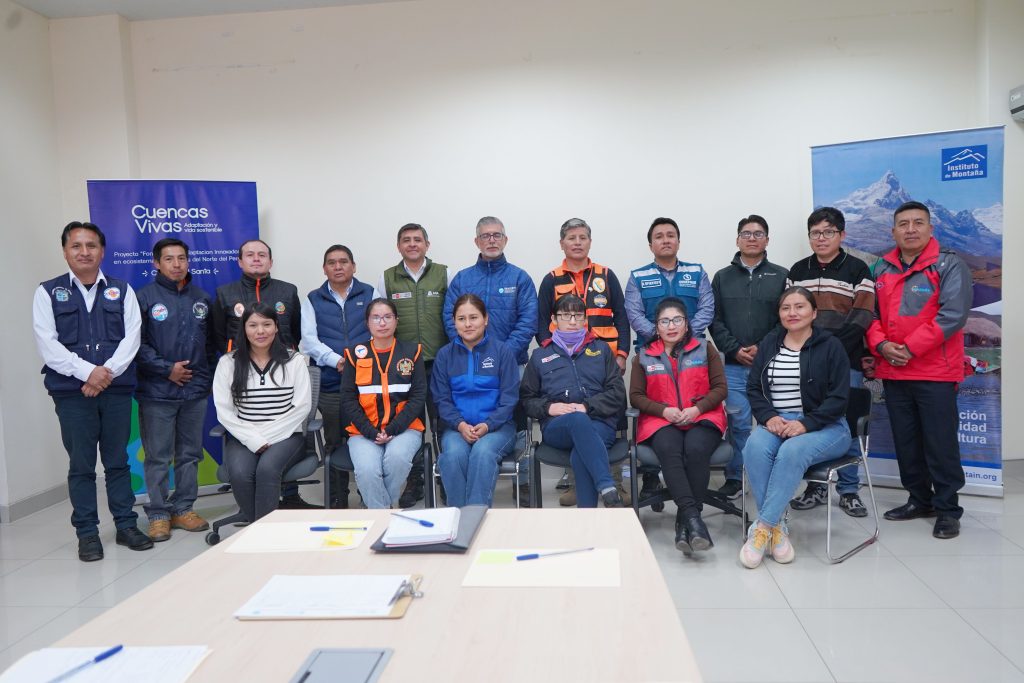
The design of an Early Warning System (EWS) for drought, the strengthening of coordination between institutions and the improvement of access to and use of climate information, incorporating intercultural and gender approaches for more effective risk management, were some of the main points of consensus reached during the meeting “Climate information for decision making and the implementation of adaptation measures to climate change”, organized by the Mountain Institute within the framework of the Cuencas Vivas (Living Watersheds) project.
The Jordanian promoted inter-institutional coordination to facilitate the exchange of experiences and the use of climatic and hydrological information. generated by State entities to strengthen decision making and facilitate the timely implementation of adaptation measures in the face of risks associated with climate change, such as the EWS.
During the day, Senamhi presented information weather and climate key for Ancash, while the National Water Authority presented on changes in glaciers and their water contribution to the sub-basins. At the same time, Inaigem shared the bioclimatic stress map for mountain ecosystems y Cenepred prospective and corrective disaster risk management and multisectoral planning. These contributions promoted the exchange of technical-scientific information through their platforms, spaces and dissemination tools for decision making in response to local climate challenges and strengthening interinstitutional coordination.
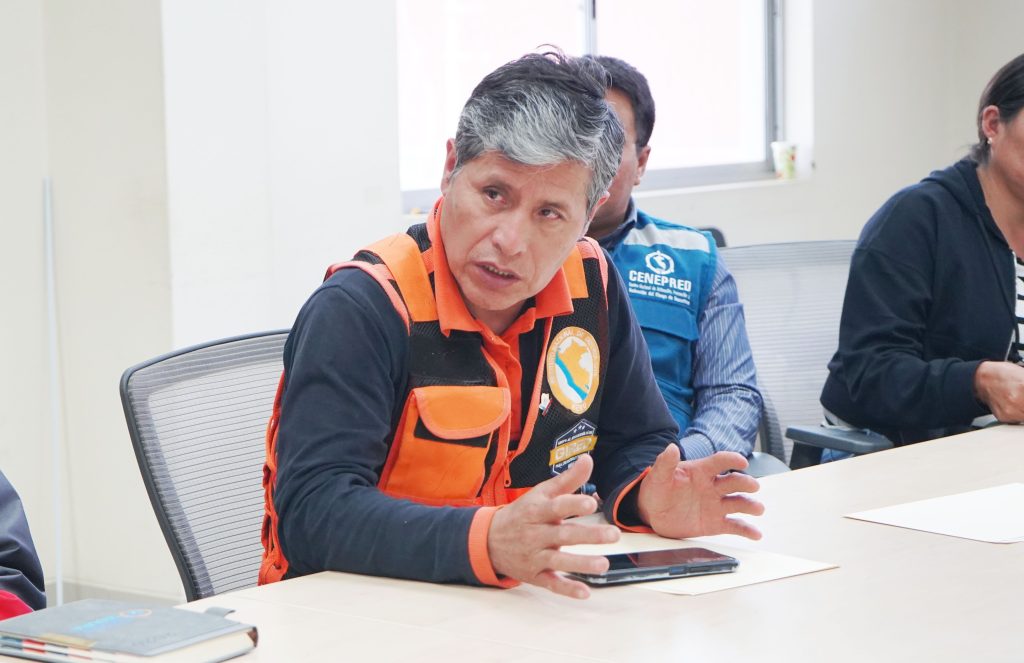
Silvestre Quito, specialist from Indeci's Decentralized Office in Ancash, shares the experiences and guidelines of the SAT. Photo: Mountain Institute.
In this context, Indeci presented the components and scope of the EWS, while the COER Ancash shared the experience of the system implemented in the Palcacocha lagoon. An experience in Puno was also presented by the consultant Omar Varillas, oriented to the agricultural sector, who highlighted the importance of integrating scientific knowledge with ancestral knowledge.
The activity took place at the Ancash Regional Emergency Operations Center (COER) and brought together representatives from municipalities such as Huaraz, Independencia, Jangas and Yungay, together with specialists from the Disaster Risk Management Offices of local governments in the Santa river basin. Representatives of specialized technical institutions such as the National Meteorological and Hydrological Service of Peru (Senamhi), the National Center for Estimation, Prevention and Disaster Risk Reduction (Cenepred), the National Institute for Research on Glaciers and Mountain Ecosystems (Inaigem), the National Water Authority (Ana), the National Civil Defense Institute (Indeci) and the COER Áncash also participated.
The project Living Basins is implemented by Profonanpe, with financing from the Adaptation Fund, and led by Mountain Institute in the Santa river basin, in the Ancash region. Its objective is to strengthen the resilience of communities and ecosystems in the face of climate change, contributing to national adaptation goals.