Author: Sernanp
After a rigorous participatory process involving the State, local authorities, and civil society, Illescas is now categorized as a National Reserve, the first in the Piura region, managed by the National Service of Natural Protected Areas (Sernanp), body attached to Ministry of the Environment.
With its officialization, the announcement made by the Minister of the Environment, Rubén Ramírez, on November 14th during his visit to the Virrilá Estuary Environmental Conservation Area (ACA), located in the province of Sechura, is fulfilled, where he confirmed the categorization of Illescas for this year.
The categorization of Illescas, formalized through Supreme Decree No. 038-2021-MINAM, marks an important milestone in Peru as it will allow the continued conservation of a representative sample of the Sechura Desert and the biodiversity present in this part of the country; in addition, it will promote the sustainable use of natural resources for the benefit of the country, mainly the local populations, in an area that was established 11 years ago as a Reserved Zone.
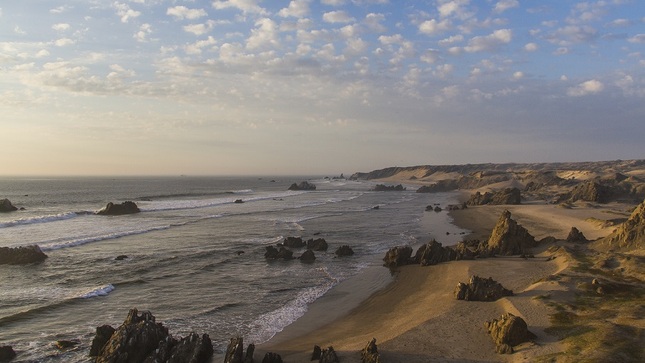
The Illescas National Reserve is home to iconic and breathtaking landscapes such as Illescas Hill, the dry savanna forest, and the barren plains. It is the only place on the coast where the Andean condor, an endangered species, breeds; it also serves as a refuge and protected area for the pampas cat, a wild feline that is near threatened. Furthermore, it is habitat for endemic species (unique to this area) such as the Illescas gecko and the Illescas rufous-collared sparrow.
Illescas is home to the northernmost coastal hills in Peru, and to the southernmost mangrove relict in Peru, the latter only recently discovered in 2015.
Within its 36,550.70 hectares, the park is home to approximately 120 species of birds, 11 species of mammals, 13 species of reptiles, and 67 species of flora. Among the diverse flora are the sapote and the carob trees; while the fauna includes mammals such as bats, the coastal fox, and the South American sea lion; reptiles such as snakes and lizards; and birds such as the falcon, the Humboldt penguin, and flamingos.
The National Reserve designation allows for the sustainable use of flora and fauna resources, as well as the development of environmentally responsible productive activities, including tourism. Within this protected natural area are the remains of human settlements from different pre-Hispanic periods, such as a temple dedicated to fishing gods and a temple known as Piedras Blancas (White Stones).
Participatory and transparent process
The categorization of Illescas as a National Reserve has been a participatory, inclusive, and transparent process. During the information phase, 39 meetings were held to present the proposal to various stakeholders, including public entities (national, regional, and local), private entities, and the local population surrounding the protected natural area.
As part of this process, the multi-sectoral working group “Illescas Reserved Zone Categorization Commission” was formed, comprised of representatives from SERNANP (National Service of Natural Protected Areas), the Ministry of Energy and Mines, the Ministry of Foreign Trade and Tourism, the Peruvian Navy, the Regional Government of Piura, the Provincial Municipality of Sechura, the San Martín de Sechura peasant community, and surrounding populated centers. This process also benefited from the support of strategic partners such as the Peruvian Society for Environmental Law (SPDA), the Andes Amazon Fund, the KfW PAN III project (led by SERNANP and administered by Profonanpe), and the UNDP Coastal Fisheries Initiatives for Latin America (CFI) project.