The communities located in the basins of the Lower Huallaga and Paranapura rivers are increasingly vulnerable to climate change, with floods, droughts and landslides affecting their water security, agricultural production and forests. Faced with this scenario, in the framework of the implementation of the Cuencas Vivas project, powered by Profonanpe, The lead partner CODEPISAM (Coordinadora de Desarrollo y Defensa de los Pueblos Indígenas de la región San Martín) held community assemblies in four native Kichwa communities: Anak Juanjuysillu, La Esperanza, Shapahilla and Ankash Urku-San Hilarión, where the project's activities and approach were validated in a participatory manner.
As part of this work, model statutes were prepared for modifications to the internal regulations of the 12 communities of the Kichwa people, with the active participation of their four representative federations: Federation of Indigenous Peoples Kechwa Chazuta Amazon (FEPIKECHA ), Federation of Kichwa Indigenous Peoples of Bajo Huallaga San Martín (FEPIKBHSAM), Ethnic Council of the Kichwa Peoples of Amazonia (CEPKA) and The Federation of Kechwa Indigenous Peoples of the San Martín Region (FEPIKRESAM). These models strengthen the management of the communal territory, promoting the protection of water sources, forest conservation, territorial surveillance and response to extreme events. They also promote the participation of women, youth and other groups in community decision-making for more inclusive governance.
At the same time, CODEPISAM coordinated actions with municipalities and technical entities in the territory, such as the SENAMHI, The Regional Office of Security and National Defense (ORSDENA), and the Regional Environmental Authority (ARA), to strengthen institutional coordination in the territory and facilitate the application of the statutes.
The progress of the Cuencas Vivas project lays the groundwork for implementing community early warning systems and strengthening watershed management with indigenous leadership, articulating ancestral knowledge, technical information and institutional coordination.
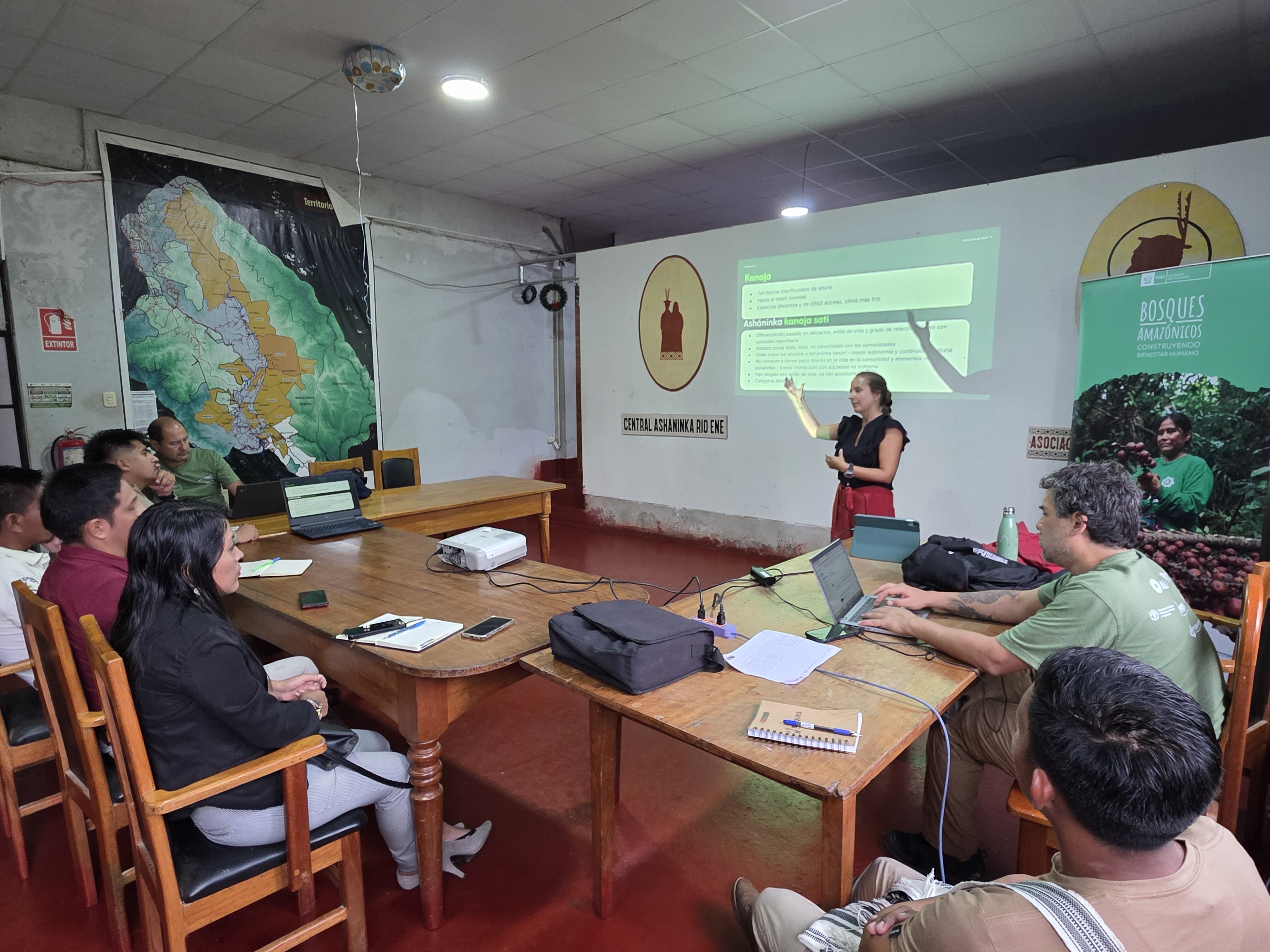
 Consultant Marco Sangama's working session with CEPKA leaders
Photo: CODEPISAM
The Cuencas Vivas Project is implemented by Profonanpe, with financing from the Adaptation Fund, and led by the Coordinadora de Desarrollo y Defensa de los Pueblos Indígenas de la región San Martín - CODEPISAM in the Bajo Huallaga and Paranapura watersheds in the San Martin region. Its objective is to strengthen the resilience of communities and ecosystems in the face of climate change, contributing to national adaptation goals.