The Frutos de la Amazonía competitive grant program concluded its first call for proposals with a response that highlights the entrepreneurial potential of the Peruvian Amazon. A total of 108 organizations and startups submitted applications to access funding and technical support that will enable them to strengthen their sustainable bio-businesses.
The applications come from the three territories prioritized by the ASL2 Amazon Forests project: 54 in Satipo, 32 in Atalaya, and 22 in Loreto-Nauta, reflecting the growing interest among communities, associations, and cooperatives in developing productive initiatives that generate income while contributing to the conservation of the Amazonian forests.
This result is the outcome of an extensive outreach effort that made it possible to connect with more than 500 entrepreneurs and representatives of local organizations through in-person and virtual meetings. The project’s technical team traveled to indigenous communities, towns, and cities in the Amazon to provide information about the opportunities offered by the fund and to support applicants throughout the process.
In Atalaya, the coordinated effort with the Provincial Municipality of Atalaya and The Sepahua District Municipality organized a call for participation from local organizations, business associations, and entrepreneurs, with significant participation from women and young leaders in the province.
In Satipo, coordination with the Provincial Municipality, the Río Tambo District Municipality, and the PROVRAEM Special Project made it possible to involve indigenous communities and producer associations engaged in activities such as handicrafts, agroforestry systems, and sustainable agriculture.
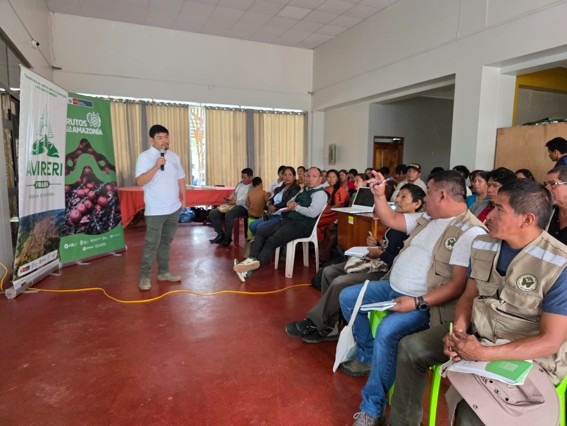
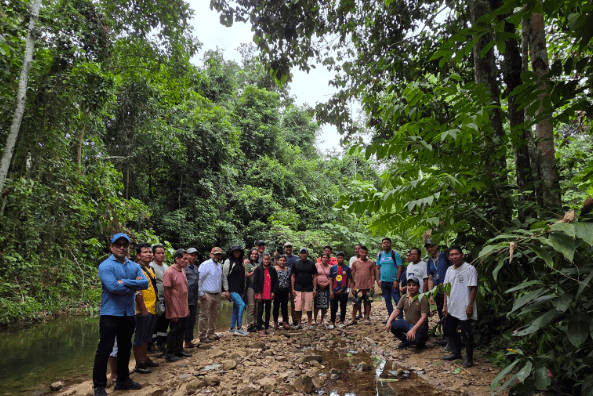
Outreach Workshop on the “Frutos de la Amazonía” Competitive Grant Program in Satipo.
Photo: Yamira Figueroa
In Loreto-Nauta, a decentralized strategy made it possible to reach more than twenty communities in the Marañón and Tigre river basins. With the support of indigenous organizations and strategic partners, this opportunity was extended to territories that have historically faced greater barriers to accessing financing programs.
The results achieved reflect significant indigenous participation: of the more than 500 people reached through the outreach process, 371 belong to indigenous peoples, and more than 350 lead or are part of active bio-businesses with growth potential.
Among the most widely represented sectors are indigenous crafts and art, agroforestry systems, aquaculture, and sustainable agricultural production—activities that combine income generation, cultural identity, and the conservation of natural resources.
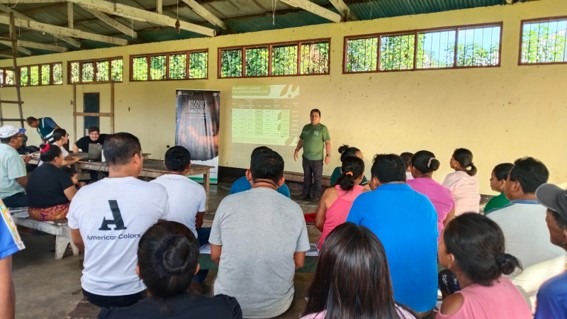
Outreach workshop in the San José de Parinari indigenous community, Loreto, featuring local businesses involved in handicrafts, experiential tourism, and chambira management.
Photo: Haroldo Linares.
The call for entries also reached such a wide audience thanks to the support of 21 local institutions and media outlets, which helped publicize the contest rules and bring the information to organizations in the priority regions.
With the closing of this first call for proposals, the next phase—aimed at identifying the initiatives with the greatest potential for impact—will begin. The selected startups will have access to non-repayable seed capital and will receive technical and business support to strengthen their production, commercial, and organizational capabilities.
Through this initiative, the project aims to promote a sustainable Amazonian economy, creating opportunities for local communities and recognizing the vital role they play in biodiversity conservation.
The ASL2 Amazon Forests Project is led by the Ministry of the Environment, funded by the Global Environment Facility (GEF), implemented by the FAO, the International Fund for Agricultural Development (IFAD), and UNIDO, and carried out by Profonanpe.