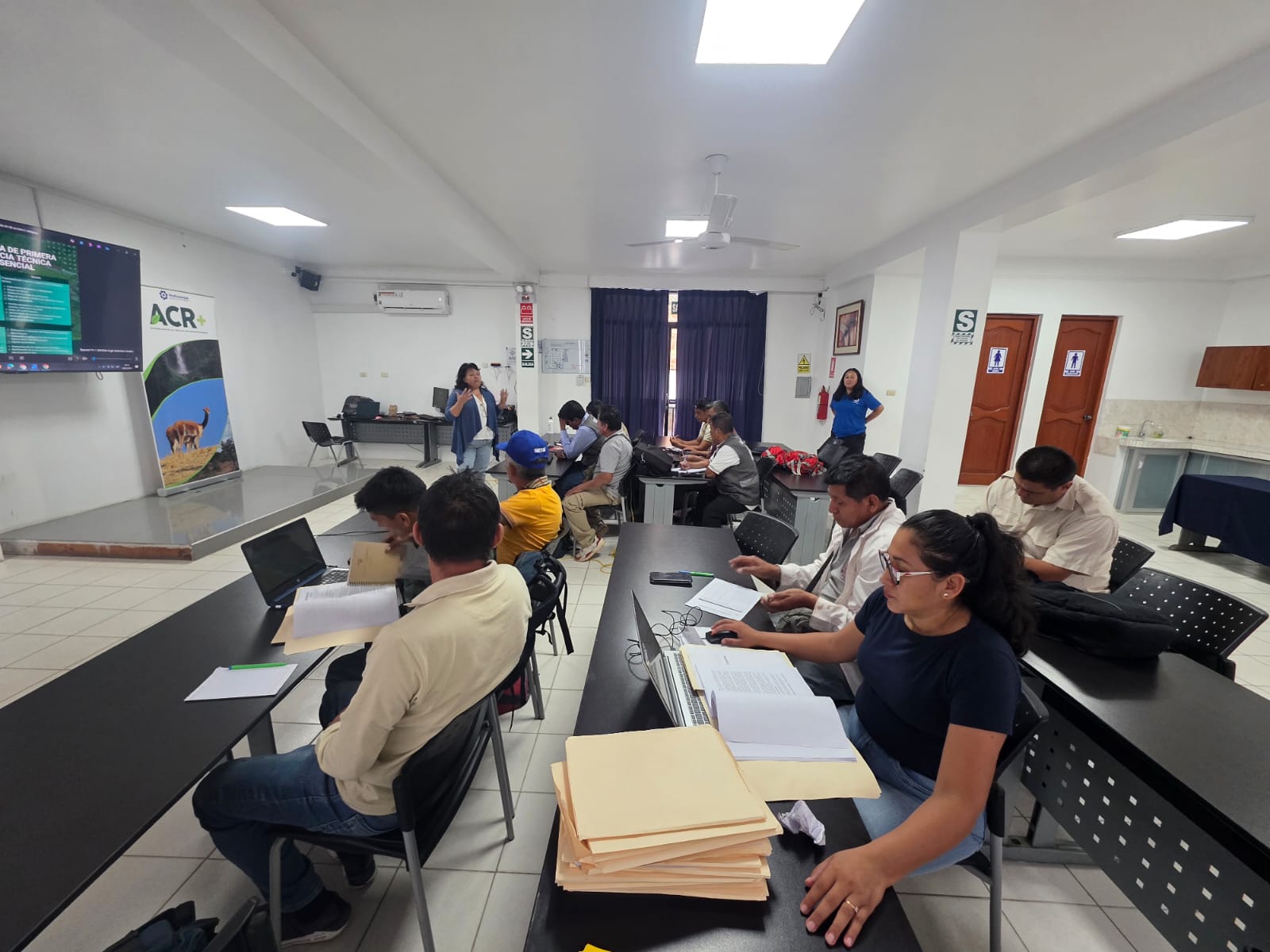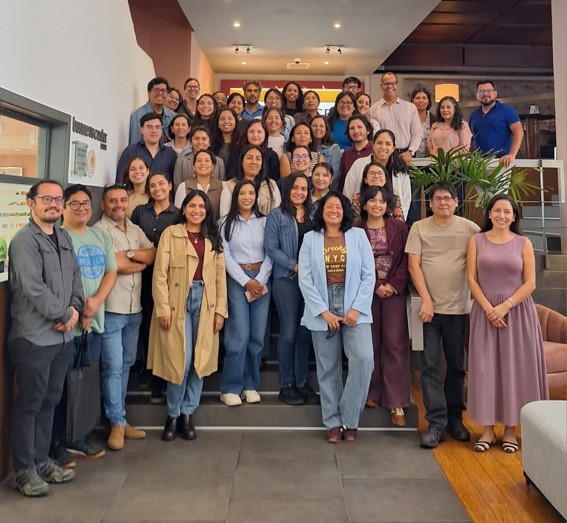
From August 24 to 27, 2026, Profonanpe held a Professional Training Course on Environmental and Social Safeguards, led by the Tropical Agricultural Research and Higher Education Center (CATIE) of Costa Rica, aimed at technical staff working on projects and in areas related to the institution’s safeguards management.
The course aimed to strengthen the technical and management capabilities of Profonanpe's teams to design, implement, and monitor the environmental and social safeguards in their presentations. Through theoretical and practical sessions, the participants worked on tools related to risk identification, the development of management plans, the design of indicators, complaint-handling mechanisms, and stakeholder engagement.
One of the main benefits of this training was to strengthen the implementation of the Environmental and Social Management System (ESMS) and the Environmental and Social Policies (ESP) from Profonanpe, institutional tools designed to ensure proper environmental and social management in projects. These lessons will make it possible to anticipate risks from the earliest stages of design, improve decision-making, and strengthen the monitoring of commitments in the field.
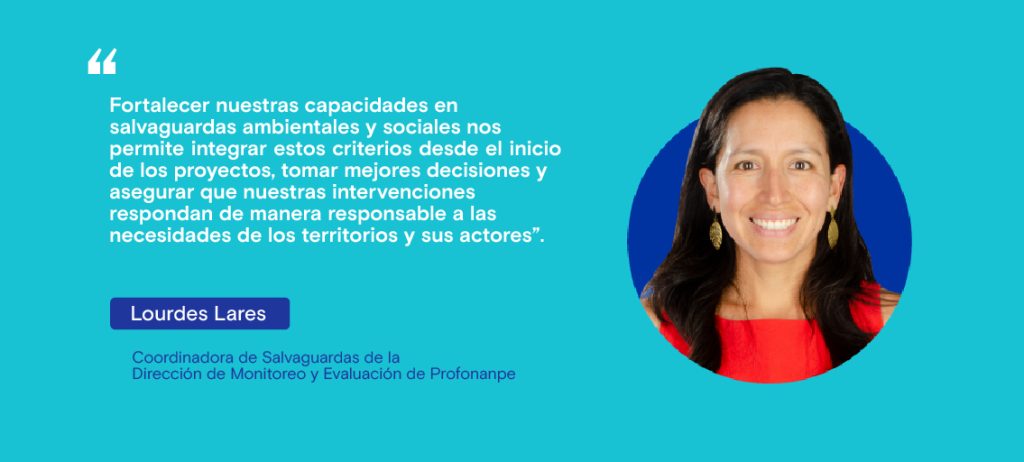
During the training process, topics such as the categorization of environmental and social risks and impacts, the development of Environmental and Social Management Plans (ESMPs), the application of safeguards in subgrant processes, complaint-handling mechanisms, and the incorporation of gender, participation, and intercultural perspectives. Additionally, international references were reviewed, such as the standards of the Green Climate Fund, the Adaptation Fund, the World Bank, the IFC, and the GEF.
The training helped reinforce the institutional vision regarding the role of safeguards as a management tool that contributes to the sustainability of projects—and not merely as a requirement associated with international financing. Using a “learning by doing” approach, participants analyzed case studies and completed practical exercises using tools applicable to different intervention contexts.
At the end of the sessions, participants completed an assessment to earn a CATIE-endorsed certification in safeguards at the basic and advanced levels. This process represents a step forward for Profonanpe in strengthening its internal capacities and consolidating increasingly robust environmental, social, and governance management.
This initiative reaffirms Profonanpe's institutional commitment to strengthening its management standards and continuing to promote sustainable, inclusive, and responsible projects that benefit people and communities.