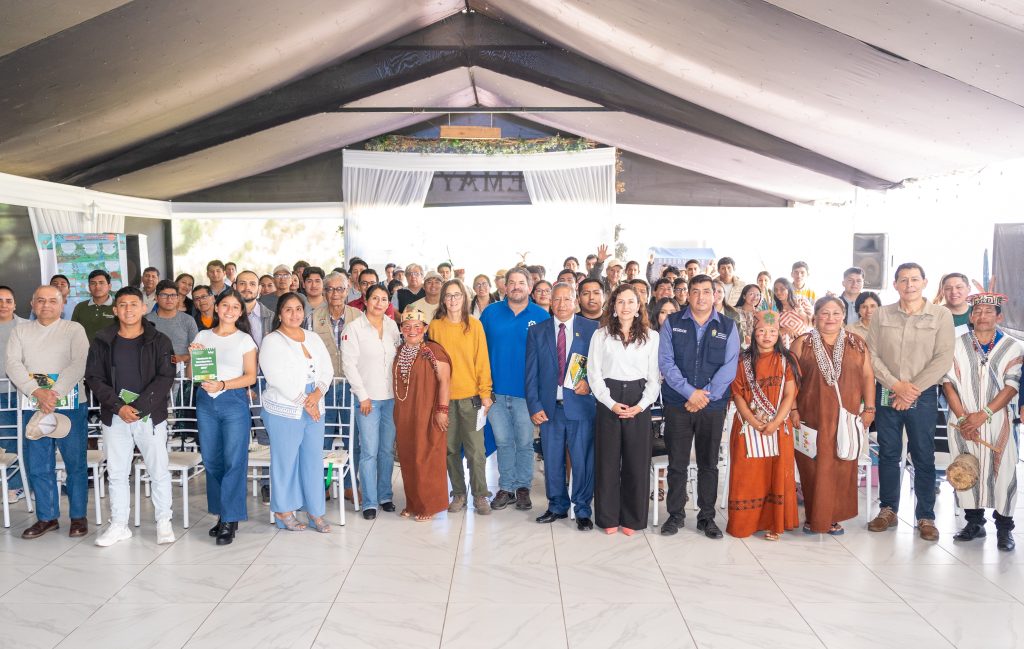
Inauguration of the I Seminar “Research and Experiences in BIOAY”.”
Photo: Profonanpe
While the world faces the alarming decline of pollinating insects, voices are being raised in the central jungle of Peru in search of solutions. Local authorities, representatives of indigenous peoples, scientists, producers and students met on June 4 and 5 in Oxapampa to promote research and conservation of biodiversity, with special attention to the vital role played by these small allies of ecosystems.
During the I Seminar “Research and experiences in the Oxapampa - Asháninka - Yánesha Biosphere Reserve (BIOAY)”, about 20 presentations were shared in four thematic blocks: research in biosphere reserves, health and conservation in the Amazon, monitoring in natural protected areas and agroecology in the central jungle. A participatory workshop was also held to collectively build a roadmap to guide future research in the region.
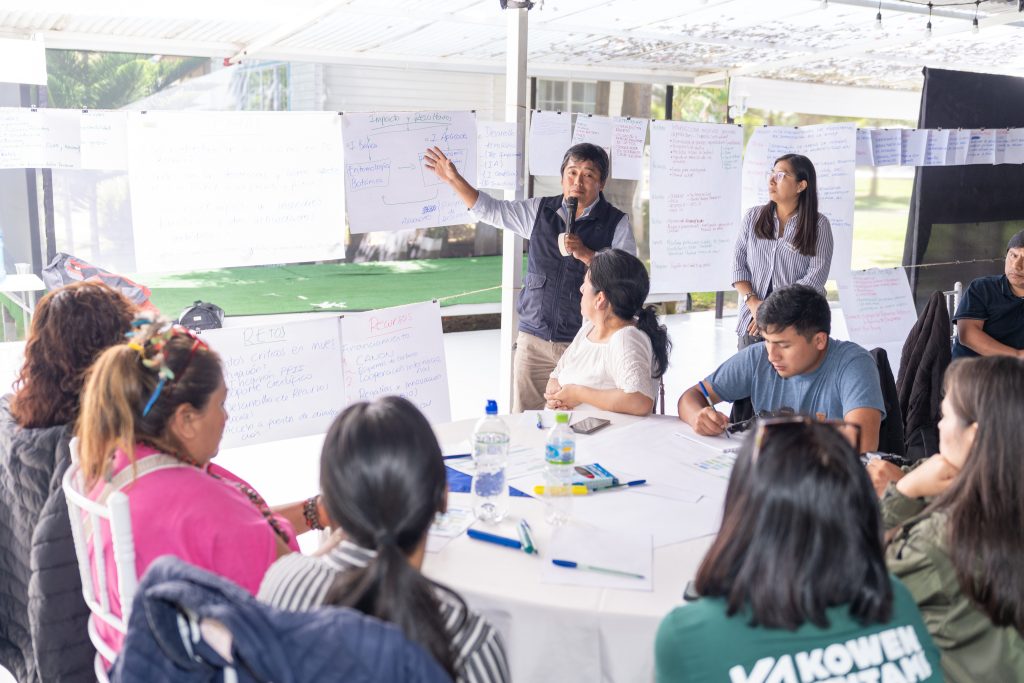
Participatory workshop to define BIOAY's research roadmap
Photo: Profonanpe
With the participation of more than 100 people, the seminar was not only an academic space, but also an intercultural encounter that reaffirmed the value of articulating science, ancestral knowledge and local management to face the environmental challenges affecting the region.
“For us, this seminar represents a milestone. We have to bet on an integrated and sustainable development in the province of Oxapampa. With this research work and these experiences, we are leaving a precedent for new generations, so that they continue working and protecting our BIOAY,” said Councilman Fidel Rueda, representing the Provincial Municipality of Oxapampa.
Marisol Shariva, vice-president of the Asociación de Comunidades Asháninkas del Valle del Pichis (ANAP), emphasized the contribution of indigenous peoples in knowledge generation processes. “We, as native peoples, investigate from the deep knowledge of our forests and our territory. We come to share and make a real exchange of knowledge,” he said.
One of the highlights of the event was the participation of the Poli-LAC project, which promotes the conservation of pollinating insects. Ignacio Piqueras, project coordinator, presented the main approaches and stressed the need to promote a priority research agenda on pollinators and their ecosystem services in BIOAY.
Dr. Daniel Vecco, research professor and president of the Board of Directors of Urku - Estudios Amazónicos, also participated, addressing the environmental, cultural and economic value of pollinators, calling for awareness and action based on scientific and local knowledge.
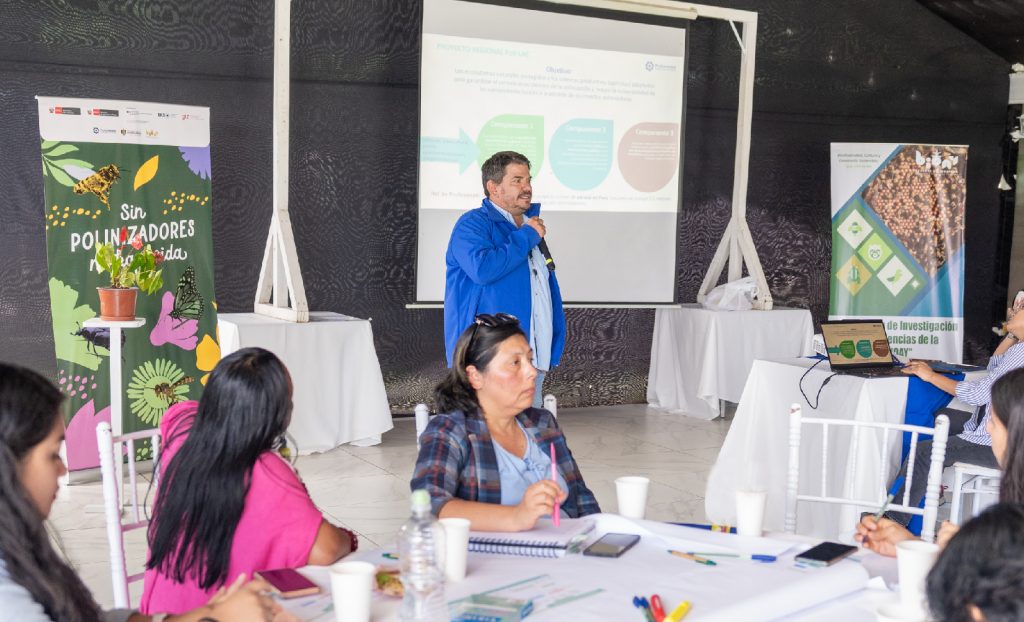
Presentation of the Poli-LAC project and validation of the priority research agenda on pollinating insects.
Photo: Profonanpe
The event was organized within the framework of the 15th anniversary of the Oxapampa-Asháninka-Yánesha Biosphere Reserve (BIOAY) thanks to the Amazon Project, implemented by UNESCO, through the Oxapampa Provincial Municipality, with the support of Louis Vuitton Moët Hennessy (LVMH); and with the co-organization of the Poli-LAC project.
About Poli-LAC
The Poli-LAC regional project in Peru is led by the Ministry of the Environment (MINAM), with the support of German development cooperation, implemented by the Deutsche Gesellschaft für Internationale Zusammenarbeit (GIZ) GmbH, commissioned by the German Federal Ministry for the Environment, Nature Conservation, Nuclear Safety and Consumer Protection (BMUV), with funds from the International Climate Initiative (IKI), and executed in the Oxapampa – Asháninka – Yánesha Biosphere Reserve (BIOAY) by Profonanpe, Peru's environmental fund.