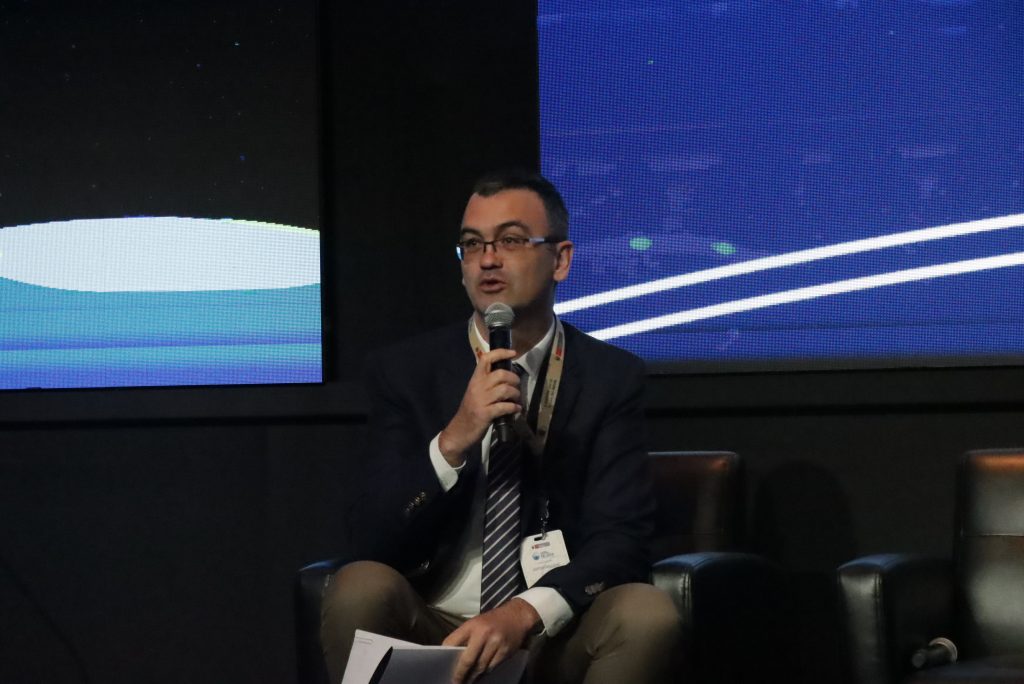
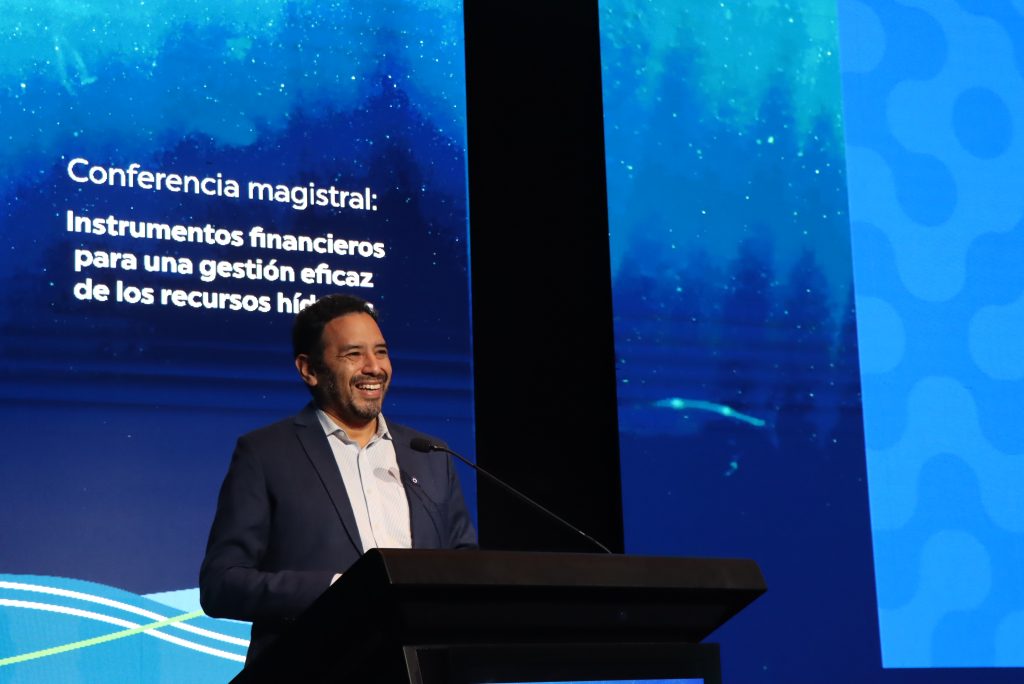
Anton Willems, executive director of Profonanpe
Photo: Profonanpe
Water as a strategic asset and driver of development
This meeting, promoted by the Ministry of the Environment together with strategic allies such as Profonanpe, Sernanp, ProInversion, the Development Bank of Latin America and the Caribbean - CAF, ENGIE, PetroTal and Compañía de Minas Buenaventura, concluded with concrete commitments and scalable proposals to guarantee sustainable, resilient and inclusive access to water.
In the context of the water crisis, where 25 % of the population in Latin America lacks access to safe water y 60 % of wastewater is discharged without treatment, The Summit left a clear message: water security is the new structural development challenge for the 21st century. According to the Development Bank of Latin America and the Caribbean (CAF), it will require quadrupling the annual investment in water and sanitation to close the current gaps.
«At Profonananpe, we believe that only an integrated view will make it possible to translate the climate finance and technological innovation into solutions that truly impact people. This Summit has been a turning point in consolidating that vision.», he pointed out Anton Willems, executive director of Profonanpe.
The private sector as a catalyst for solutions
From mining to agribusiness, the business sector showed tangible experiences of impact. Buenaventura reuses up to 95 % of water used, The company's privately financed wastewater treatment plant in Arequipa, treats 99.5 % of the urban effluent, benefiting both communities and industries.
In addition, successful schemes, such as the PPPs (productive water development initiatives), Works for Taxation (Works for Taxation), Water for Development (WFD), Water for Development (WFD). and the Mechanisms for the Remuneration of Ecosystem Services (MERESE), which allow the channeling of up to 70 % of funds raised to critically water-stressed watersheds.
«To promote the energy transition there needs to be. integrated planning water-energy, territorial climate finance, ecosystem restoration, inclusion of biodiversity indicators, strengthening of multi-level governance and real community participation,» he said. Cecilia Rabitsch, vice president of Social, Environmental and Sustainability Affairs of ENGIE Peru.
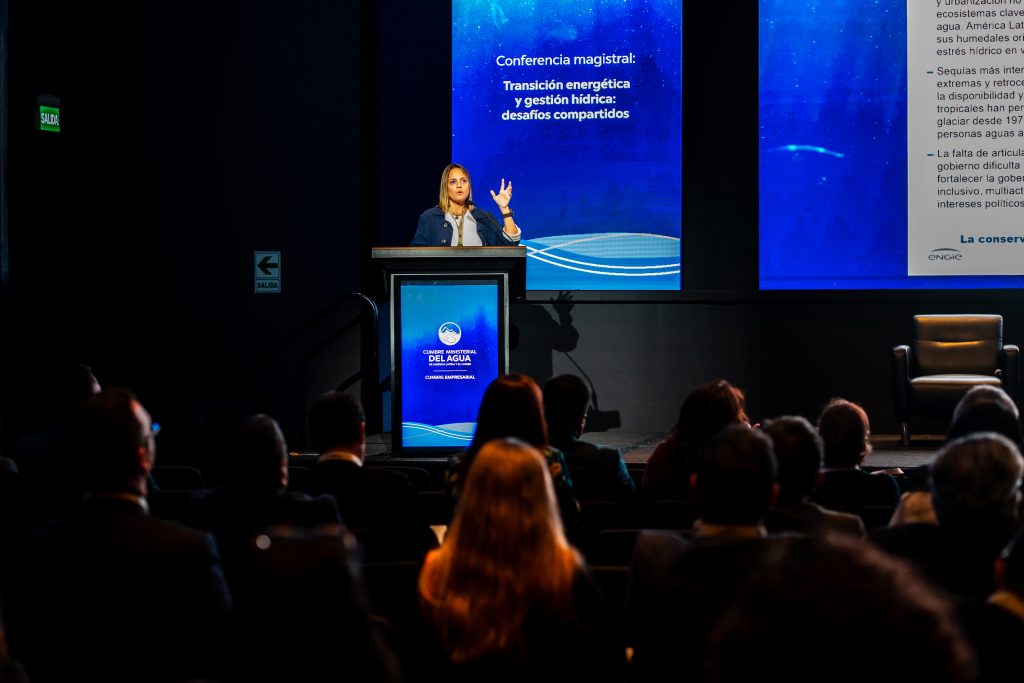
Cecilia Rabitsch, Vice-president of Social, Environmental and Sustainability Affairs of ENGIE Peru
Photo: Profonanpe
Technology, green finance and territorial vision: the keys to success
Data interoperability, artificial intelligence and water information systems were identified as strategic levers for decision making. Today, only 2 out of 10 basins are monitored digitally, according to the Minister of the Environment, Juan Carlos Vargas. The goal for 2030 is to reach the 100 % coverage.
For their part, ProInversión's portfolio exceeds US$ 1,670 million in water projects and the 63 % of the Peruvian energy matrix is already renewable, This is evidence of a concrete opportunity for transition to an integrated water and energy model.
«There are a variety of financial instruments available for proper water management such as the MERESE, Water Funds (such as Aquafondo and Forasan Piura), Green Bonds y Blue Bonds, APPs y water rights market.», he said Christian Bueno, head of Profonanpe's water management program
Christian Bueno, The water management program of Profonanpe is managed by the head of Profonanpe's Water Management Program.
Photo: Profonanpe
Remaining challenges
The Business Water Summit 2025 left a strong message: transforming water governance in Latin America is urgent and possible. There was a cross-cutting consensus on the need to adopt integrated, territorial and multisectoral water management, overcoming structural gaps in infrastructure, institutions and financing. It was recommended that the watershed approach be strengthened as the axis of policy articulation and that annual investment in water and sanitation be multiplied by four, accompanied by greater local technical capacity and improved technical files.
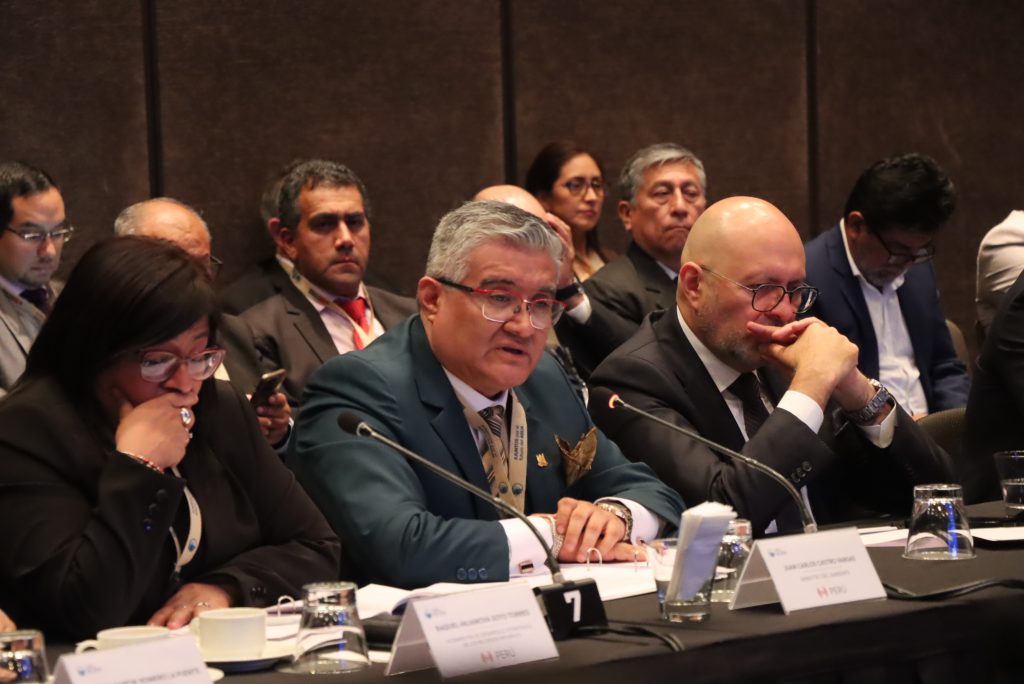
«The expansion of the National Water Resources Information System, with interoperability between entities and projected coverage of 100 % of the priority basins by 2030, will strengthen the country's water and territorial sustainability,» he said. Juan Carlos Castro, Minister of the Environment of Peru.
 .
.
Juan Carlos Castro, Minister of the Environment of Peru
Photo: Profonanpe
Commitments that set the course
The private sector was recognized as a strategic ally, with success stories in water reuse and treatment. The potential of investments in water reuse and treatment was also highlighted. natural infrastructure y innovative mechanisms such as MERESE and water bonds.
The Water 2025 Business Summit not only brought together voices, but also weaved a cross-cutting pact between the State, business and civil society. Because when water flows, so does the development, equity and resilience of our territories.
The summary of the day and the presentations made can be found on the following web site here.