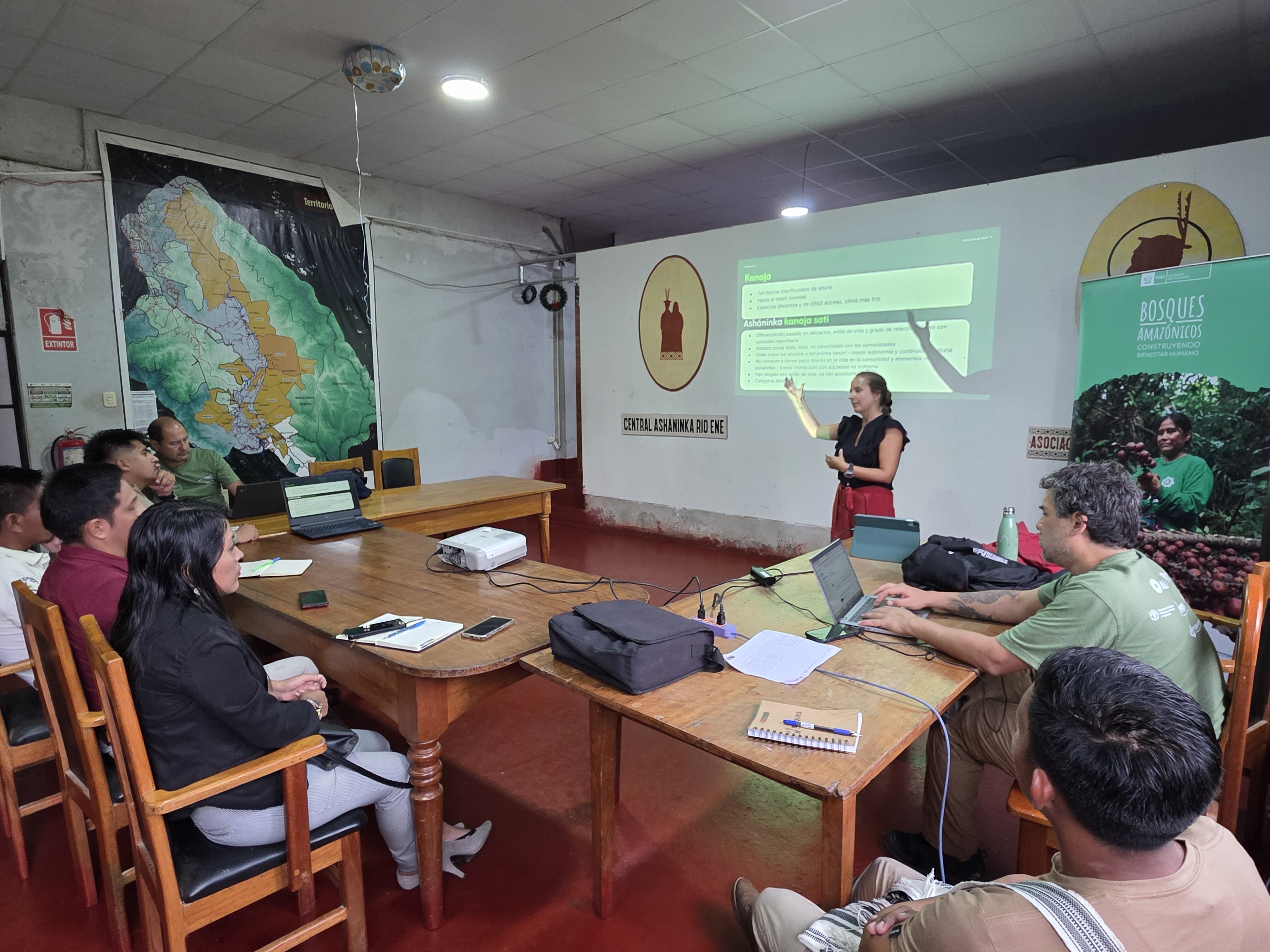
Socialization meeting
Photo: Carlos Torres - ProPurús
For the past year, the Sawawo Hito 40 and Nueva Bella communities have been promoting the creation of two PCAs to protect their territories and natural resources.
The native communities of Sawawo Hito 40 and Nueva Bella (Ucayali) concluded the talking maps phase of their project to create Private Conservation Areas (PCA). Built through a participatory process, these maps allowed them to capture their ancestral knowledge, identify key areas for the subsistence and conservation of biodiversity and other vital elements for their communities.
For the past year, Sawawo Hito 40 and Nueva Bella have been promoting the creation of two PCAs to protect their territories and natural resources. The initiative seeks to ensure the protection of 53 thousand hectares of Amazon rainforest, strengthen their sustainable hunting and fishing practices, and preserve access to natural resources for future generations.
After completing the mapping phase, the communities are now working on the legal formalization of the PCAs. In the coming months, a biological study will be carried out to identify the bird species present in this area and, in addition to recording the condition, habitat and species of each bird, will determine the presence of endangered or vulnerable species.
For the development of the activity, a team of biologists and specialists will use audiovisual equipment to help document the avifauna of the area.
Creation of PCAs and talking maps
The talking maps integrate information on sacred sites, traditional hunting and fishing routes, crops, biodiversity areas and other elements vital to the communities. This tool reflects its relationship with the territory and guides decision making in environmental management..
These maps were developed within the framework of the Conserva Aves project., driven by American Bird Conservancy (ABC), National Audubon Society (Audubon), BirdLife International and RedLAC (Latin American and Caribbean Network of Environmental Funds). Also participating as partners in the ECOAN (Asociación Ecosistemas Andinos) project are Profonanpe and ProPurús, with financing from the Bezos Earth Fund.
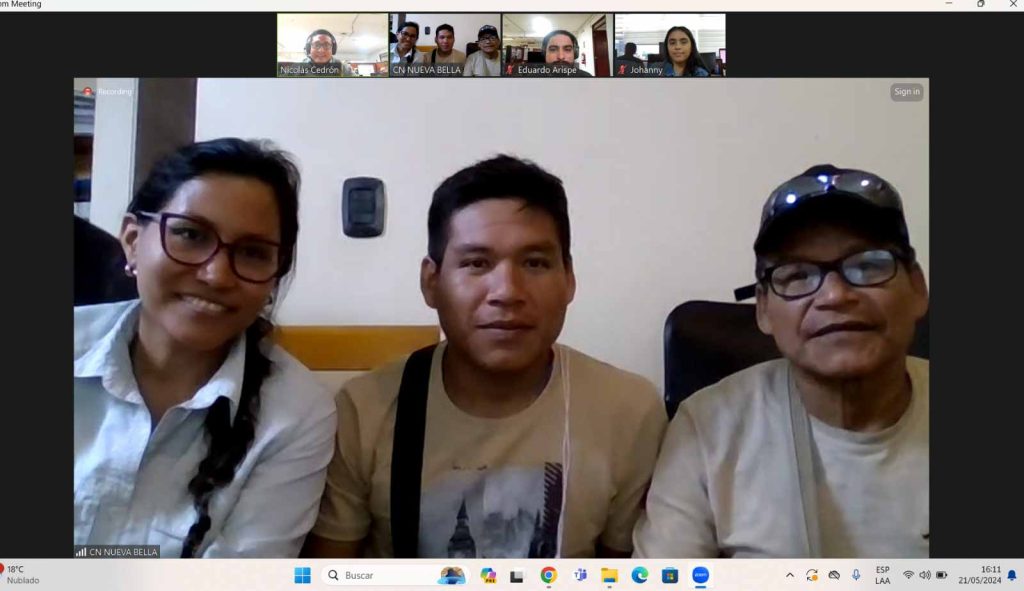
Socialization meeting via Zoom - ProPurús
Axes for implementation
The creation of the PCAs is led by the Sawawo Hito 40 and Nueva Bella communities, with the technical support of the ProPurús Association, which has accompanied the biological assessment and territorial planning.
To achieve this, the project's objectives have focused on three main axes:
- Obtain legal recognition of PCAs
- Conserving the biodiversity of the Amazon ecosystem
- Promote the sustainable use of resources
In this way, we seek to strengthening community governance, to be able to ensure conservation aligned with local cultural values and needs.
Diversity under constant threat
Thanks to the talking maps, they have been identified priority areas for community life. These include hunting areas with the presence of peccary and deer; fishing areas in rivers and lakes with an abundance of native species; river navigation routes; agricultural plots where products such as cassava and plantains are grown; and places of spiritual value.
These talking maps were developed within the framework of the Conserva Aves project., The project is promoted by the American Bird Conservancy (ABC), the National Audubon Society (Audubon), BirdLife International and RedLAC (Latin American and Caribbean Network of Environmental Funds). ECOAN (Asociación Ecosistemas Andinos), Profonanpe and ProPurús also participate as partners in the project and its implementation, with funding from the Bezos Earth Fund.
However, The Peruvian Amazon faces increasing threats from deforestation, illegal mining and other extractive activities. In 2023 alone, Peru lost 132,216 hectares of Amazonian forest, with Ucayali being one of the most affected regions according to data from the National Environmental Information System (SINIA 2024).
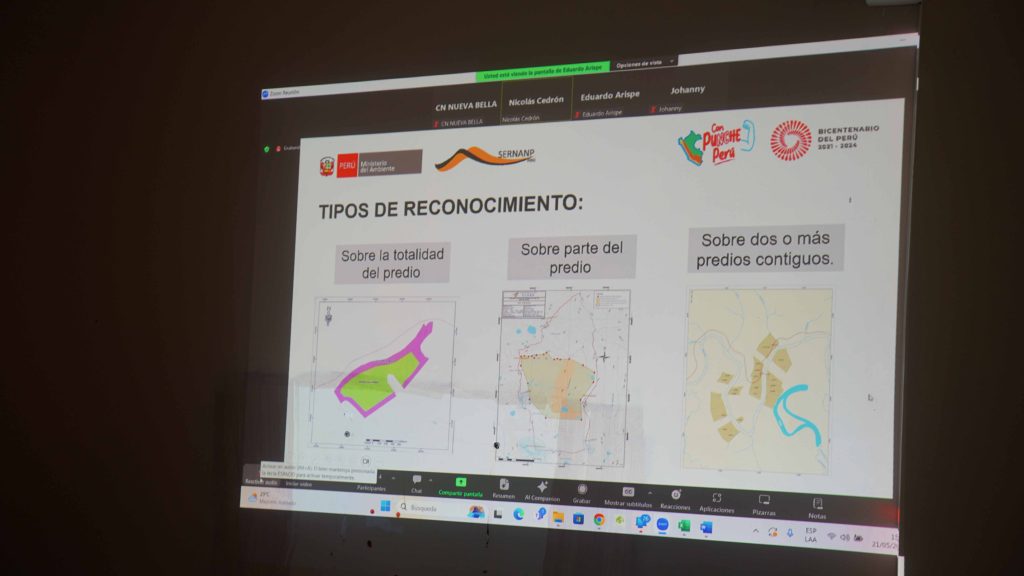
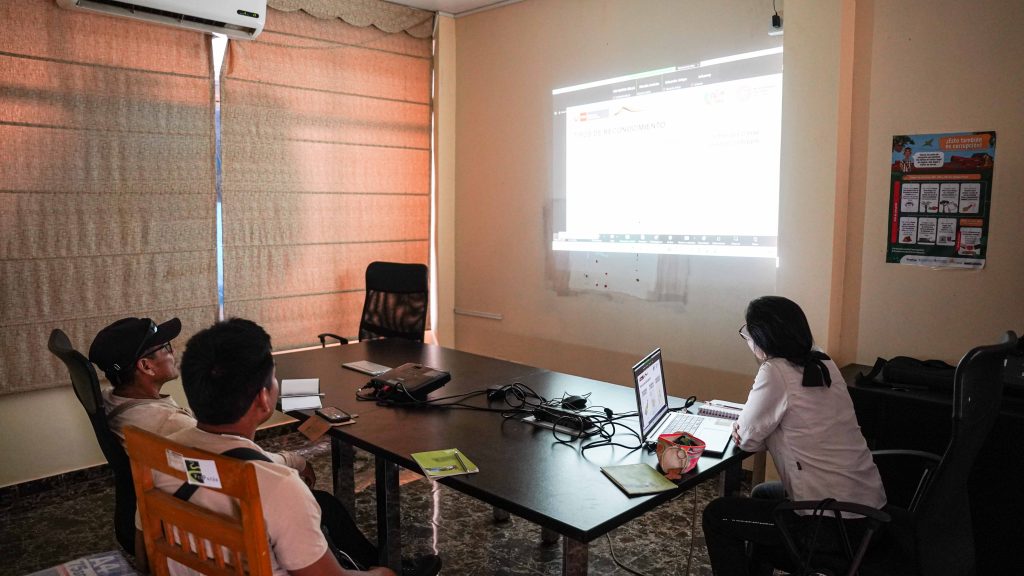
Recognition strategies - ProPurús
Against this identified backdrop, Private Conservation Areas represent an effective tool for sustainable land management.; enable communities to establish their own rules of protection, consolidate their autonomy and ensure the continuity of the ecosystems that sustain their way of life.
Join us
Darvin Aguilar
Communicator
aguilar@propurus.org | 931394074