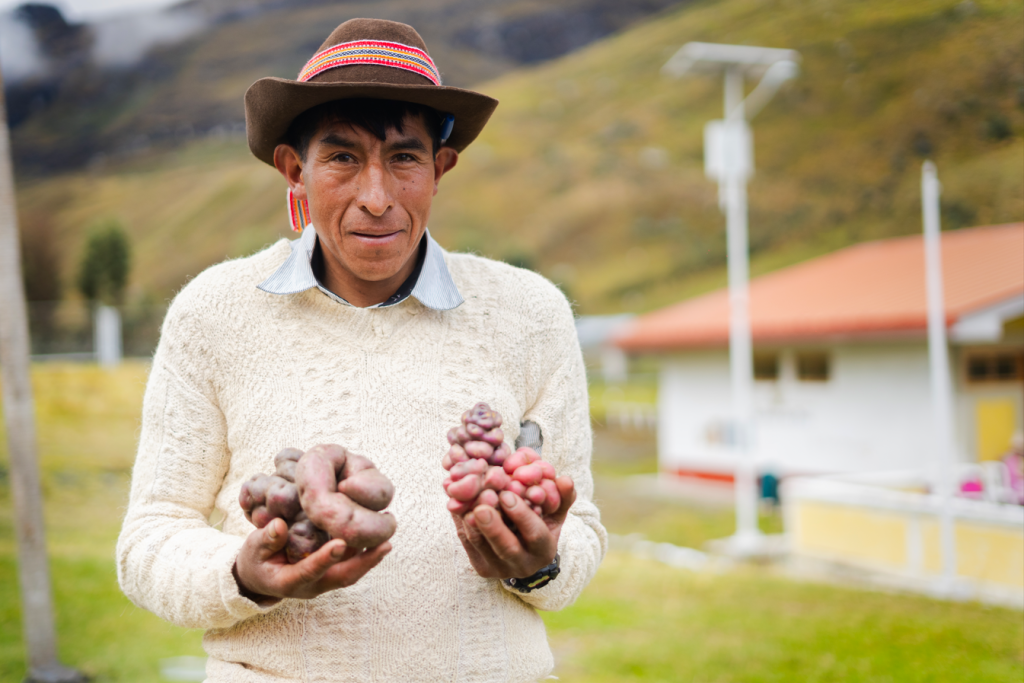
The Huanuco farming community belongs to the Quechua indigenous people and is located
in the district of Andamarca, province of Concepción, Junín.
© Gerson Ferrer | Yunkawasi
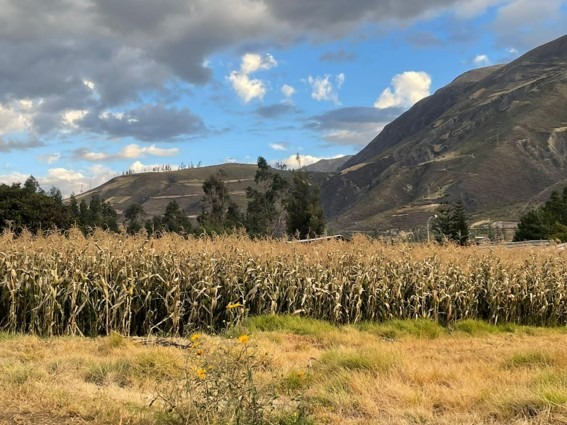
At an altitude of over 4,000 meters, in the heart of the Junin Andes, the Huanuco farming community celebrated its II Native Potato Festival. It was a day of pride, tradition and ancestral knowledge which brought together various entities to disseminate and celebrate the dozens of native potato varieties preserved by this locality, located in the proposed San Cristóbal de Pucutá - Menkori Regional Conservation Area (RCA).
The event took place within the framework of the PAIS Program's Multisectorial Fair, where more than ten public and private institutions provided social services and cultural activities to the population. The event made it possible to highlight the central role played by farming families as guardians of agrobiodiversity, as well as the potential of their traditional practices in the face of the effects of the climate crisis.
“We have types of potatoes for different uses, some are better for our consumption, others for drying, others are more suitable for trade because of their price; The good thing is that we still have several in our community.”Lucho Camarena, a community member from Huánuco who exhibited more than 80 varieties in his plot, said in his presentation.
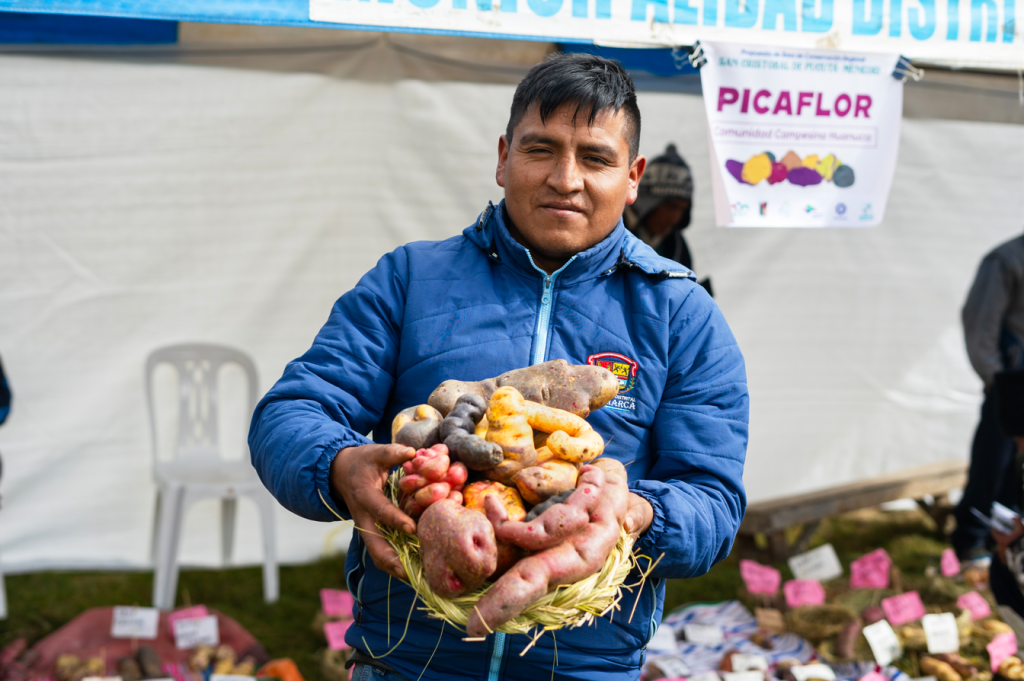
Lucho Camarena, a member of the peasant community of Huánuco, displays a
of its more than 80 varieties of native potatoes preserved by its family.
© Gerson Ferrer | Yunkawasi
During the festival, the community members exhibited a extraordinary variety of potatoes of different sizes, shapes and colors. Many of them are grown in small family plots and are kept alive thanks to the knowledge passed down from generation to generation. The neighborhoods of Godopampa, Centro, Yunkanbado and Unión Progreso together presented more than 100 different varieties, reflecting their commitment to the conservation of this diversity and their ancestral knowledge.
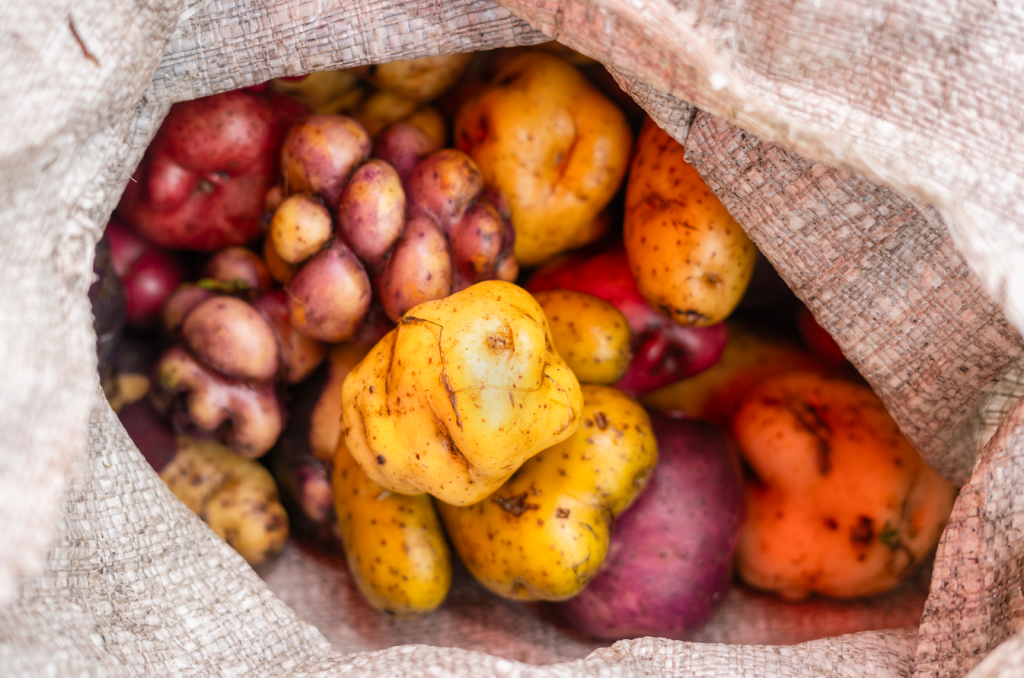
Among the native potatoes that are most traded in the community are the
Varieties known as amarilla, huayro, saca, shaulina and huamantanga.
© Gerson Ferrer | Yunkawasi
This diversity is not only a priceless genetic treasure for the world, but it also represents a fundamental basis for food sovereignty in high Andean communities.
Conservation from the territory
The community of Huanuco is part of the scope of ACR San Cristóbal de Pucutá - Menkori's proposal.; This is an initiative led by the Regional Management of Natural Resources and Environmental Management of the Regional Government of Junín that seeks to conserve more than 60,000 hectares of key ecosystems in the provinces of Satipo and Concepción. This area includes cloud forests, grasslands, high Andean lagoons and headwaters that are fundamental for the Mantaro and Perené river basins.
The II Festival de la Papa Nativa is part of the informative process of this protected area initiative, whose objective is to to enhance the value of the agroecological wealth that local communities protect. ACR's proposal has the technical and financial support of Profonanpe, Yunkawasi, Rainforest Trust, Andes Amazon Fund and the Conserva Aves Initiative.
Thanks to the project “Participative Conservation of the Tropical Andes in the Department of Junín - Peru”, financed by the Bird Conservation Initiative and implemented by Yunkawasi in alliance with the Regional Government of Junín, will continue to promote this type of initiative that integrates culture, sustainability and wellbeing for local populations.
The Bird Conservation Initiative is led by the American Bird Conservancy (ABC), National Audubon Society (Audubon), Bird Life International, Birds Canada and the Latin American and Caribbean Network of Environmental Funds (RedLAC). The national partners are Profonananpe and ECOAN, leaders of implementation in Peru, with funding from the Bezos Earth Fund.
Press contact:
Gerson Ferrer | gferrer@yunkawasiperu.org | +51 945 690 022