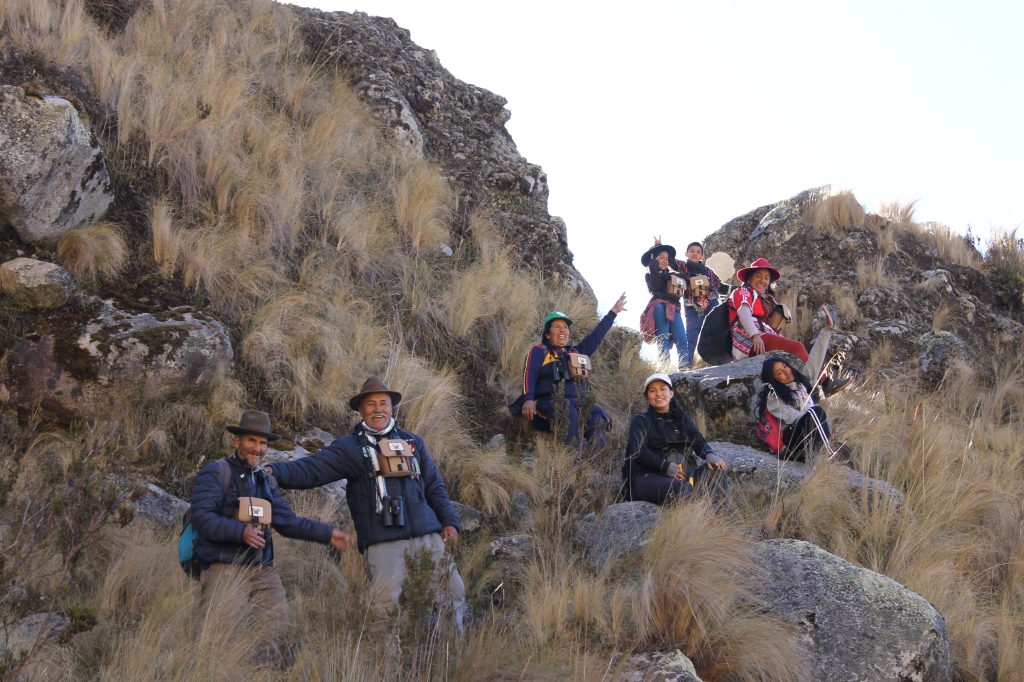
With binoculars in hand, a group of young people from Pichirhua began to learn about the birds that inhabit their area. The training sessions, which combine classroom instruction and field trips to the Lidioni and Tarpaya areas, are part of the creation of the Bird Monitoring Committee for the proposed Pichirhua Private Conservation Area (ACP).
During the sessions, participants learned techniques for identifying, observing, and recording birds. The goal is for this knowledge to continue to grow within the community and for young people to share what they have learned with their families and other residents.

A specimen of Vultur gryphus. – © Amazon Conservation – ACCA
The next step will be to begin systematic monitoring of birds in the ACP, with a special focus on species of conservation interest, such as the royal cinclodes (Cinclodes aricomae), he ash-colored breasted bull (Anairetes alpinus) and the Andean condor (Vultur gryphus).
These records will provide a better understanding of which species are present, where they are found, and how their presence changes over time. The information generated by the community itself will thus help expand our knowledge of Pichirhua’s biodiversity and guide future conservation efforts.
Now, the challenge will be to apply what we’ve learned in the field and turn every sighting into information. With the start of the monitoring program, the residents of Pichirhua will play an active role in learning about the species that share their territory and closely tracking the changes occurring in their ecosystems.
This initiative is part of Conservación Amazónica – ACCA’s efforts to strengthen community-based conservation by promoting tools that integrate biodiversity, governance, and sustainable development in the Andes and the Amazon.
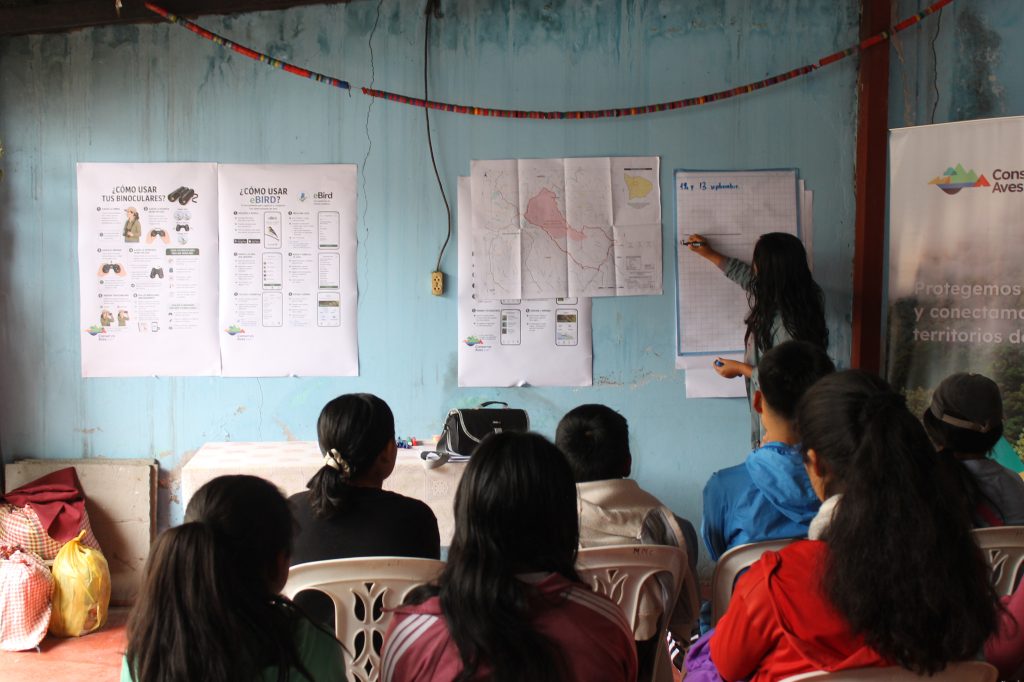
Lectures on bird monitoring. – © Amazon Conservation – ACCA
The Initiative Preserves Birds is led by American Bird Conservancy (ABC), National Audubon Society (Audubon), BirdLife International, Birds Canada and the Latin American Environmental Funds Network and the Caribbean (RedLAC). The national partners are Profonanpe y ECOAN, implementation leaders in Peru, with funding from the Government of Canada.