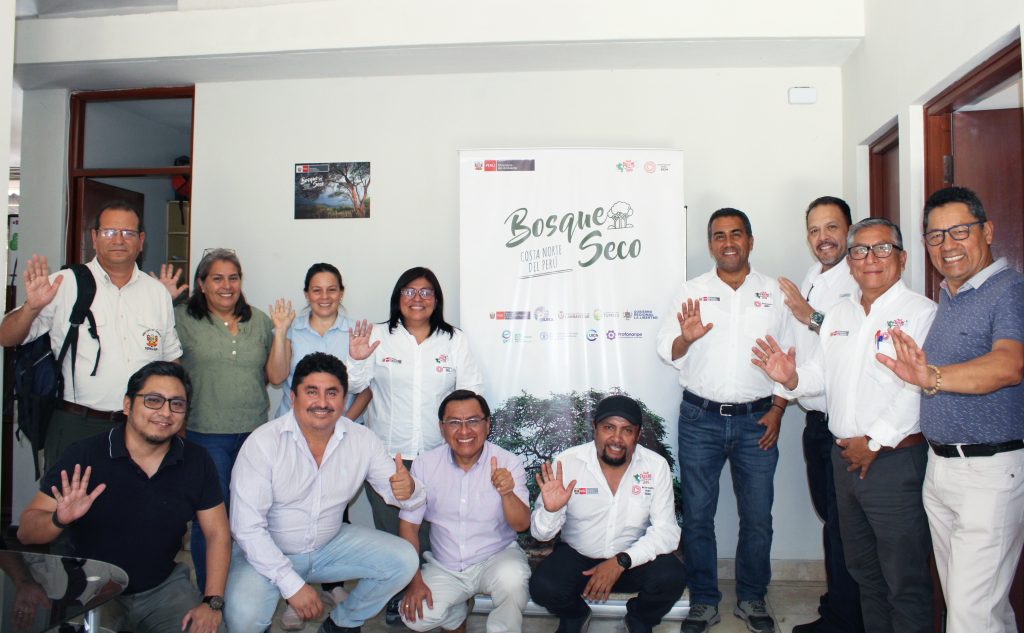
Recently, representatives of the Ministry of the Environment (MINAM), the National Service of Natural Areas Protected by the State (SERNANP), the Regional Government of Piura and the Profonanpe Dry Forest project team held a series of meetings to align actions and priorities among the different levels of government and strategic allies, within the framework of the project and other initiatives that promote protection and sustainable development in the region.
During the first meeting, held at the headquarters of the Regional Government of Piura, issues such as ecological connectivity, coordination of joint restoration actions and collaboration mechanisms for the effective implementation of the GEF Dry Forest project were discussed. In the second meeting, held at the Bosque Seco project headquarters, the MINAM team and the PMU reviewed the project's progress, identified challenges for its implementation and explored opportunities to enhance its impact through active restoration, ecological connectivity and the use of satellite monitoring tools. Finally, at the SERNANP offices, the current status of the region's Natural Protected Areas (NPAs) was evaluated and mechanisms were discussed to strengthen their articulation with other conservation modalities, such as OMECs (Other Effective Conservation Measures).
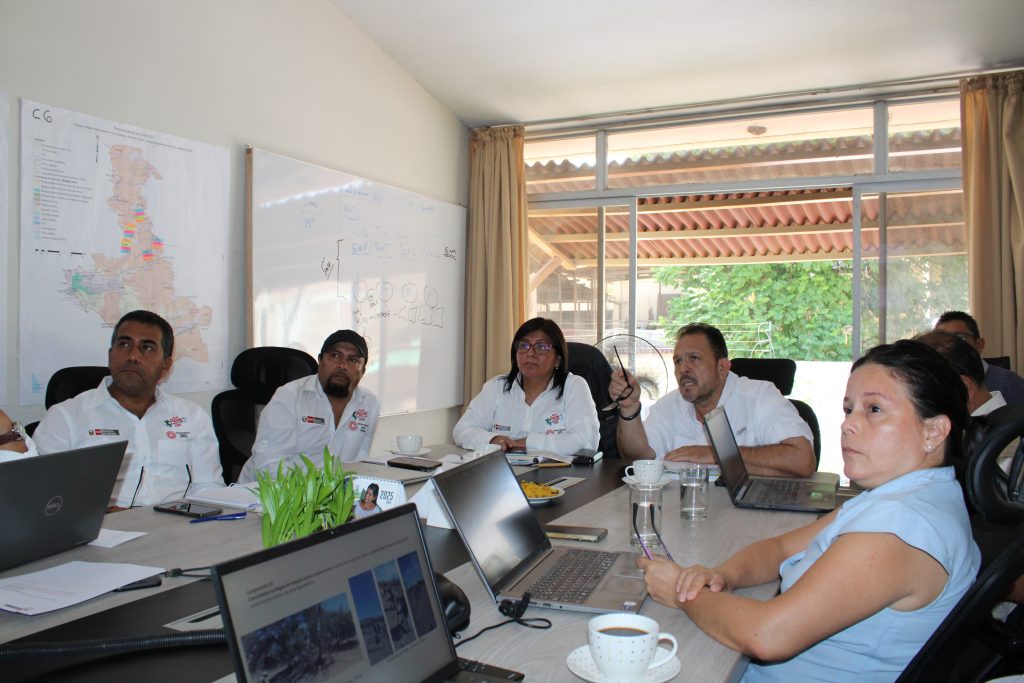
Marco Arenas, director of Biological Diversity of MINAM and national director of the Dry Forest Project, highlighted that “the objective is to generate development opportunities for local populations based on biodiversity, so we will have the experience on how a connectivity corridor becomes a strategic corridor for development.”
Sergio Lazo, coordinator of the Dry Forest Project, recalled that this is a MINAM project, executed by Profonanpe with funding from the Global Environment Facility (GEF). “The natural resources management is part of the governance of the project, involving the regional governments of Tumbes, Piura, Lambayeque, and La Libertad with interventions in community restoration aligned with productive activities”.”, he said.
At the end of the day, Raquel Soto, Vice-Minister of Strategic Development of Natural Resources of MINAM, emphasized: “We cannot talk about restoration without having a conservation perspective that promotes local economic development. We are going to work on a bioeconomy strategy so that the population can see that conservation can be beneficial for their local economic development. Local communities and indigenous populations identify with this task and they are the ones who will ultimately safeguard and protect these resources now and in the future. And finally, he emphasized that ”only by articulating our efforts will we be able to make the possible sources of funding effective and move towards a common goal“.”.
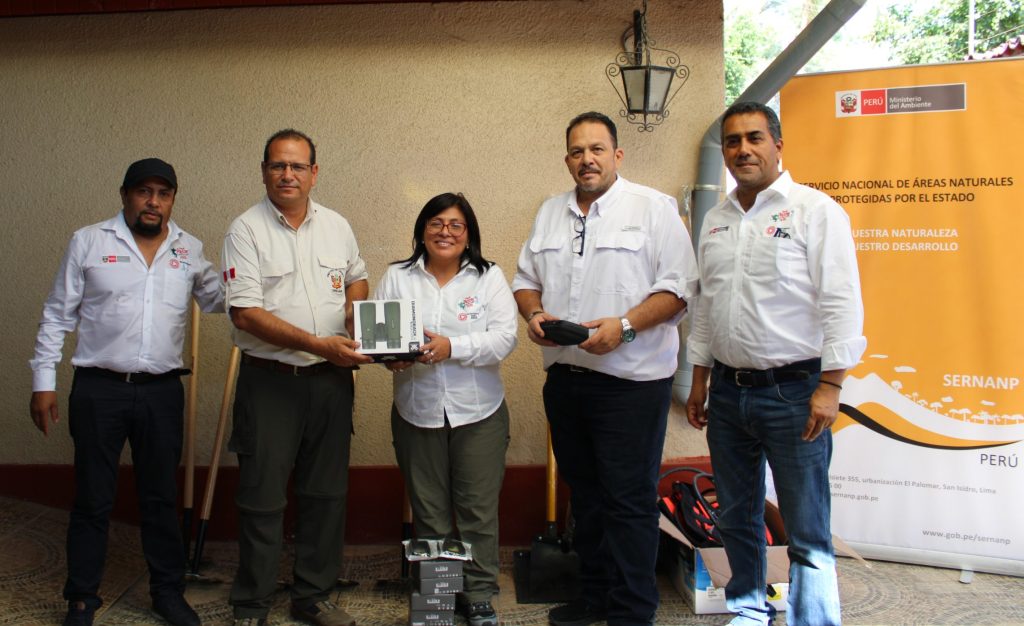
These meetings reaffirm the commitment of the Dry Forest Project and its partners to integrated environmental management that values the ecological, economic and cultural potential of the dry forest, one of the country's most threatened and valuable ecosystems.
Participating in these meetings were: Raquel Soto, vice minister of Strategic Development of Natural Resources of the Ministry of Environment; Marco Arenas, director of Biological Diversity of the Ministry of Environment and national director of the Dry Forest Project; Alberto Saenz, general director of land use planning of MINAM; William Llactayo, director of monitoring and evaluation of MINAM; Aldo Aguirre Cura, head of the Illescas national reserve and hunting reserve el Angolo of Sernanp; Sergio Lazo, coordinator of the Dry Forest Project; Vladimir Saguma, coordinator of component 1 of the Dry Forest Project; Arturo Sol, general manager of the Piura Regional Government; Martín Sernaqué Saavedra, manager of natural resources and environmental management of the Piura Regional Government; and Raúl Cevallos, director of the Regional System for the Conservation of Natural Areas (SRCAN).
About the project “Dry Forest of the Northern Coast of Peru”.”
Dry forest ecosystems are crucial for climate change adaptation and mitigation, as they harbor great biological diversity and provide essential ecosystem services for local communities.
The “Dry Forest of the Northern Coast of Peru” project is an initiative financed by the Global Environment Facility (GEF) and executed by the Ministry of the Environment. It is supported by the Ministry of Agrarian Development and Irrigation, FAO, IUCN and Profonanpe. Learn more here.