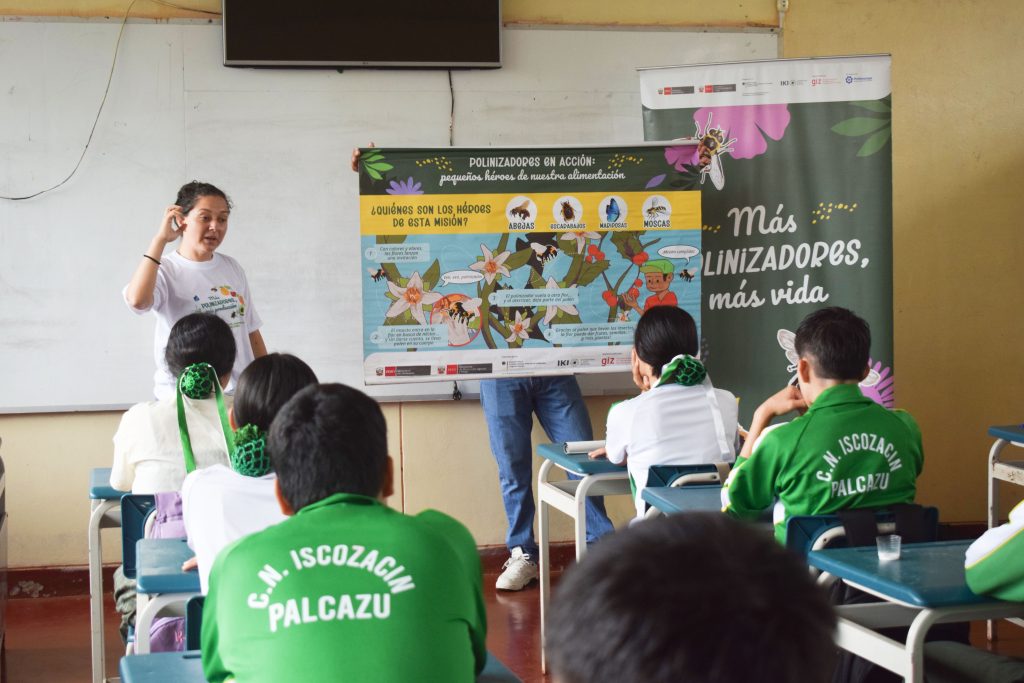
The protection of pollinating insects—which are essential for food security and the maintenance of ecosystems—is among the priorities identified at the Meeting on Experiences and Challenges in Environmental Education in the Oxapampa-Ashaninka-Yanesha Biosphere Reserve (BIOAY). The event brought together more than 60 stakeholders from the region to share experiences and propose actions to strengthen environmental education.
Held as part of Environmental Education Week, the meeting helped identify challenges that require a joint response. In addition to the conservation of pollinators and the ecosystem service of pollination, priority was given to water pollution; solid waste, especially single-use plastics; reforestation; and poor agricultural practices, such as the irresponsible use of agrochemicals and burning.
These contributions will serve as the basis for developing the Agenda of Priorities for Environmental Education in the BIOAY 2027–2030, a tool designed to guide future actions and strengthen coordination among institutions, organizations, and communities.
Poli-LAC promotes environmental education to conserve pollinators
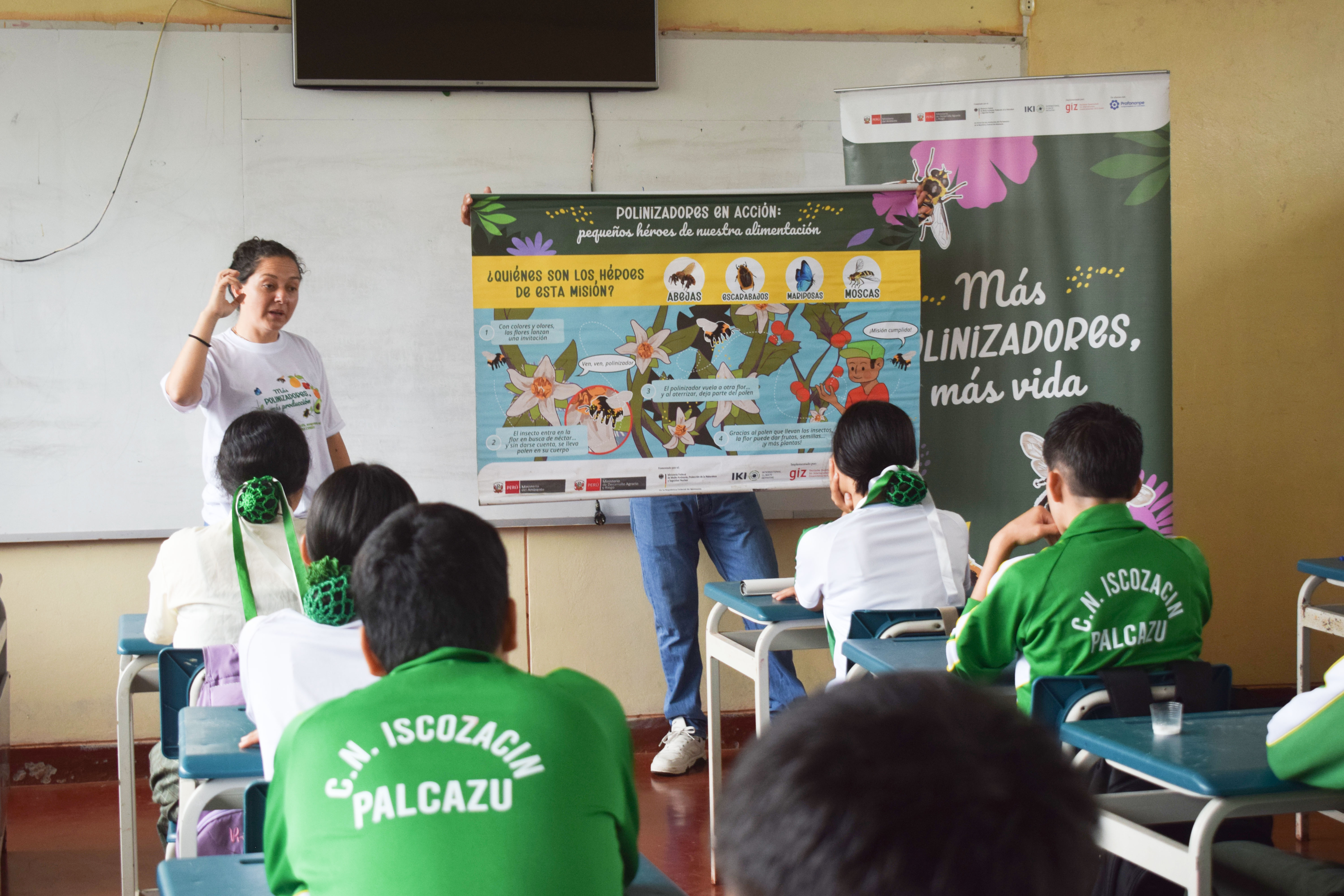
At the event, the Poli-LAC project presented the initiative “More Pollinators, More Life,” which focused on the importance of conserving pollinating insects—such as bees, butterflies, flies, and beetles—and promoting practices that are friendly to them. Their presentation highlighted the role of environmental education in raising public awareness about pollinators and promoting actions that contribute to their protection.
Incorporating this issue into BIOAY’s priorities will make it possible to take pollinator conservation into account in future educational initiatives and in the promotion of more sustainable practices in natural and productive areas.
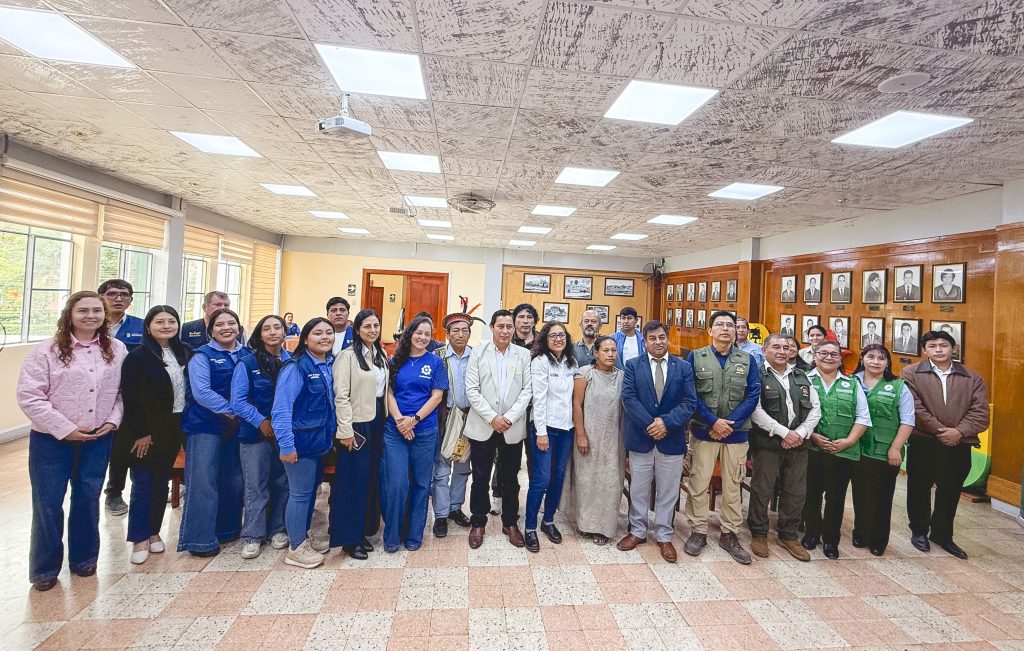
Opening ceremony of the event at the Oxapampa Provincial Municipality.
Photo: Profonanpe
An environmental agenda developed at the local level
The event was organized by the Provincial Municipality of Oxapampa, the EDUCCA Municipal Program, the BIOAY Technical Interest Group on Communication and Environmental Education, and the Poli-LAC project. The event included an exchange of experiences among local governments, educational institutions, protected natural areas, and projects, as well as a panel discussion on the progress and challenges of environmental education.
During the event, Milagros Tazza, a specialist with the General Directorate of Education, Citizenship, and Environmental Information at the Ministry of the Environment, highlighted the value of bringing together representatives from different sectors to address the region’s environmental challenges: “It is important to create these kinds of forums because they allow us to understand the situation from an environmental perspective across the reserve’s various areas and through the eyes of different stakeholders.”.
The process aims to lay the groundwork for coordinated and sustained efforts that link environmental education with biodiversity conservation and the active participation of the various stakeholders in the BIOAY.
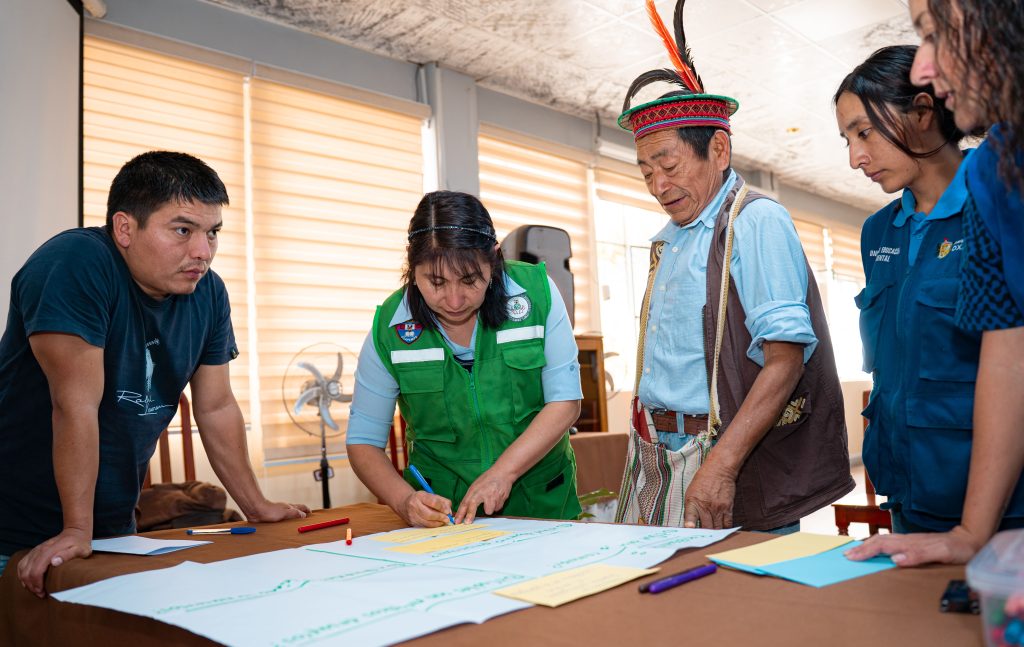
Group work aimed at gathering input for the development of the Agenda of Priorities for Environmental Education in the BIOAY 2027–2030.
Photo: Profonanpe
In Peru, the project “Regional Action to Improve the Protection of Pollinating Insects and Pollination Services in Latin America and the Caribbean (Poli-LAC),” led by the Ministry of the Environment, in partnership with the Pollinators Technical Group, the Ministry of Agricultural Development and Irrigation, and Profonanpe, with support from German development cooperation, implemented by the GIZ, commissioned by the German Federal Government's International Climate Initiative (IKI).