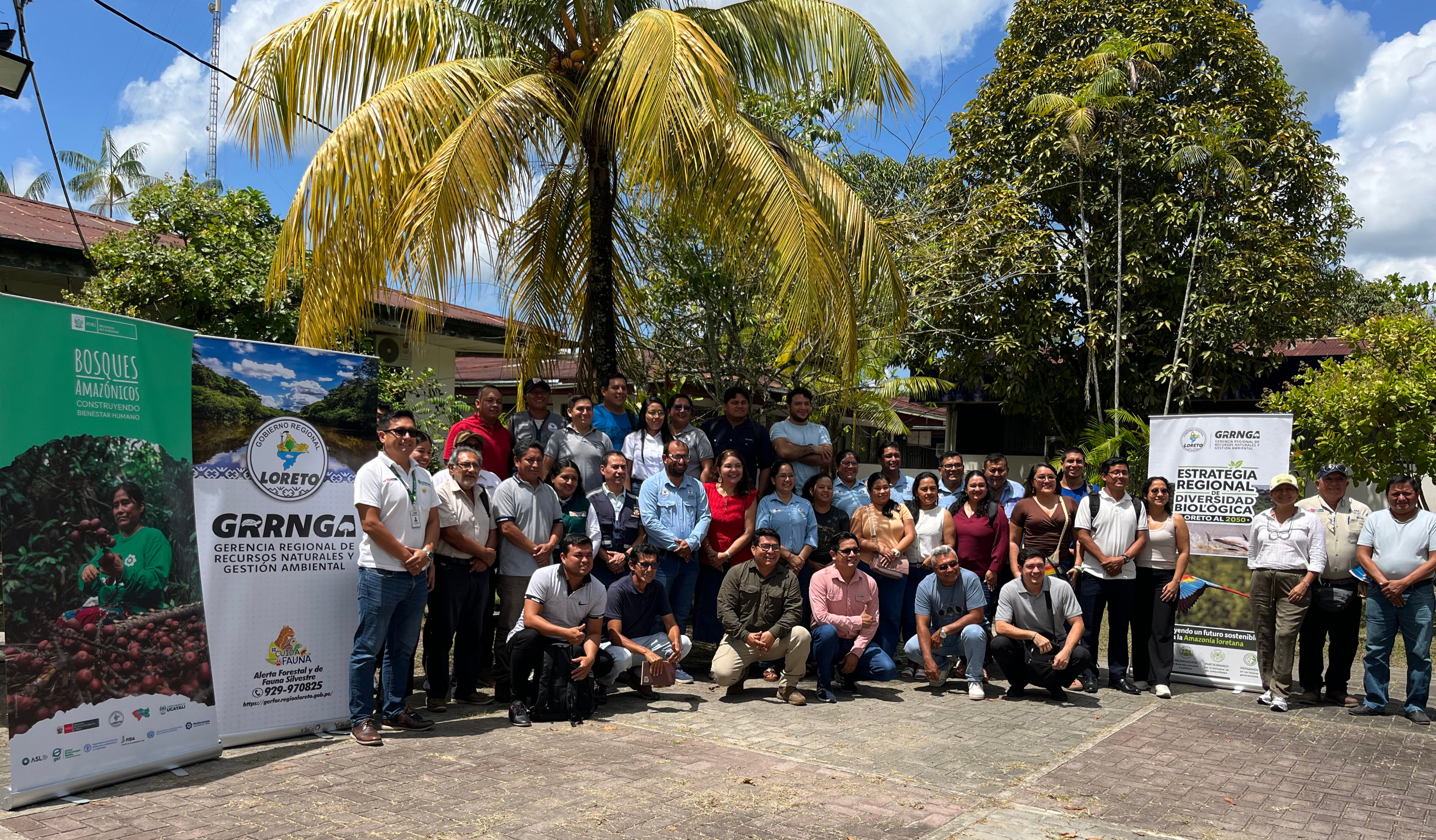
Profonanpe, the institution in charge of the technical and administrative secretariat of the Contingency Fund for Environmental Remediation in the Four Basins, held a discussion this Thursday entitled “What is the Contingency Fund and how are we progressing in the environmental remediation process?” Representatives from the Ombudsman's Office, the Institute of Amazonian Research of Peru (IIAP), and local and regional authorities participated in the event.
The event featured panelists Norma Vidal, former Vice Minister of the Ministry of Development and Social Inclusion (MIDIS), and Flor Blanco, manager of the Environmental Liabilities Program at Profonanpe. Progress in remediation efforts was highlighted, including the approval of 14 rehabilitation plans in priority areas of Corrientes, Tigre, and Pastaza. Attendees' questions were answered during a Q&A session.
The exchange with the attendees was smooth, and several opportunities for improvement were addressed. There was also agreement that current regulations should focus on resolving the urgent need to simplify processes.
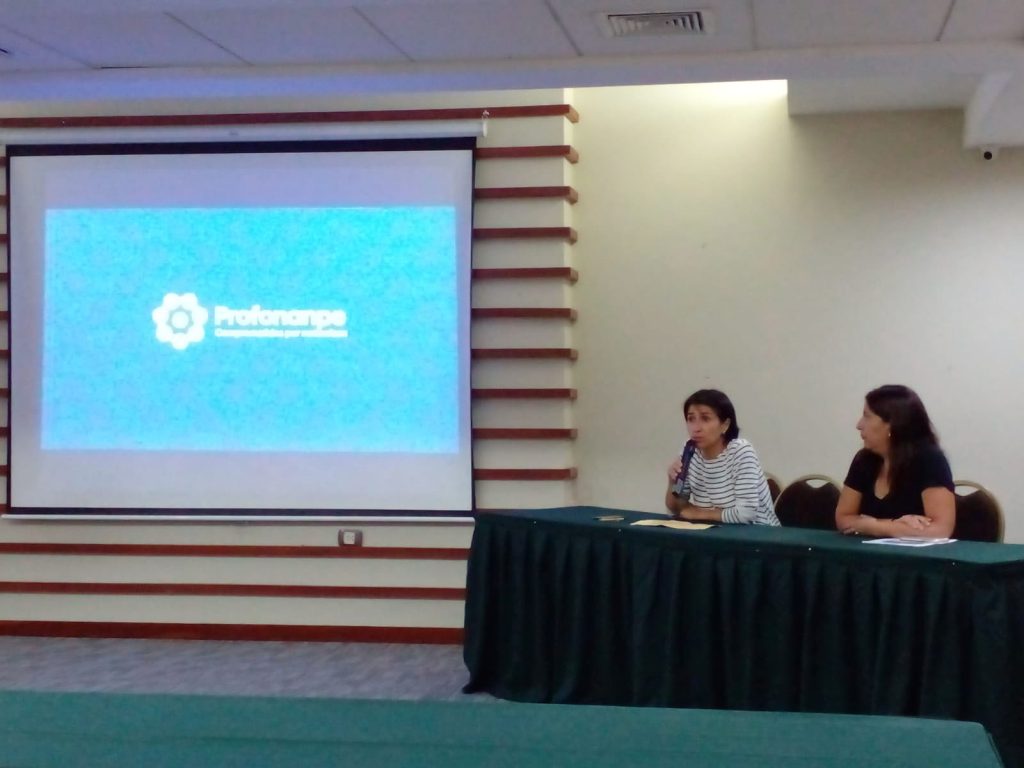
Flor Blanco, manager of the Environmental Liabilities Program of Profonanpe; and Norma Vidal, former vice minister of the Ministry of Development and Social Inclusion (MIDIS), were in charge of the discussion.
“The goal of rethinking the remediation process is to improve and find new strategies to accelerate and simplify processes and give them the necessary priority within each of the institutions involved. But above all, it’s about listening to the communities and addressing their legitimate expectations,” said Flor Blanco, representative of Profonanpe.
Along the same lines, Norma Vidal emphasized the importance of adopting a comprehensive approach that involves communities with other relevant stakeholders in the remediation process, such as academia, service providers, authorities, and the members of the Contingency Fund themselves. She noted that this approach should aim to create a 'remediation ecosystem' that fosters collaborative work, in which each party contributes to improving the outcomes of the others, thus preventing disruptions in the cooperation process.
“It’s important to have a comprehensive approach that focuses not only on applicable technology or compliance with international standards, but also on meeting the expectations of the affected population. It’s not enough to talk about environmental recovery; we also need to talk about people,” Vidal commented.
Profonanpe announced that it will continue to promote these discussions as a good practice of transparency and accountability, with the aim of creating spaces for dialogue between the Loreto society and the members of the Contingency Fund.