Profonanpe News

18/08/2021

GEF-Agrobiodiversity SIPAM Project: 51 farming families receive compensation for restoring and conserving species of our agrobiodiversity

This intervention seeks to strengthen food security and resilience to climate change.

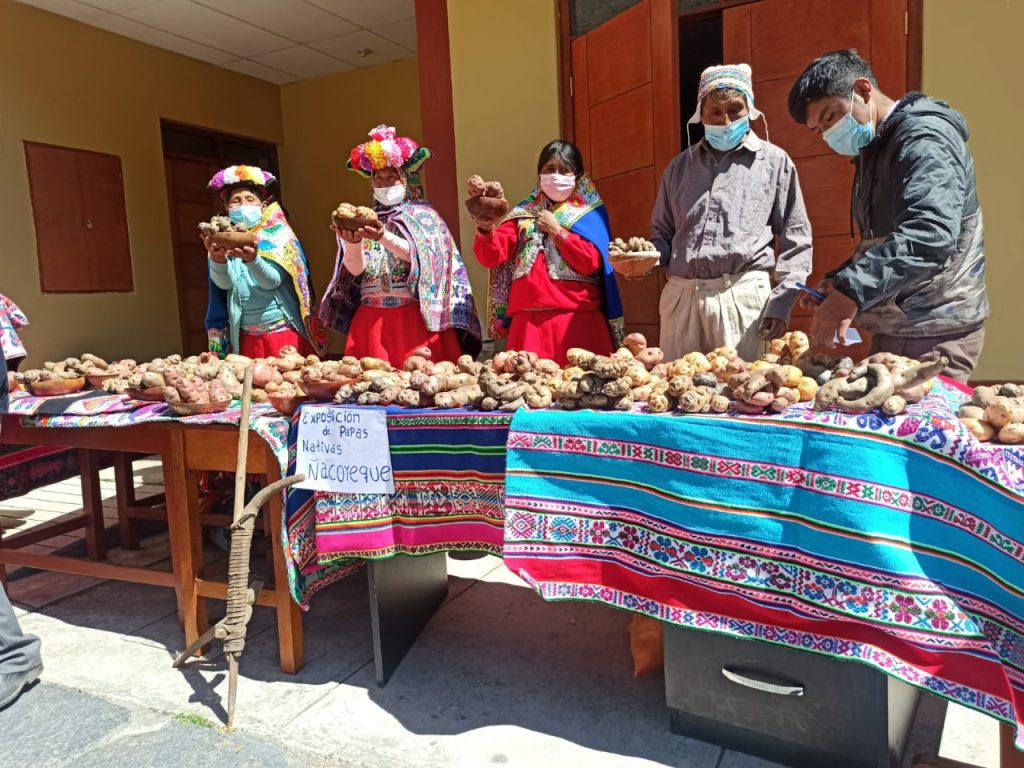
A total of 51 families from six peasant communities in the district of Cuyocuyo, in Puno, benefited from the compensation granted by the Ministry of the Environment (Minam), for a value of S/ 22,000, in recognition of their work in recovering 22 cultivars of potato, oca, olluco and añu (mashua), which were in danger of disappearing.


The handover ceremony took place this morning in a virtual event that included the participation of the Minister of the Environment, Rubén Ramírez, who stated that the farmers of said district are "preserving food security, through the planting and harvesting of endangered varieties and breeds of potato, mashua, oca, among others.".


He also said that this is "a well-deserved incentive, through the Reward for Agrobiodiversity Conservation Services (Resca) program, which rewards these practices that are being replicated in other areas such as Huancavelica, Cusco and Apurímac.".


In his message delivered virtually, he highlighted the State's efforts to support the work of conservationist farming families. "This is an effort that the Peruvian State has been making through the Ministry of the Environment (Minam) and the Ministry of Agriculture (Midagri). It is a well-deserved recognition, focused on the well-being of the people. A national and international example of the preservation of agricultural species," he emphasized.


Remuneration for conservation

The Ministry of the Environment (Minam), in collaboration with Bioversity International, is promoting the Payment for Agrobiodiversity Conservation Services (ReSCA) mechanism, an initiative that seeks to generate agreements for the conservation and sustainable use of native crops at high risk of disappearing in the country. This year, payments of approximately S/ 190,000 are planned for the aforementioned regions.


From that same perspective, The Ministry of the Environment (MINAM), together with the Ministry of Agrarian Development and Irrigation, FAO, Profonanpe, regional and local governments, and farming communities, are promoting the GEF Agrobiodiversity SIPAM II project., which generates experiences and data for the design of comprehensive public intervention policies, aimed at mitigating the decline of our agrobiodiversity and the deterioration of the environment, and improving the economic conditions of peasant communities.


This intervention strengthens efforts to recover diverse seeds, so that they can return to the fields and become part of nature-based solutions, helping to strengthen food security and resilience to climate change; in this way, the deplorable rates of anemia and malnutrition in our rural communities can be reversed, and a more sustainable and inclusive development can be promoted.


Source: ANDINA

Comunicaciones

Communications

You might be interested in

2026, News

06/04/2026

“Fruits of the Amazon”: More than US$1 million allocated to finance sustainable businesses in the Peruvian rainforest

2026, News

01/04/2026

Peru secures US$1,443,37.5 million in funding to conserve the Peruvian Amazon

2026, News

01/04/2026

New environmental financing opportunities in April

2026, News

01/04/2026

Unchog strengthens its governance with a community committee and bird monitoring

2026, News

31/03/2026

106 managers from 22 Regional Conservation Areas strengthen the monitoring of their territories

2026, News

31/03/2026

Three initiatives of the Puna Competitive Fund are visited by students from Freie Universität Berlin