The detection of between 18 and 20 individuals of Cinclodes palliatus, The record, an endemic Peruvian bird categorized as Critically Endangered (CR) by the International Union for Conservation of Nature (IUCN), is one of the most important findings of the recent inventory of avifauna developed by Conservation and Environmental Research (CIAM). The record was made by biologist and ornithologist Jordan Riofano, as part of the project “Conservation and community participatory action for the recognition of the Nevado de Tunsho Private Conservation Area”, promoted by the Conserva Aves initiative and financed by the Government of Canada.
The relevance of the finding is particularly significant due to the ecological characteristics of the species. Cinclodes palliatus It lives exclusively in wetlands and high mountain wetlands, between 4,400 and 5,000 m a.s.l., fragile ecosystems that are highly vulnerable to climate change. It also has an extremely restricted distribution, reduced populations and a declining population trend. According to BirdLife International (2021), the estimated global population ranges between 50 and 249 individuals, so the registration of up to 20 specimens in a single area is a milestone for its conservation.
Odile Sanchez, Subgrant Manager at Profonanpe, emphasized that “the results of the avifauna inventory reaffirm the urgency of conserving high Andean ecosystems and provide decisive scientific evidence for the creation of the Nevado de Tunsho Private Conservation Area. This registry confirms that these are strategic spaces within the key biodiversity areas prioritized by the Conserve Birds initiative”.

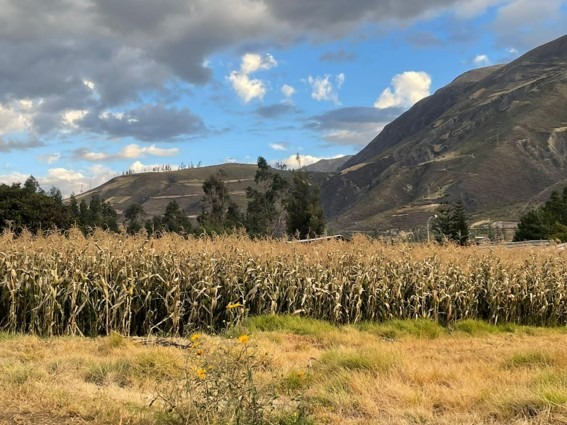
Tunsho snow-capped mountain slopes - District of Suitucancha in Junín | Photo: Jordan Riofano - CIAM
The inventory was elaborated through a rigorous methodology based on 100 count points strategically distributed in six zones of the area of interest, selected from social information, local knowledge and preliminary reconnaissance visits. As a preliminary result, 44 bird species were identified and 4 endemic to Peru (Cinclodes palliatus, Geositta saxicolina, Oreotrochilus melanogaster and Asthenes virgata).
One of the most relevant aspects of the study was the identification of three sectors where the species is active, even observing groups of two to four individuals, a rare behavior that opens new opportunities to delve deeper into its ecology, social dynamics and habitat use.

Group of individuals from Cinclodes palliatus | Photo: Jordan Riofano - CIAM
Preliminary results consolidate the technical support for the creation of the Nevado de Tunsho ACP by confirming the presence of a Critically Endangered (CR) species and evidencing the high biological value of the area. The next steps of the project include more exhaustive research and the implementation of drones and artificial intelligence for advanced monitoring of the species, contributing to its effective long-term protection.
About the Bird Conservation Initiative
Preserves Birds Conserva Aves is a hemispheric initiative that is committed to conservation with a vision for the future: protecting endemic birds, strengthening community governance, implementing participatory monitoring, promoting ecotourism, and developing management and financial sustainability plans with a focus on gender, interculturality, and community conservation.
The Conserva Birds Initiative is led by the American Bird Conservancy (ABC), the National Audubon Society (Audubon), BirdLife International, Birds Canada, and the Latin American and Caribbean Environmental Funds Network (RedLAC). The national partners are Profonanpe and ECOAN, which are leading the implementation in Peru, with funding from the Government of Canada.