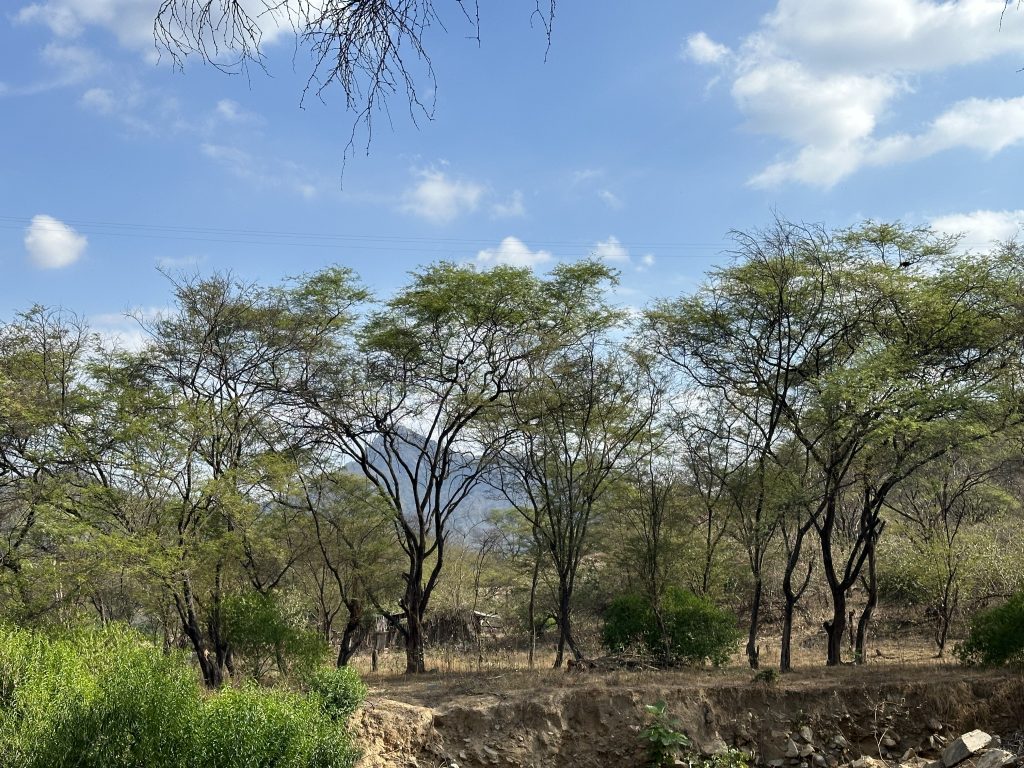
In a context of increasing environmental degradation revealing the loss or degradation of 95% of Peru's dry forests, recognizing the integral value of the carob tree is key to ensuring the health of this unique ecosystem and the well-being of the communities that depend on it.
The carob tree, in addition to supporting an enormous diversity of species, from endemic birds to mammals, reptiles and insects, also improves soil fertility, helps conserve water and sustains ancestral practices and local livelihoods. As one of the most important and representative species of the dry forest, the carob tree plays a key role thanks to the multiple benefits it offers. Its flowers, fruits and leaves are a source of food for many species, and it also provides shade and shelter, helping other species to survive in extremely hot conditions. Because of its ability to fix nitrogen in the soil, it helps to improve its fertility, favoring the growth of other plants. It also has deep roots that help conserve soil moisture and prevent desertification, making it a pillar in maintaining ecological balance.
A refuge for many species
The carob tree is home and sustenance for many species, such as the Pacific Hornero (Furnarius cinnamomeus) that builds its nests in it; the Turtupilin (Pyrocephalus rubinus), which perches and nests in its branches, or the Peruvian Cortarramas (Phytotoma raimondii) that feeds on their shoots. Other birds such as the White-winged guan (Penelope albipennis) and the Emerald Parakeet (Forpus coelestis) consume their seeds.
Also mammals such as the coastal fox (Lycalopex sechurae) seek refuge in their forests and eat their fruits. The gray deer (Odocoileus virginianus peruvianus) feeds on their leaves and pods, and rodents such as the wild rat (Necromys urichi) use it as a home and food source.
On the other hand, native bees feed on its flowers and thus pollinate its blossoms, while beetles and ants collaborate with the dispersion of its seeds. Reptiles and amphibians also depend on this tree: the iguana of northwestern Peru (Iguana iguana) feeds on their leaves, while the rainbow boa (Epicrates cenchria) hunts the species that approach it.
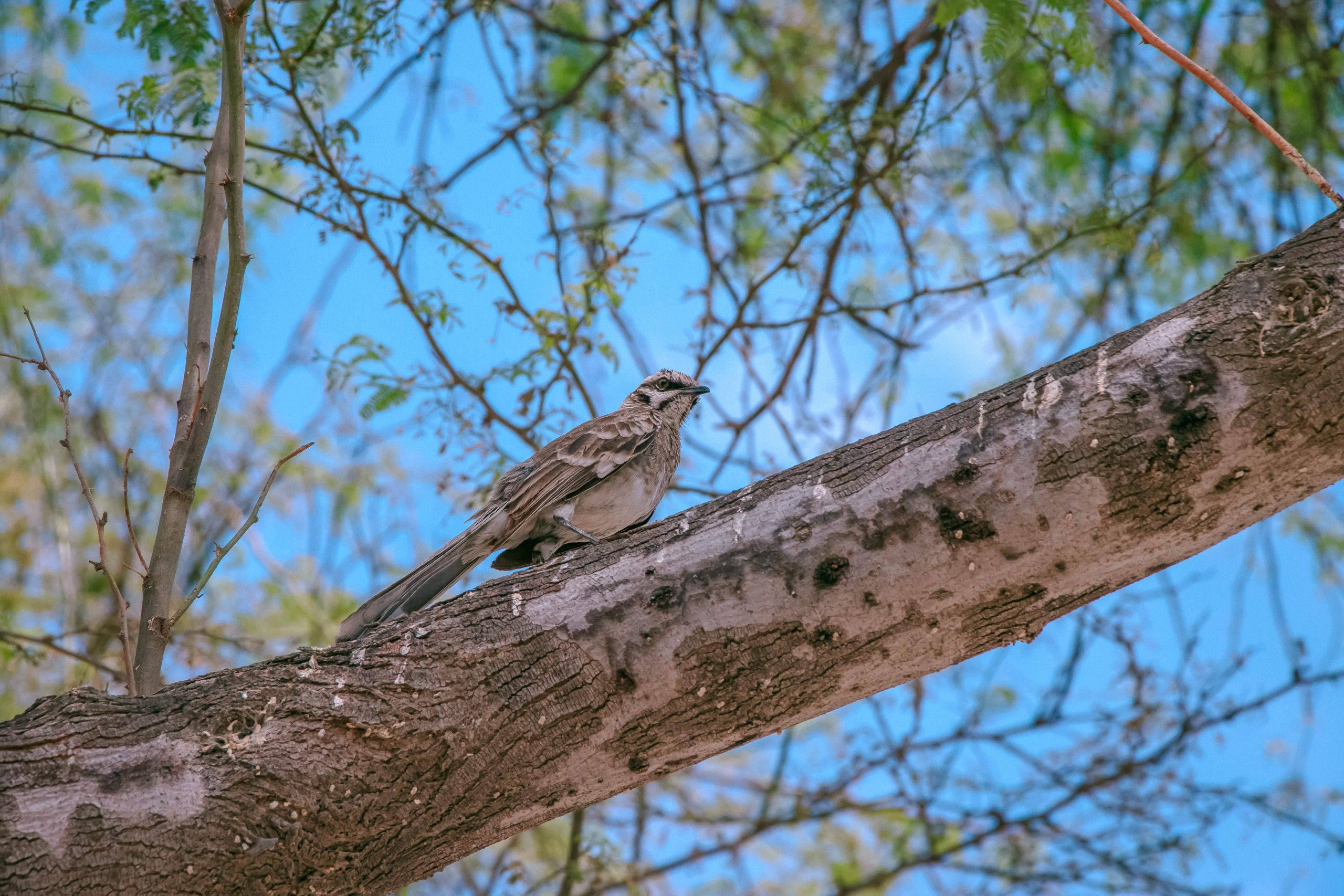
Photo: Profonanpe
A tree that coexists with other plants
Other plant species also grow around the carob tree. Some, such as lianas and lianas, lean on it to reach the light, while Cactaceae such as the prickly pear (Opuntia spp.) grow nearby taking advantage of the environment, as well as grasses and leguminous plants also thrive thanks to the fertile soil generated by the Algarrobo's leaf litter. It is also accompanied by trees such as the Zapote (Capparis scabrida) and the Hualtaco (Loxopterygium huasango), which enrich the diversity of the forest.
A vital resource for communities
In addition to its ecological value, the carob tree (Neptuma pallida) is very important for families living in the dry forest. The carob pod, the only fruit of this tree, is used for various economic activities that help improve the lives of these communities.
Among the best known derivatives are carob flour, rich in nutrients, and carob “coffee”, which is obtained by roasting the pods, and macerating it with sugarcane brandy to make a liqueur. In addition, the boiling of the pods is used to prepare the traditional Aguamiel or Yupisin, an ancestral drink of the area, and a special process is used to produce the famous algarrobina, used in confectionery and beverages. The pods are also used as fodder to feed livestock in arid areas.
In agriculture, carob favors the growth of crops and pastures and its wood is highly valued for furniture, handicrafts and charcoal, generating employment and income for many families.
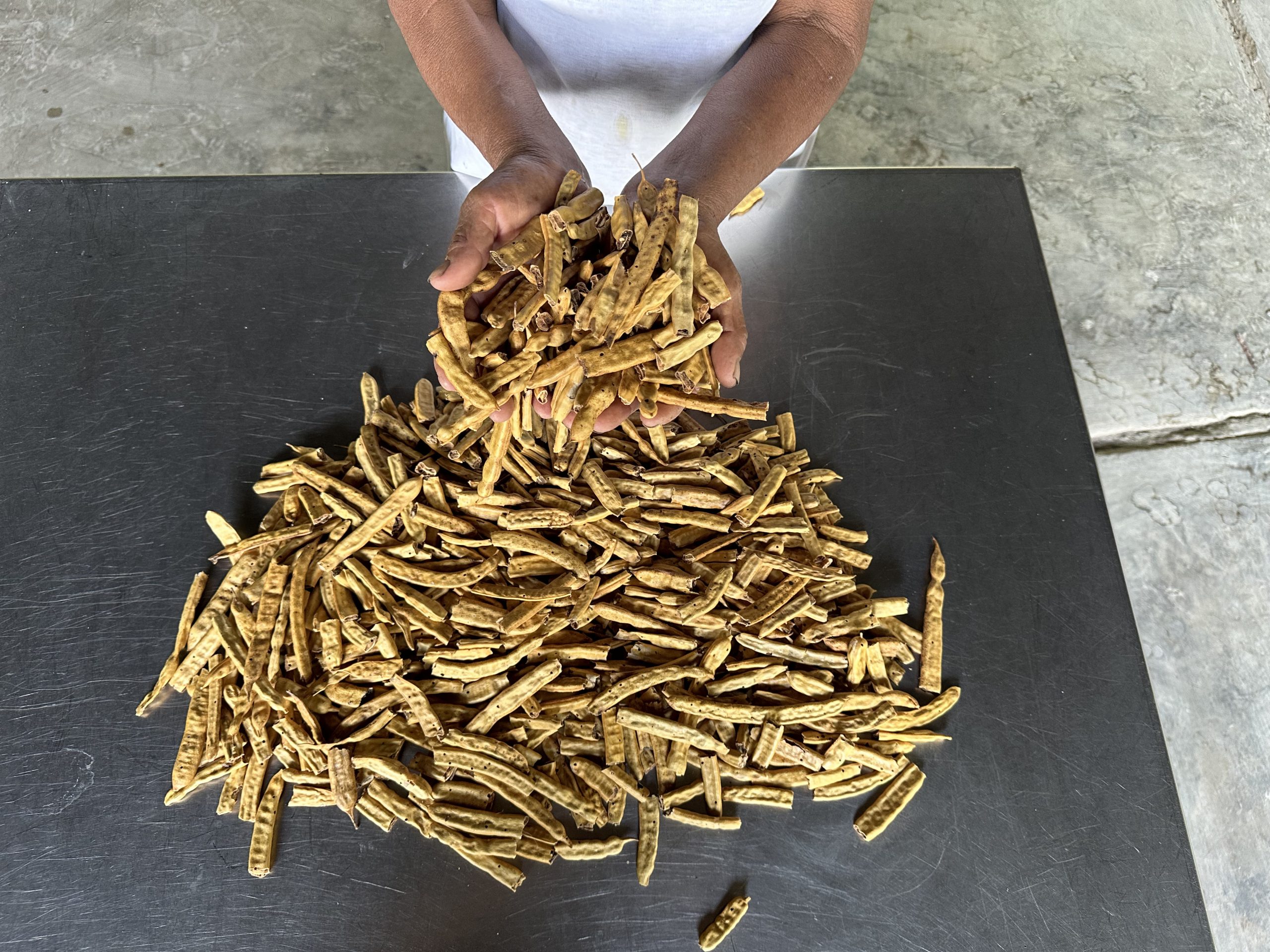
Photo: Profonanpe
Environmental and ecotourism ally
The carob tree is also essential for conserving the dry forest because it helps prevent desertification, protects soils and favors the recharge of aquifers by allowing better infiltration of rainwater. In times of heavy rainfall, its canopy cushions falling water, reducing erosion and runoff.
In addition, the carob forests have great potential for ecotourism, as they attract visitors interested in observing wildlife and enjoying the landscape, promoting a sustainable economy.
About the project “Dry Forest of the Northern Coast of Peru”.”
The Bosque Seco project is led by the @Ministerio del Ambiente - Peru with funding from the @Global Environment Facility (GEF). It is supported by the @Ministry of Agrarian Development and Irrigation, @FAO, @IUCN - International Union for Conservation of Nature and @Profonanpe.