Lima, April 2024. One of the most valuable Ramsar sites in Peru and the world is the Pastaza River Fan Wetland Complex, an ecosystem whose conservation is of national interest and which already has a roadmap that will strengthen its management and conservation. To this end, the Regional Government of Loreto and the Ministry of the Environment, with the technical support of the “Amazonian Forests - ASL2” project, established key actions to promote its conservation, within the framework of national regulations and the Ramsar Convention.
The technical support provided by the “Bosques Amazónicos - ASL2” project will enable the establishment of protection mechanisms for the peatlands and other relevant ecosystems of the Pastaza Fan, which are facing increasing pressures and threats.
“The Pastaza Fan is a set of key ecosystems whose conservation contributes to the long-term care of the Peruvian Amazon in the face of climate change. From the Amazon Forests - ASL2 project, we seek to contribute to the adoption of mitigation measures and preserve carbon stocks for the benefit of local communities and their ecosystems”.” notes Jorge Elliot, technical coordinator of the project.
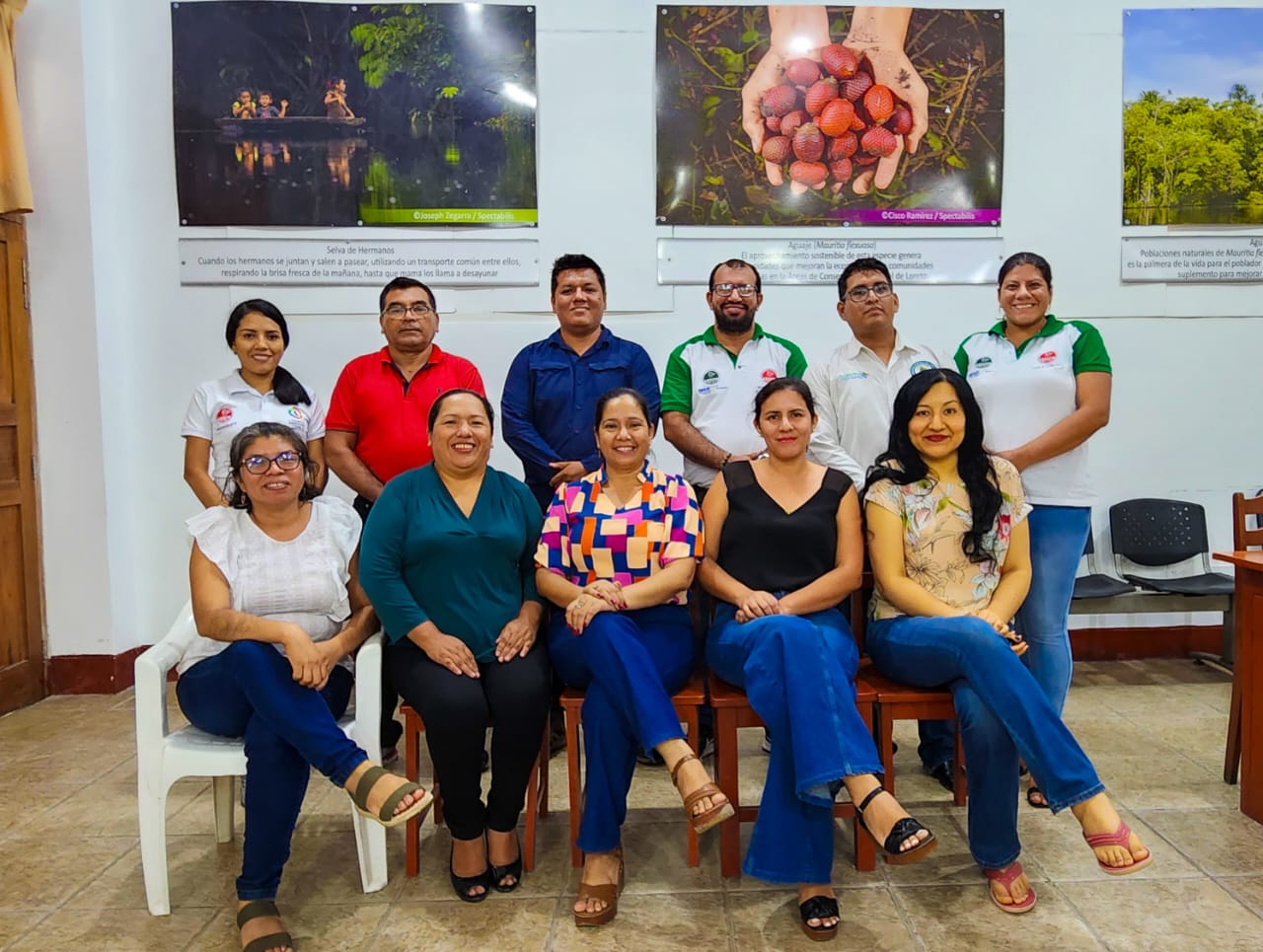
Technical team of the “Bosques Amazónicos - ASL2” project, the Ministry of Environment and the Regional Government of Loreto, team in charge of establishing the roadmap for the management of the Pastaza Fan.
The effective conservation of the Pastaza Fan is of vital importance due to its high carbon sequestration capacity, which contributes to mitigating the effects of climate change. Its ecosystem is characterized by large extensions of swamps, lakes and alluvial plains covering more than 3.8 million hectares, which allows it to store more than 3 billion tons of carbon, equivalent to the accumulation of 62 years of annual emissions from human activities in Peru.
In this sense, the knowledge and experience generated in the area by the Humedales del Datem project of Profonanpe, Peru's environmental fund, represents a valuable precedent in the relationship with local communities and the management and promotion of bio-businesses.
These actions will support the implementation of the Roadmap for the management of the Ramsar site, which will now focus on governance, through the creation of a participatory body for its management, considering its extension and variety of stakeholders.
Another of the actions foreseen in the aforementioned roadmap consists of strengthening the capacities of key actors in the Ramsar site and the subsequent development of the management instrument that will ensure its sustainability. This process will be led by the Regional Government of Loreto and it is expected that, by the end of this year, its management body will be operational with the support of MINAM and the technical support of the “Bosques Amazónicos - ASL2” project.
About the project “Amazon Forests - ASL2”.”
The project seeks to promote the conservation of healthy, functional and climate-resilient forests and wetlands; maintaining important carbon reserves, avoiding Greenhouse Gas (GHG) emissions and generating sustainable and resilient local livelihoods.
This initiative is executed by the Ministry of the Environment - MINAM, with financing from the Global Environment Facility - GEF; and has the support of the Food and Agriculture Organization of the United Nations - FAO, the International Fund for Agricultural Development - IFAD, the United Nations Industrial Development Organization - UNIDO and Profonanpe.