Amazonian Forests – ASL2

The project seeks to promote the conservation of healthy, functional and climate-resilient forests and wetlands; maintaining important carbon reserves, avoiding Greenhouse Gas (GHG) emissions and generating sustainable and resilient local livelihoods.

Start:

December 23, 2022

Ending:

August 23, 2027

Financing:

$15.406.883

Profonpe's role:

Executor and administrator

Contributing
Entity:

GEF_logo_main_vertical_RGB

Global Environment Facility (GEF)

Partnership for international cooperation in which 183 countries work together with international institutions, civil society organizations and the private sector to address global environmental challenges.

Executing
Entity:

logo_minam_border

MINAM

The Ministry of the Environment promotes the conservation and sustainable use of natural resources, the enhancement of biological diversity and environmental quality for the benefit of people and the environment

Profonanpe 2020 logo Final_Working table 1 (1)

Profonanpe

We are the first national private institution accredited by GCF, and the project is the first approved worldwide by this fund.

Location:

Junín, Loreto, Ucayali

Alto Ucayali-Inuya Landscape, located in the provinces of Atalaya (Ucayali) and Satipo (Junín); and Tigre-Marañón Landscape, located in the province of Loreto Nauta (Loreto).

Beneficiary:

Key players in Amazonian bio-trade

Population of native and local communities, producers, local entrepreneurs, companies linked to Amazonian biocommerce, regional governments, local governments, support organizations.

Documents
of the project

Environmental and Social Management Plan with a Gender Approach | Amazonian Forests Project ASL2

Environmental and Social Management Plan with a Gender Focus

Authors: Profonanpe
Publication date: 2024-09-02
The document details the measures, mechanisms, and strategies for addressing the environmental and social risks and impacts of the ASL2 Amazon Forest Project, ensuring its alignment with the expected outcomes. This plan is crucial for the sustainable implementation of the project, which aims to contribute to the conservation of Amazonian ecosystems and generate well-being for local communities, both men and women, in the provinces of Loreto, Atalaya, and Satipo, in the departments of Loreto, Ucayali, and Junín, respectively.
Gap analysis between safeguards and regulations related to the project | ASL2 Amazonian Forests Project

Analysis of gaps between safeguards and regulations related to the project

Authors: Profonanpe
Publication date: 2025-07-01
This document analyzes the alignment between the Environmental and Social Safeguards Standards (ENSS) and the Peruvian regulatory framework in the context of the Amazonian Forests Project ASL2. Through a systematic analysis, it identifies compatibilities, gaps, and addressing measures. It examines key areas such as biodiversity, natural resource management, climate change adaptation, decent work, gender equality, indigenous peoples' rights, community health, cultural heritage, and resettlement processes.
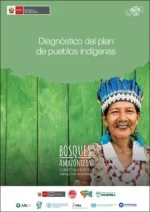
Diagnosis of the Indigenous Peoples Plan | Amazonian Forests Project ASL2

Diagnosis of the Indigenous Peoples Plan

Authors: Profonanpe
Publication date: 2025-07-01
The document presents a socioeconomic, cultural, and legal assessment of 16 Indigenous communities in the Tigre/Marañón and Alto Ucayali/Inuya landscapes. It analyzes the national and international legal framework regarding collective rights, prior consultation, and land titling. Furthermore, it identifies the main risks, conflicts, and demands these communities face.
Complaints and Grievance Mechanism | Amazon Forest Project ASL2

Complaints and Claims Mechanism

Authors: Profonanpe
Publication date: 2025-07-01
This document establishes the Complaints and Claims Mechanism (MQR) for the ASL2 Amazonian Forests Project, coordinated with the service channels of the Ministry of the Environment (MINAM), Profonanpe, and other related entities. It defines objectives, principles, scope, and types of complaints, as well as the means of access, service channels, and response times.
Gender Action Plan : Amazon Forest Project ASL2

Gender Action Plan

Authors: Profonanpe
Publication date: 2025-07-01
The Gender Action Plan (GAP) of the Amazonian Forests Project ASL2 defines guidelines for integrating a gender perspective into all project components. It seeks to reduce institutional and sociocultural barriers that limit the participation of Indigenous and rural women in the conservation and sustainable management of the Amazonian landscape. It incorporates approaches based on interculturality, intersectionality, human rights, new masculinities, and the care economy. It proposes measures to strengthen leadership, participation in decision-making, equitable access to productive resources, and shared responsibility for care. Furthermore, it links these actions to the project's expected outcomes, ensuring coherence with national and international policies on gender equality and socio-environmental safeguards.
Solid Waste Management Plan - Initial Stage - Amazon Forests Project ASL2

Solid Waste Management Plan

Authors: Profonanpe
Publication date: 2025-07-01
The document establishes technical guidelines and procedures for the proper management of waste during project implementation, particularly in protected natural areas and native communities within the Tigre-Marañón and Alto Ucayali-Inuya landscapes. It details strategies for minimization, segregation, reuse, storage, collection, transportation, treatment, and final disposal, based on the 5Rs approach and the circular economy. It includes a physical and regulatory assessment, risk analysis, and preventive and adaptive measures. Furthermore, it defines monitoring and follow-up mechanisms to ensure compliance. Its purpose is to prevent pollution, protect public health, and ensure environmental sustainability in conservation interventions.
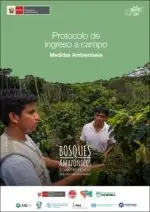
Field Entry Protocol with Environmental Measures - ASL2 Amazonian Forests Project

Field Entry Protocol with Environmental Measures

Authors: Profonanpe
Publication date: 2025-07-01
The document establishes minimum guidelines for preventing and mitigating negative impacts on Amazonian ecosystems during field activities. Aimed at project staff, consultants, and contractors, it regulates the preparation, stay, activity development, and fieldwork phases in protected natural areas and native communities. It includes provisions on safety, solid waste management, use of sanitary facilities, respect for wildlife, and intercultural communication.
Operational Route of the Indigenous Peoples Plan - Amazonian Forests Project ASL2

Operational Roadmap of the Indigenous Peoples Plan

Authors: Profonanpe
Publication date: 2025-07-01
The document defines the procedures and phases to guarantee the full and effective participation of native communities and representative institutions through Free, Prior and Informed Consent (FPIC). It organizes the initiation, mid-implementation, and closing stages, specifying consultation activities, intercultural dissemination of information, grievance and complaint mechanisms, and the establishment of participatory monitoring committees.
Diagnosis of the Aguaje Value Chain in the Province of Loreto, Loreto Region

Diagnosis of the Aguaje Value Chain in the Province of Loreto, Loreto Region

Authors: Profonanpe
Publication date: 2026-01-07
The document describes the diagnosis of the aguaje fruit value chain in Loreto, developed within the framework of the Amazonian Forests Project ASL2 as a baseline input for promoting sustainable livelihoods linked to biodiversity valuation. It analyzes actors and links in the chain, costs, supply and demand; identifies gaps and bottlenecks; and proposes an economic model with recommendations to improve the chain's articulation and sustainability.
Diagnosis of the Camu Camu Value Chain in the Province of Loreto, Loreto Region

Diagnosis of the Camu Camu Value Chain in the Province of Loreto, Loreto Region

Authors: Profonanpe
Publication date: 2026-01-07
The diagnostic study describes the camu camu value chain in the Tigre River basin (Loreto), developed within the framework of the ASL2 Project, as a baseline to guide actions for strengthening production, trade, and biobusinesses, by connecting public and private stakeholders and communities. It analyzes links and actors in the chain, logistical costs, supply and demand; and identifies gaps and bottlenecks, proposing recommendations, coordination mechanisms, and an economic model.
Diagnosis of the Handicraft Chain in the Provinces of Satipo (Junín) and Atalaya (Ucayali)

Diagnosis of the Handicraft Chain in the Provinces of Satipo (Junín) and Atalaya (Ucayali)

Authors: Profonanpe
Publication date: 2026-01-07
This document describes the current state of artisanal activity in Asháninka and Ashéninka communities. Prepared within the framework of the Amazonian Forests ASL2 project, it serves as a baseline for promoting sustainable livelihoods and bio-businesses linked to biodiversity valuation. It analyzes actors, functions, and relationships within the value chain using UNIDO methodology, as well as supply, marketing, costs, and margins. It identifies gaps and bottlenecks (e.g., limited negotiating power, marketing weaknesses, and market access) and proposes an ideal economic model with social and environmental safeguards, along with recommendations to strengthen the chain's integration and sustainability.

Let's talk about you, your organization, your idea, or your project

We are transparent. We want to hear from you.