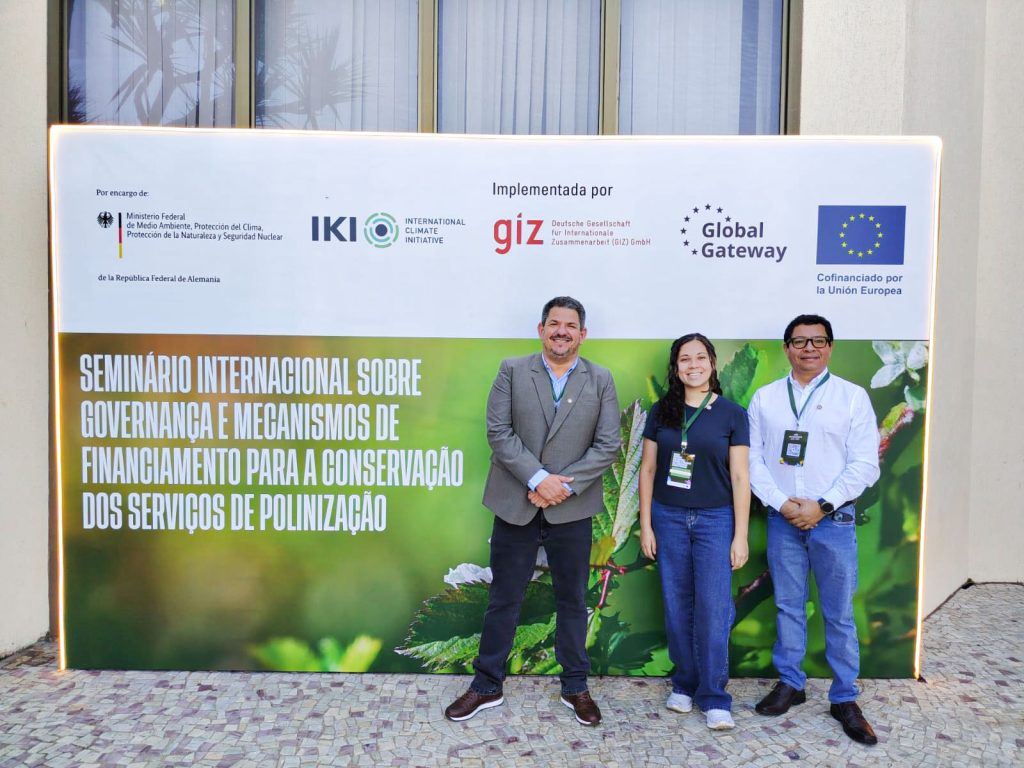
The loss of pollinating insects is not only a threat to biodiversity; it also jeopardizes food production, community incomes, and the sustainability of production systems. In response to this challenge, experts from Latin America and the Caribbean identified opportunities to strengthen public policies, research, funding, and markets related to their conservation.
These were some of the main topics of discussion at the International Seminar on Governance and Financing Mechanisms for the Conservation of Pollination Services, held on August 19 and 20 in Brazil as part of the Poli-LAC regional project.
More than 80 experts and representatives from governments, international organizations, financial institutions, the private sector, academia, producer organizations, indigenous peoples, and traditional communities participated in the exchange, which sought to link pollinator conservation with decisions on biodiversity and development.
More evidence and funding to protect pollinators
One of the main challenges identified was strengthening the available scientific information to guide public policy decisions. Lukas Hach, technical advisor for International Biodiversity Affairs at the Federal Ministry for the Environment, Climate Action, Nature Conservation, and Nuclear Safety (BMUKN) of Germany presented his country’s experience following a 30-year study that showed a reduction of approximately 80 % in insect biomass. This case led to new policies, legislation, and increased resources for research and conservation.
From the Peruvian perspective, Mirbel Epiquién, Director General of Biological Diversity at the Ministry of the Environment (MINAM) noted that 80 % of coffee production depends on pollination and warned that habitat loss is one of the main threats to this ecosystem service. In this regard, he explained that deforestation associated with the expansion of coffee cultivation can create a vicious cycle by affecting precisely the ecosystems that sustain pollinators. He also highlighted the importance of having data that allows for a better understanding of these processes, guides conservation efforts, and generates evidence to mobilize funding.
The story of Ysabel Calderón, founder of Sumak Kawsay, illustrates how these challenges translate into concrete opportunities in local communities. After receiving the Midori Prize for Biodiversity, she allocated part of the funds to create “Guardianas de Abejas Nativas” (Guardians of Native Bees), a project that works with about 60 women to protect native bees, build knowledge, and promote meliponiculture in northern Peru.
“Without science, the restoration will be done blindly””, said Calderón, who also identified access to land, capital, knowledge, and markets as some of the main barriers preventing women from benefiting from the economic value of pollination.
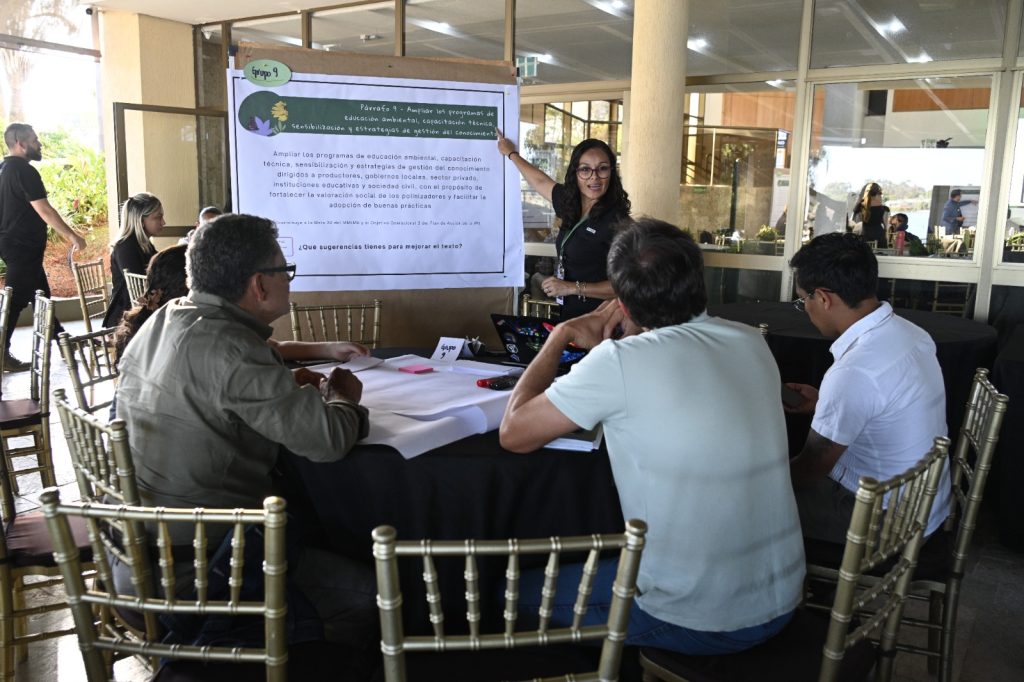
Participatory development of proposals to strengthen the conservation of pollinating insects in the region.
Photo: © GIZ / Zuleika de Souza
Conservation with Opportunities for the Regions
The inclusion of traditional communities, women, youth, and Indigenous peoples was another key focus of the meeting. The panel, moderated by Ignacio Piqueras, coordinator of the Poli-LAC project on behalf of Profonanpe, addressed the importance of integrating scientific and traditional knowledge and creating better conditions for these populations to participate in conservation models that also generate income.
Edith Bastidas, former Deputy Minister of Environmental Policy and Standardization at Colombia's Ministry of Environment and Sustainable Development and a member of the Network of Indigenous Women on Biodiversity in Latin America and the Caribbean, emphasized the importance of recognizing the role of indigenous peoples, women, youth, and other groups that have historically been overlooked in environmental policies and regulations. He noted that their perspectives and knowledge must be recognized as part of the solutions for conservation. She also warned that maintaining current extractive production models hinders the protection of pollinators and raised the need to establish clear boundaries to protect both pollinators and indigenous territories.
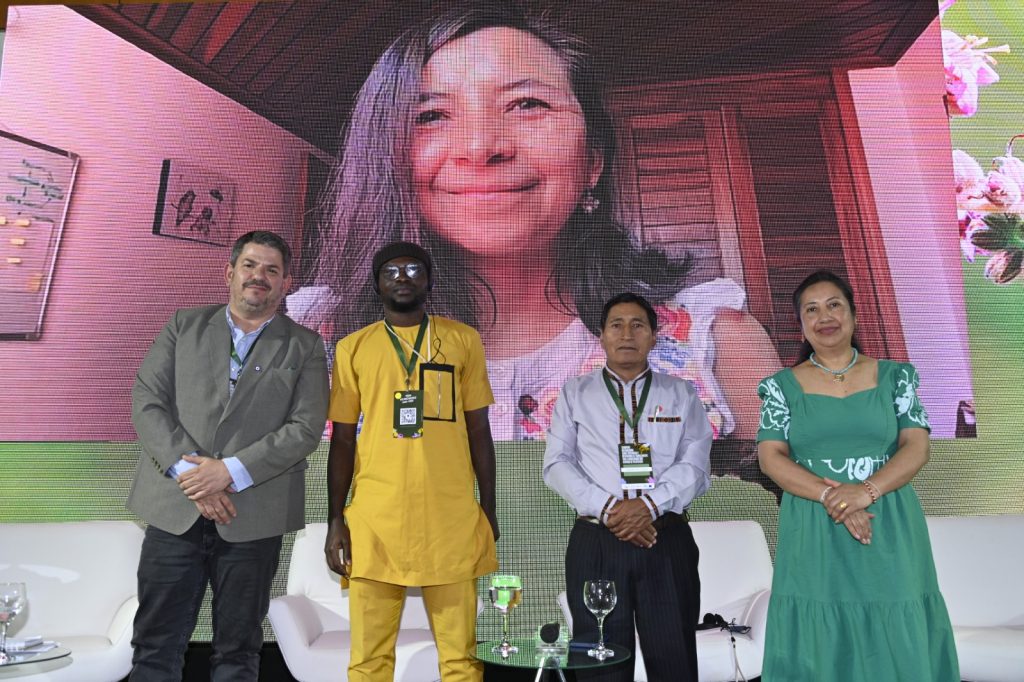
Panel: “Inclusion of Traditional Communities, Women, Youth, and Indigenous Peoples in Pollination Conservation Models That Generate Income”
Photo: © GIZ / Zuleika de Souza
As part of the event, the Call to Action for the Protection of Pollinators in Latin America and the Caribbean was issued—a joint reflection by the participating countries aimed at raising political awareness of this issue, positioning it, and strengthening its presence on public agendas, as well as establishing a framework for advocacy, so that its contents are taken into account in future regional and international negotiations and forums, such as the COP17 side event and the FAO Conference on the Global Pollinator Platform, which will take place this year.
About Poli-LAC in Peru
In Peru, the regional project “Protection of Pollinating Insects in Latin America and the Caribbean (Poli-LAC)” is led by the Ministry of the Environment, in partnership with the Pollinators Technical Group, the Ministry of Agricultural Development and Irrigation and Profonanpe, with support from German development cooperation, implemented by GIZ on behalf of the German Federal Government’s International Climate Initiative (IKI).